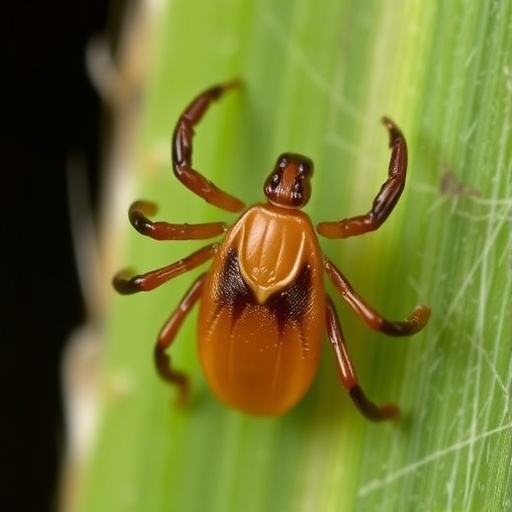
In a groundbreaking discovery that challenges our understanding of tick morphology and development, researchers from Japan have documented the first-ever instance of morphological anomalies in the tick species Haemaphysalis megaspinosa. This revelation, detailed in a recent study published in Acta Parasitologica, offers novel insights into the potential environmental and genetic factors influencing tick physiology and could have significant implications for disease transmission dynamics.
Ticks are notorious vectors of numerous pathogens affecting both humans and animals, and detailed knowledge about their biology is crucial for crafting effective control measures. Haemaphysalis megaspinosa, a hard tick species native to East Asia, has typically been characterized by well-defined morphological traits used to distinguish it from other species. However, recent field studies carried out in Japan revealed individuals exhibiting unexpected and notably irregular physical features, sparking curiosity and concern within the research community.
The morphological anomalies documented are not trivial deviations but rather striking alterations in structural characteristics essential for the tick’s identification and survival. These include aberrations in body segmentation, atypical development of the dorsal shield (scutum), and unexpected changes in appendage architecture. Such anomalies could conceivably affect the tick’s ability to attach to hosts, feed successfully, and consequently, its capacity to transmit pathogens.
According to lead author R. Matsumura and colleagues, the finding emerged from comprehensive field sampling and microscopic examinations conducted over several months across various Japanese habitats known for Haemaphysalis megaspinosa prevalence. The unexpected morphological irregularities were initially suspected to be a result of environmental stressors, but subsequent laboratory analyses also suggested potential genetic mutations playing a role.
The implications of this first report are profound. Morphological anomalies can influence vector competence, the ability of the tick to harbor and transmit infectious agents such as bacteria, viruses, or protozoa. Changes in physical structure might reduce or enhance the efficiency with which ticks latch onto hosts or evade immune responses, potentially altering disease epidemiology in regions where these ticks are endemic.
Furthermore, this discovery prompts reconsideration of taxonomic classifications reliant solely on morphological features. If anomalies occur with some frequency, they can complicate identification processes, leading to misclassification or underreporting of tick species diversity. This issue is particularly pressing as climate change and human activity continue to modify habitats and influence species distributions, possibly increasing the prevalence of such developmental irregularities.
The study involved an interdisciplinary approach combining field entomology, molecular biology, and advanced imaging techniques. High-resolution microscopy allowed researchers to delineate minute structural deviations, while genetic assays sought to uncover underlying mutations or epigenetic factors potentially responsible for the anomalies. Although no conclusive genetic marker was identified yet, the data suggest a complex interaction between genetics and environment.
Researchers also highlighted the possibility that exposure to pollutants, pesticides, or novel pathogens could induce such morphological changes. Japan’s diverse ecosystems provide a unique setting where urban encroachment and agricultural practices might inadvertently stress tick populations, leading to developmental disturbances. This theory aligns with broader ecological studies indicating that environmental contaminants can induce phenotypic plasticity or defects in arthropod vectors.
Given the pivotal role of Haemaphysalis megaspinosa in transmitting pathogens responsible for diseases such as babesiosis and rickettsiosis, understanding morphological anomalies becomes even more urgent. Changes in tick morphology could influence feeding behavior, host range, and even the internal microbiome that affects pathogen survival and transmission, raising questions about emergent risks to public and animal health.
The team also underscored the importance of long-term surveillance to monitor the frequency and distribution of these anomalies. Establishing whether these morphological irregularities are isolated incidents or part of a growing trend linked to environmental changes or evolutionary pressures will aid in predicting future impacts on tick populations and disease dynamics.
Moreover, the research highlights the necessity for integrating morphological assessments with molecular diagnostics in tick surveillance programs. Reliance on morphology alone might overlook or misinterpret genetically distinct or anomalous specimens, impairing accurate data collection critical for ecological and epidemiological studies.
This discovery opens an intriguing new avenue in tick biology and parasitology, underscoring the complexity underlying vector species’ adaptability. The presence of anomalies in Haemaphysalis megaspinosa signifies a potential evolutionary response or maladaptation, the consequences of which remain to be fully understood but are likely to influence tick-host interactions and vector-borne disease patterns.
Future research directions proposed by the authors include focused genetic sequencing of anomalous specimens, experimental studies to simulate environmental stressors, and investigations into the role of symbiotic relationships within tick microbiota. Such research could unravel whether these anomalies confer any survival advantages or disadvantages under various ecological contexts.
This landmark study is likely to stimulate further research globally, encouraging epidemiologists, entomologists, and ecologists to re-examine morphological variability in other tick species and to consider how such factors might influence public health risk assessments. The nuanced understanding of tick morphology presented here challenges previous assumptions and emphasizes the dynamic nature of arthropod vectors.
As climate change and anthropogenic influences continue to reshape ecosystems, discoveries like this one remind the scientific community of the adaptive and sometimes unpredictable nature of disease vectors. Recognizing and studying morphological anomalies not only enriches our understanding of tick biology but also contributes to the broader endeavor of controlling vector-borne diseases that pose significant threats to global health.
In sum, the first report of morphological anomalies in Haemaphysalis megaspinosa ticks from Japan represents a critical milestone. It expands the scientific narrative around tick morphology, development, and ecology and sets the stage for future inquiries that could redefine approaches to vector surveillance and disease prevention strategies worldwide.
Subject of Research: Morphological anomalies in the tick species Haemaphysalis megaspinosa and their implications for vector biology and disease transmission.
Article Title: First Report of Morphological Anomalies in Haemaphysalis megaspinosa Ticks from Japan.
Article References:
Matsumura, R., Sawabe, K., Sasaki, T. et al. First Report of Morphological Anomalies in Haemaphysalis megaspinosa Ticks from Japan. Acta Parasit. 71, 17 (2026). https://doi.org/10.1007/s11686-025-01201-0
Image Credits: AI Generated
DOI: https://doi.org/10.1007/s11686-025-01201-0
Tags: aberrations in tick body segmentationEast Asian tick species researchenvironmental impact on tick morphologygenetic factors in tick physiologyHaemaphysalis megaspinosa studyimplications for tick control measuresmorphological anomalies in ticksresearch on tick vectors of pathogenssignificance of tick morphologystructural characteristics of Haemaphysalis tickstick disease transmission dynamicsunusual physical features in ticks