In the rapidly evolving field of oncology, the introduction of innovative methodologies for predicting treatment responses is nothing short of revolutionary. A recent multicenter study conducted by a team of researchers, led by Xu et al., is set to change the landscape of esophageal cancer treatment. This groundbreaking research integrates habitat radiomics with traditional radiomic features in an effort to enhance prediction accuracy for pathological complete response (pCR) in patients suffering from esophageal squamous cell carcinoma (ESCC) following neoadjuvant immunotherapy and chemotherapy. The findings of this study promise to provide significant insights into the optimization of treatment protocols, leading to more effective patient management.
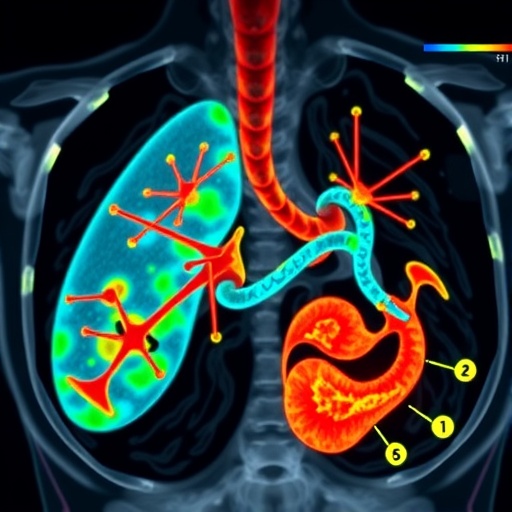
Radiomics is an emerging discipline that extracts quantitative features from medical images, providing a powerful tool for identifying patterns that may be imperceptible to the naked eye. In this study, the authors take radiomics a step further by incorporating habitat radiomics, which focuses on the microenvironment of tumors. By analyzing the spatial arrangement and interaction between different regions within the tumor, researchers can glean invaluable data that may influence treatment efficacy. This integration of two sophisticated approaches aims to increase the predictive capability of models for pCR, creating a more nuanced understanding of tumor behavior.
The importance of accurately predicting pCR cannot be overstated. Patients who achieve pCR after neoadjuvant therapy tend to have significantly better survival outcomes. However, not all patients respond equally to treatment, making it critical to identify those at higher risk for residual disease. Xu et al. meticulously analyze data from a variety of centers, allowing for a robust comparison of the predictive abilities of the combined radiomic modalities against traditional approaches. The results from this multicenter design bolster the external validity of the findings, reinforcing their applicability in real-world clinical settings.
One of the most significant challenges in cancer treatment remains the heterogeneity of tumor biology. ESCC, in particular, presents a complex landscape. Variations in genetic expression, tumor microenvironmental factors, and the interplay between different cellular populations contribute to inconsistent treatment responses. This study addresses these intricacies directly by leveraging the predictive power of combined radiomic features. By examining not only the tumor’s characteristics but also its microhabitat, researchers can create a more holistic picture that informs treatment decisions.
Moreover, the study delves into the nuances of neoadjuvant therapy itself, which combines immunotherapy and chemotherapy in a strategic effort to maximize therapeutic efficacy before surgical intervention. Understanding how these treatments interact with tumor characteristics is crucial for tailoring individualized therapies. The findings from this research suggest that patients exhibiting specific radiomic signatures may benefit more from specific therapeutic combinations, paving the way for tailored treatment protocols.
Incorporating artificial intelligence into the analysis further amplifies the study’s potential impact. By harnessing machine learning algorithms, the authors can sift through extensive datasets to uncover intricate relationships between radiomic features and treatment outcomes. The automated processing of vast amounts of imaging data not only streamlines the analysis but also enhances the precision of predictions regarding patient responses to therapy.
As the study unfolds, one can see its practical implications for clinical oncology. The potential for a new standard in personalizing treatment protocols is tangible. Clinicians may soon be able to rely on advanced imaging analyses to inform their therapeutic decisions, leading to improved patient outcomes. This integration of technology into oncology could herald a new era where decisions are data-driven rather than solely reliant on traditional histopathological evaluations.
However, the authors emphasize the need for further validation of their findings. While the initial results are promising, thorough testing across diverse populations and settings will be essential to solidify the applicability of these advanced radiomic methodologies. The scientific community must remain vigilant, ensuring that emerging technologies undergo rigorous evaluation before becoming commonplace in clinical practice.
Additionally, ethical considerations must come to the forefront as these technologies advance. The interplay between technology and patient care raises questions about the implications of machine-driven decisions in healthcare. Equitable access to advanced imaging tools and effective therapies must be prioritized, ensuring that all patients benefit from the progress made in cancer treatment. Furthermore, transparency in how algorithms arrive at conclusions will become increasingly important in maintaining trust in clinical decision-making processes.
As we look ahead, the potential for this research to influence other cancers is noteworthy. The principles of habitat radiomics and the integration of diverse data sources could be applied to various malignancies, broadening the horizons for precision oncology. As the methods develop, we may witness a transformative shift in how cancer is diagnosed, treated, and monitored over time.
The trajectory of cancer treatment research is undeniably entering a new phase with studies like that of Xu et al. By marrying traditional approaches with innovative technologies, the healthcare community is headed toward a future where individualized treatment plans are the norm rather than the exception. This evolution in oncological practice not only holds promise for improved survival rates but also enhances the quality of life for patients navigating the complexities of cancer treatment.
In summary, the work led by Xu and colleagues marks a significant milestone in the quest to enhance predictive analytics in cancer therapy. As the integration of habitat radiomics and traditional features begins to permeate clinical practice, the overarching goal will remain clear: to provide patients with the most effective, personalized treatment strategies available.
Subject of Research:
Esophageal squamous cell carcinoma and predictive analytics for treatment response.
Article Title:
Integration of habitat radiomics and traditional radiomic features for predicting pathological complete response in esophageal squamous cell carcinoma following neoadjuvant immunotherapy and chemotherapy: a multicenter comparative study.
Article References:
Xu, Z., Lu, Y., Zuo, F. et al. Integration of habitat radiomics and traditional radiomic features for predicting pathological complete response in esophageal squamous cell carcinoma following neoadjuvant immunotherapy and chemotherapy: a multicenter comparative study.
J Transl Med (2026). https://doi.org/10.1186/s12967-025-07522-y
Image Credits: AI Generated
DOI:
Keywords:
Tags: chemotherapy effectiveness in cancer treatmentenhancing prediction accuracy in cancerhabitat radiomics in esophageal cancerinnovative methodologies in oncology researchintegration of radiomic features in cancer researchmulticenter study on cancer treatmentneoadjuvant immunotherapy for esophageal cancerpathological complete response in ESCCpatient management in esophageal cancerpredicting treatment response in cancerradiomics in oncologytumor microenvironment analysis