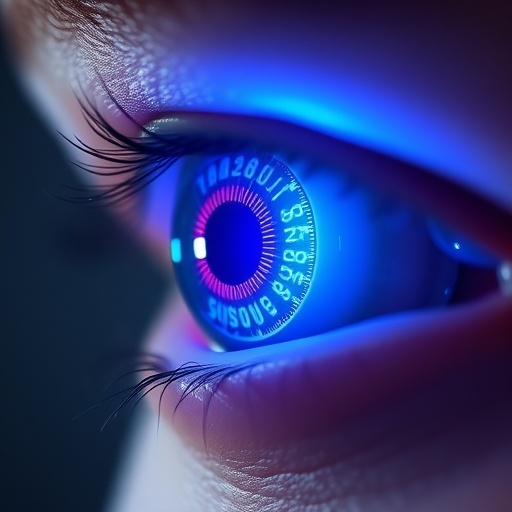
In a remarkable leap forward for ocular health technology, researchers have unveiled an ultra-sensitive smart contact lens capable of real-time monitoring of intraocular pressure (IOP). This groundbreaking device integrates parity-time (PT) symmetry wireless technology, representing a paradigm shift in the management and early detection of glaucoma and other eye conditions associated with abnormal pressure inside the eye. The innovation promises unprecedented precision and continuous monitoring without the discomfort or invasiveness characteristic of traditional methods.
The challenge of monitoring intraocular pressure has long plagued ophthalmologists. Elevated IOP is the primary risk factor for glaucoma, a leading cause of irreversible blindness worldwide. Current clinical techniques rely on sporadic measurements using cumbersome equipment, often performed in specialized settings. These methods only provide a snapshot of IOP, failing to capture its dynamic fluctuations throughout the day and night. The new integrated smart contact lens offers a continuous, non-invasive solution, fundamentally altering the landscape of eye care monitoring.
At the core of this advancement lies the innovative use of parity-time symmetry wireless technology, a concept borrowed from quantum physics and wave mechanics. PT symmetry allows for the design of optical systems that balance gain and loss, enabling more robust signal transmission and enhanced sensitivity. By leveraging this principle in the smart lens’s architecture, researchers have achieved an extraordinarily sensitive detection platform capable of monitoring minute changes in IOP with exceptional fidelity.
The smart contact lens is meticulously engineered to seamlessly conform to the eye’s surface while maintaining comfort and optical clarity. The sensing element, embedded within the lens material, consists of nano-scale structures tuned to respond to the subtle mechanical deformations caused by changes in intraocular pressure. These structural changes modulate an optical signal transmitted wirelessly using PT-symmetric resonators, which enhance the signal-to-noise ratio and ensure reliable data acquisition even in the complex biological environment of the eye.
One of the key technological breakthroughs enabling this device is the wireless data transmission system that employs PT symmetry to overcome traditional limitations such as signal attenuation and interference. By balancing gain and loss mechanisms within the resonator circuit, the researchers have constructed a system that remains stable and highly responsive. This robust wireless channel eliminates the need for cumbersome external connectors or batteries, allowing the lens to operate continuously and transmit data directly to a handheld or wearable receiver.
The ultra-sensitive nature of the smart lens is a testament to the precision engineering and novel material science underpinning its construction. The device uses advanced flexible electronics embedded in biocompatible polymers that not only maintain comfort but also provide the endurance necessary for prolonged daily use. This durability is critical for practical applications where continuous monitoring is essential for detecting harmful pressure spikes that might otherwise go unnoticed between clinic visits.
Clinical implications of this technology extend beyond glaucoma management. Continuous IOP monitoring can provide valuable insights into circadian variations in eye pressure, which is crucial for fine-tuning individual treatment regimens. Moreover, the real-time data acquisition facilitates early diagnosis of ocular hypertension, enabling timely interventions that could prevent the progression of optic nerve damage and preserve vision.
Beyond medical applications, this smart lens technology hints at a future where ocular devices serve as integrated platforms for broader health monitoring. The ability to wirelessly track physiological parameters through the eye opens possibilities for monitoring biomarkers related to diabetes, dehydration, or even neurological disorders. The integration of PT symmetry wireless technology forms a scalable foundation that could accommodate additional sensing modalities while maintaining the lens’s functional integrity and user comfort.
The development process involved a multidisciplinary collaboration among experts in optics, materials science, electrical engineering, and ophthalmology. Rigorous laboratory testing demonstrated the smart lens’s capability to detect IOP variations with a sensitivity surpassing conventional tonometers by orders of magnitude. Moreover, preliminary human trials have shown promising user acceptance, with participants reporting minimal discomfort and substantial confidence in the lens’s performance.
Safety and biocompatibility were key priorities in the design and testing phases. The materials used are FDA-approved for ocular applications, and the lens is engineered to allow ample oxygen permeability crucial for corneal health. The wireless power and data transmission operate at frequencies posing no risk to eye tissues, supported by comprehensive electromagnetic safety evaluations.
Looking ahead, further clinical trials are planned to validate long-term performance across diverse patient populations with varying glaucoma types and severities. Researchers also aim to refine data analytics and integration with digital health platforms, enabling clinicians to access continuous IOP profiles remotely and adjust therapies dynamically. This infrastructure could herald a new era of personalized medicine in ophthalmology, reducing the burden of disease through predictive care and real-time intervention.
The innovative use of PT symmetry wireless technology in this smart contact lens not only exemplifies the creative application of physical principles to biomedical engineering but also paves the way for broader adoption of smart wearable devices in medicine. As the IoT ecosystem expands, such devices will increasingly facilitate ubiquitous health monitoring, empowering patients and clinicians alike with timely, actionable information.
In the broader context of flexible electronics, this study highlights how advances in material flexibility, miniaturization, and wireless communication synergistically converge to produce novel healthcare solutions. The integration of ultra-sensitive sensors within everyday wearable formats like contact lenses underscores a growing trend toward seamless human-machine interfaces that collect vital data with minimal intrusion.
This breakthrough aligns with global health goals to reduce preventable blindness and enhance quality of life for millions affected by glaucoma. The scalability and cost-effectiveness of the manufacturing process will be critical to the technology’s widespread adoption, especially in resource-limited settings where traditional ophthalmic care is less accessible.
Ultimately, this ultra-sensitive smart contact lens presents a compelling vision for the future of eye health monitoring—one where measurement devices are not only integrated into patient lifestyles but also elevate the precision, responsiveness, and personalization of care. Its realization marks a milestone in biomedical innovation, blending sophisticated physics, cutting-edge materials, and healthcare needs into a singular transformative wearable technology.
Subject of Research: Ultra-sensitive real-time monitoring of intraocular pressure using smart contact lens technology integrating parity-time symmetry wireless communication.
Article Title: Ultra-sensitive real-time monitoring of intraocular pressure with an integrated smart contact lens using parity-time symmetry wireless technology.
Article References:
Xiao, T., Zhang, H., Takamatsu, T. et al. Ultra-sensitive real-time monitoring of intraocular pressure with an integrated smart contact lens using parity-time symmetry wireless technology. npj Flex Electron 10, 4 (2026). https://doi.org/10.1038/s41528-025-00507-3
Image Credits: AI Generated
DOI: https://doi.org/10.1038/s41528-025-00507-3
Tags: advanced glaucoma managementcontinuous IOP monitoring systemglaucoma detection technologyintraocular pressure monitoring devicenon-invasive eye care solutionsocular health innovationsprecision ophthalmology devicesPT symmetry wireless technologyreal-time eye pressure monitoringreducing risk of blindnesssmart contact lens technologywearable eye health technology