In a groundbreaking advancement in parasitology and nanotechnology, researchers have unveiled a promising new approach for combating Toxocara vitulorum infective larvae using thymol-loaded chitosan nanoparticles. This innovative method not only epitomizes the power of nanomedicine in addressing parasitic infections but also underscores the potential of natural compounds in enhancing therapeutic efficacy. Toxocara vitulorum, a notorious nematode parasite primarily affecting cattle and buffalo calves, poses significant health risks in veterinary contexts, urging scientists to develop more effective and safer antiparasitic strategies.
The research team, spearheaded by Ali, S.B., Mohamed, A.S., and Fahmy, S.R., explored the in vitro effectiveness of encapsulating thymol, a naturally derived monoterpene phenol extracted from thyme oil, within chitosan nanoparticles. Chitosan, a biopolymer obtained from chitin’s deacetylation, is heralded for its biocompatibility, mucoadhesive properties, and biodegradability, making it an ideal carrier for drug delivery. Through this nanocarrier system, thymol’s antiparasitic potency is enhanced by protecting the active ingredient, facilitating sustained release, and improving penetration into parasitic membranes.
The urgency for novel interventions arises from the challenges posed by conventional anthelmintics which often exhibit toxicity, environmental harm, and growing parasite resistance. The encapsulation approach not only mitigates these issues but also opens the door for utilizing phytochemicals that have historically been limited by poor solubility and stability. This study bridges the gap by marrying natural bioactive compounds with cutting-edge nanotechnology to achieve pronounced larvicidal effects.
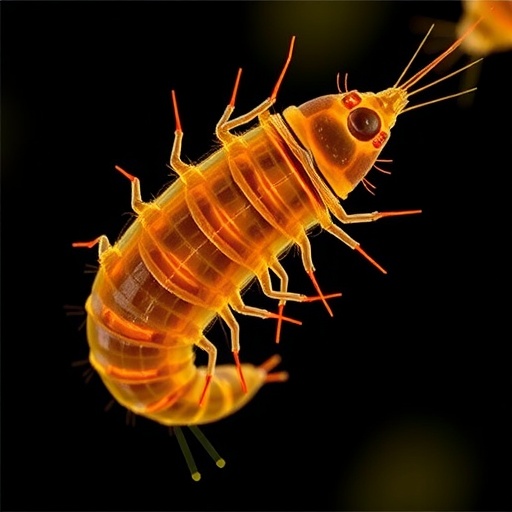
Comprehensive in vitro trials conducted by the researchers demonstrated that thymol-loaded chitosan nanoparticles exerted significantly higher larvicidal activity against Toxocara vitulorum infective larvae compared to free thymol or chitosan nanoparticles alone. Larvae exposed to these nanocomposites exhibited increased mortality rates and notable morphological damage, highlighting the enhanced bioavailability and targeted delivery achieved by nanoparticle encapsulation. These findings underscore how nanoparticle drug carriers can revolutionize the administration of herbal-derived antiparasitic agents.
Mechanistically, the study suggests that the positively charged chitosan enhances adhesion to the negatively charged parasite cuticle, facilitating thymol’s penetration and causing disruption in larval membranes. This disturbance likely compromises vital metabolic processes, leading to larval death. Electron microscopy images revealed severe cuticular and internal structure damages within treated larvae, providing visual validation of the nanoparticles’ cytotoxic effects.
Another crucial aspect addressed was the controlled release profile of thymol from chitosan nanoparticles, which ensures a sustained antiparasitic effect over time. Unlike direct administration of thymol which may rapidly dilute or degrade, the nanoparticles maintain effective concentrations in the vicinity of the parasites, maximizing lethality while potentially reducing required dosages and minimizing side effects.
In addition to larvicidal efficiency, thymol-loaded chitosan nanoparticles exhibited promising biocompatibility, as initial assessments indicated minimal cytotoxic effects on mammalian cells used as controls. This biocompatibility profile is essential for future in vivo applications, ensuring that therapeutic interventions remain safe while being lethal to parasites.
The study also broadened the horizon for veterinary parasitology by providing a potential template for combating other nematode infections through similar nanoformulation strategies. Given that parasitic worms represent a significant burden to livestock productivity worldwide, such advancements could substantially impact animal health and agricultural economics.
Furthermore, the environmentally friendly nature of both thymol and chitosan aligns perfectly with current movements toward sustainable and green veterinary medicines. Avoiding synthetic chemical overuse decreases ecological damage and minimizes chemical residues in animal products, catering to rising consumer demands for ethically produced livestock.
Importantly, the findings highlight the synergistic advantages of combining floral phytochemicals with polymeric nanoparticles, setting the stage for a new generation of multifunctional antiparasitic agents. Future research could expand these findings by exploring in vivo efficacy, dose optimization, and scaling production methods suitable for field applications.
The implications extend beyond veterinary science; the approach exemplifies how nanomedicine can revitalize natural product usage in combating diseases caused by parasites, potentially inspiring innovations in human medicine where antiparasitic resistance is also mounting. Such cross-disciplinary influence could bolster global parasitic disease mitigation efforts.
With increasing concerns about drug resistance and safety concerns surrounding chemical antiparasitics, this research marks a pivotal moment. It exemplifies how nanotechnology can transform natural bioactive agents, turning them into potent, targeted therapies that align with ecological and health-conscious standards. It encapsulates the future path for parasitic control, balancing efficacy, safety, and sustainability.
This seminal work published in Acta Parasitologica not only pioneers a new treatment paradigm for Toxocara vitulorum larval infections, but also charts a visionary course for integrated nanoscale solutions in parasite management. The research team’s innovative combination of thymol and chitosan nanoparticles could herald a new era in parasitic disease control both in veterinary contexts and potentially beyond.
As the global scientific community continues to seek alternatives to diminishing conventional antiparasitic arsenals, this study offers a beacon of hope demonstrating how the fusion of natural chemistry and nanotechnology can surmount prevailing limitations. The step from petri dish success to clinical and field applicability may soon follow, promising safer and more effective anti-parasitic regimens for livestock and the ecosystems dependent on them.
In summary, the exploration of thymol-loaded chitosan nanoparticles against Toxocara vitulorum infective larvae represents a pivotal advance at the intersection of parasitology and nanomedicine. Through enhanced bioavailability, targeted action, and sustainable composition, this approach could revolutionize how parasitic infections are tackled in the near future. This research embodies the innovative spirit essential for overcoming some of the most pressing challenges in veterinary parasitic disease control today.
Subject of Research: The in vitro effectiveness of thymol-loaded chitosan nanoparticles against Toxocara vitulorum infective larvae.
Article Title: Effectiveness of Thymol-Loaded Chitosan Nanoparticles Against Toxocara vitulorum Infective Larvae In Vitro.
Article References:
Ali, S.B., Mohamed, A.S., Fahmy, S.R. et al. Effectiveness of Thymol-Loaded Chitosan Nanoparticles Against Toxocara vitulorum Infective Larvae In Vitro. Acta Parasit. 71, 18 (2026). https://doi.org/10.1007/s11686-025-01196-8
Image Credits: AI Generated
DOI: https://doi.org/10.1007/s11686-025-01196-8
Tags: biopolymer drug delivery systemschallenges of conventional anthelminticscombatting Toxocara vitulorumeffectiveness of chitosan nanoparticlesencapsulation of thymolinnovative treatments for nematodes.nanomedicine in parasitologynatural compounds in antiparasitic therapyphytochemicals in veterinary medicinesustainable antiparasitic strategiesThymol-chitosan nanoparticlesveterinary parasitic infections