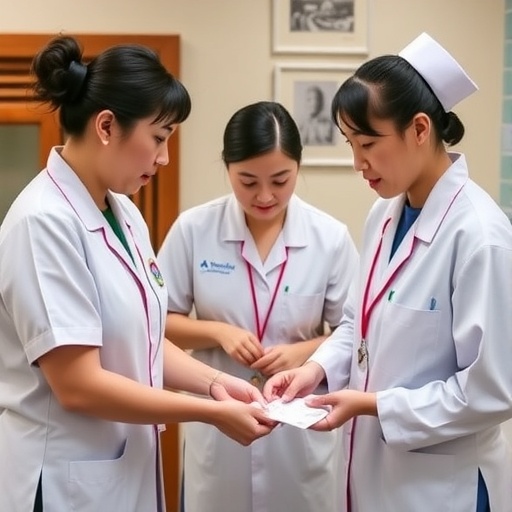
In an increasingly complex healthcare landscape, the role of nursing has evolved, demanding a foundation rooted in both traditional practices and modern evidence-based approaches. A recent study by Lan, Jia, and Pang delves into the nuances of nursing competence within the context of traditional Chinese medicine hospitals located in Hunan province. This groundbreaking cross-sectional research sheds light on the multifaceted factors that influence nursing competence, a key component in delivering high-quality patient care.
The study posits that nursing competence is not merely a reflection of clinical skills but is influenced by a variety of elements including educational background, ongoing training, and individual attributes of the nurses themselves. This delineation is crucial as it underscores the importance of comprehensive training programs that incorporate both evidence-based practices and the cultural competencies necessary for thriving in a traditional medicine context. By integrating these varying dimensions, healthcare systems can bolster their nursing workforce, aligning it more closely with the diverse needs of patients.
Central to the findings is the acknowledgment that while traditional Chinese medicine holds a revered place in healthcare, it is essential for nurses to be well-versed in evidence-based practices to ensure that patient outcomes are optimized. This merging of traditional knowledge and modern evidence-based practice can lead to superior patient care, enhancing the overall effectiveness of treatment protocols. The study’s authors advocate for ongoing education and training that encapsulates the essence of both worlds, ensuring nurses can navigate their dual roles effectively.
Moreover, the study emphasizes the role of institutional support in nurturing nursing competence. Administration and healthcare leadership must prioritize the establishment of a culture that values continuous learning and professional development. Encouraging a context where nurses feel empowered to pursue further education and training can have substantial positive repercussions on patient care and satisfaction. This not only improves individual nurse performance but also fosters a more cohesive healthcare team.
The research also highlights the personal attributes that can influence nursing competence. Traits such as resilience, adaptability, and a commitment to lifelong learning emerged as pivotal to the enhancement of nursing skills. Personal characteristics can affect how nurses respond to the challenges presented by their work environment, particularly within the unique pressures found in traditional medicine settings. Therefore, addressing these personal dimensions within training programs could significantly elevate nursing practice in these specialized hospitals.
Furthermore, the study explores the impact of peer interactions and mentorship on nursing competence. Establishing robust support networks enables nurses to share knowledge, best practices, and coping strategies, ultimately enhancing their professional skills. Peer collaboration fosters an environment of mutual growth, which can be particularly beneficial in traditional medicine settings where practices may differ from conventional medicine.
Critical to the discourse is the consideration of how demographic factors influence nursing competence. Variables such as age, experience level, and educational attainment have been demonstrated to play significant roles in shaping the competencies of nursing professionals. Understanding these correlations allows for more targeted educational strategies that can accommodate various demographic groups, ensuring that knowledge dissemination is inclusive and effective.
As the study highlights, the integration of technology into nursing practice cannot be overlooked. In a world increasingly characterized by digital transformation, adopting technological tools can significantly elevate the standard of care provided in healthcare settings, including those rooted in traditional Chinese medicine. The appropriate usage of technology aids in enhancing nursing competence, as it can be leveraged for everything from patient management systems to telehealth services. This digital engagement is essential for modern nurses to keep pace with evolving healthcare demands.
Cultural competence also emerges as a vital component in the study’s findings. Nurses operating within traditional Chinese medicine hospitals must engage with diverse patient populations while being attuned to cultural sensitivities and practices. Training programs aimed at enhancing cultural awareness alongside clinical skills can facilitate a more harmonious relationship between nurses and the communities they serve. Nurses equipped with cultural competence are better positioned to provide holistic and respectful care.
The issue of policy implications also surfaces within this context. Regulatory bodies and healthcare policymakers must respond to the findings of the study by prioritizing nursing education reforms that embrace both evidence-based and traditional practices. This approach may involve the creation of interdisciplinary curricula that reflects the rich tapestry of healthcare methodologies. By aligning educational frameworks with the findings of such studies, policymakers can help ensure that nurses are adequately prepared to meet the complexities of patient care today.
Additionally, the research calls attention to the necessity for ongoing research into nursing competence. Given the dynamic nature of healthcare, continued exploration of this topic is crucial to adapt and refine training and support mechanisms for nurses. Longitudinal studies could facilitate a deeper understanding of the changing landscape of nursing competencies, thereby shaping future educational paradigms.
As the study indicates, investing in nursing competence is tantamount to investing in patient outcomes. Healthcare systems that recognize and act upon the insights gleaned from this research can enhance their nursing workforce and improve the quality of care delivered. Ultimately, the success of any healthcare system relies upon the empowerment of its nurses, who serve as the backbone of patient care.
In conclusion, this illuminating research by Lan, Jia, and Pang advocates for a multifaceted approach to nursing competence that integrates traditional practices with modern evidence-based methodologies. By addressing the various influencing factors outlined in the study, healthcare systems can cultivate a more competent and capable nursing workforce, ultimately fostering better patient outcomes and satisfaction. As the world continues to evolve, the commitment to understanding and improving nursing competence remains a critical priority for the health of communities around the globe.
Subject of Research: Nursing competence and its influencing factors among nurses in traditional Chinese medicine hospitals.
Article Title: Evidence-based nursing competence and its influencing factors among nurses in traditional Chinese medicine hospitals in Hunan province: a cross-sectional study.
Article References:
Lan, X., Jia, Q., Pang, F. et al. Evidence-based nursing competence and its influencing factors among nurses in traditional Chinese medicine hospitals in Hunan province: a cross-sectional study. BMC Nurs (2026). https://doi.org/10.1186/s12912-026-04304-9
Image Credits: AI Generated
DOI:
Keywords: Nursing competence, evidence-based practice, traditional Chinese medicine, healthcare for nurses, training programs.
Tags: cultural competence in healthcareevidence-based nursing practicesfactors influencing nursing competenceHunan traditional Chinese medicine hospitalsintegrating traditional and modern healthcarenursing competence in traditional medicinenursing education and trainingnursing roles in complex healthcare systemsnursing workforce developmentongoing nurse training programspatient care quality in traditional medicinetraditional vs modern nursing approaches