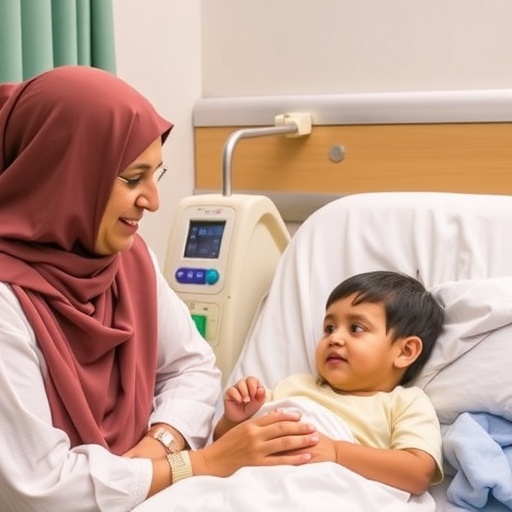
In the complex landscape of healthcare, the significance of family involvement in medical decisions and processes cannot be overstated, particularly in critical care settings where the stakes are undeniably high. In the context of intensive care units (ICUs), the engagement of family members is multifaceted, deeply influencing not only the quality of care delivered to patients but also the emotional and psychological well-being of families during traumatic experiences. A recent study conducted in Saudi Arabia sheds light on the perceptions, barriers, and facilitators encountered by nurses in enabling such family engagement, offering vital insights into an often-underexplored area of critical care medicine.
The research meticulously cataloged and analyzed the experiences and views of nurses working in intensive care environments. The focus on nurses—as frontline healthcare professionals—highlights their pivotal role in facilitating family participation in care discussions, decision-making processes, and the overall patient care trajectory. The study reveals that nurses often find themselves at the intersection of medical protocols and human emotions, where their advocacy for family involvement can profoundly affect patient outcomes and satisfaction levels.
One of the primary findings of the study indicates that there are significant perceptual gaps between nurses and families regarding the role of family in the care process. Many nurses recognize the importance of family engagement but report feeling inadequately supported in their endeavors to include family members in critical discussions. This disjunction suggests that while healthcare providers acknowledge the necessity of family involvement, systemic barriers often prevent the seamless integration of families into the care paradigm. Nurses expressed a desire for more structured frameworks that empower them to facilitate discussions with family members about care options and decisions affecting their loved ones.
The barriers identified in the context of family engagement are myriad and complex. Chief among them is the lack of clear communication channels within the healthcare system. Nurses often face challenges in delivering critical information to families, who may be overwhelmed with anxiety and confusion during a loved one’s critical illness. The inability to provide timely updates can lead to a breakdown in trust and foster feelings of helplessness among family members. Furthermore, the physical layout of intensive care environments, which may not be conducive to family inclusivity, adds another layer of difficulty. In many cases, the ICU’s design prioritizes medical equipment and staff access over family comfort and involvement.
Moreover, the research highlights cultural factors that also play a crucial role in shaping family engagement in intensive care settings in Saudi Arabia. Societal norms and values significantly influence how families interact with healthcare systems. In many cases, family members may defer to the medical team due to cultural beliefs, which can complicate the nurses’ efforts to encourage active participation. This cultural dynamic raises important questions about the need for culturally competent care approaches that acknowledge and respect diverse family structures and their unique ways of coping with medical crises.
Facilitation of family involvement does not solely depend on addressing barriers; it also hinges on harnessing the facilitators that exist within the healthcare environment. The study identifies the pivotal role of education and training for nurses as a primary facilitator of effective family engagement. By equipping nurses with the skills and knowledge to communicate effectively with families, institutions can enhance the capacity of nursing staff to foster meaningful interactions. This training can take many forms, from communication workshops to simulation exercises that prepare nurses for real-life scenarios where family members require support and guidance.
Another significant facilitator identified was the development of supportive institutional policies that prioritize family involvement in patient care. Such policies should encompass clear protocols for family meetings, avenues for family education, and strategies for addressing the emotional needs of families navigating their loved ones’ critical illnesses. Creating an environment that recognizes the value of family engagement can significantly enrich the nursing practice and patient care experience, ultimately leading to improved health outcomes.
The importance of interdisciplinary collaboration cannot be overlooked in the pursuit of enhanced family engagement in intensive care. Nurses highlighted the need for cohesive teamwork among healthcare providers, including doctors, social workers, and chaplains. When all team members are on the same page regarding family involvement, it creates a unified front that can effectively support families through the complexities of critical care. Such collaboration fosters an atmosphere of mutual respect and understanding, where family members feel heard, valued, and empowered to participate in their loved one’s care.
In drawing from the insights of nurses, the study offers a clear call to action for healthcare administrators and policymakers. There is an urgent need for systemic reforms that not only acknowledge the value of family engagement in intensive care but actively support its implementation through concrete measures. This might include increasing staffing levels to ensure sufficient support for both patients and their families, as well as investing in infrastructure changes that accommodate families’ physical and emotional needs in the ICU setting.
As the landscape of healthcare continues to evolve, the findings of this study offer a critical lens through which to examine the intersection of nursing practice, family dynamics, and intensive care. By prioritizing family engagement, healthcare systems can enhance the quality of care delivered to patients while simultaneously supporting the families who provide foundational emotional support. The movement towards establishing robust family engagement practices within ICUs must be recognized as a fundamental objective, driven by the desire to improve health outcomes and foster a more compassionate healthcare environment.
In conclusion, the study’s exploration of nurses’ perceptions, barriers, and facilitators regarding family engagement in intensive care within Saudi Arabia underscores the need for continuing dialogue and action in this crucial area of healthcare. As family engagement emerges as a key indicator of quality care, it beckons healthcare professionals to reflect on their roles, cultivate environments that nurture familial involvement, and ultimately ensure that patient-centered care is a shared journey between healthcare providers and family members alike.
Subject of Research: Family engagement in intensive care settings
Article Title: Family engagement in intensive care: perceptions, barriers, and facilitators among nurses in Saudi Arabia.
Article References:
de Beer, J., Omer, T., Filipinas, V. et al. Family engagement in intensive care: perceptions, barriers, and facilitators among nurses in Saudi Arabia. BMC Health Serv Res (2026). https://doi.org/10.1186/s12913-026-14044-w
Image Credits: AI Generated
DOI:
Keywords: Family engagement, intensive care, nursing practice, healthcare systems, patient-centered care, barriers, facilitators, Saudi Arabia.
Tags: barriers to family engagement in healthcarecritical care family involvementemotional well-being in ICUenhancing communication in ICUsfacilitators of family involvement in critical carefamily engagement in ICU nursingfamily-centered care in intensive careimproving patient outcomes through family engagementnurses’ role in family participationpatient care decision-makingperceptions of ICU nursesSaudi Arabia healthcare study