In a groundbreaking study published in BMC Nursing, researchers B. S., B.D. N., and L. Lakshmi explore an increasingly pivotal aspect of nursing education: the self-confidence and perceptions of nursing students engaged in simulation-based educational practices. The study is vital as it delves deep into how these simulations can either bolster or hinder the self-confidence of upcoming nurses, a critical element that not only impacts their academic performance but also their future professional efficacy and patient interactions.
The significance of this study emanates from the growing adoption of simulation-based education in nursing programs worldwide. Traditional educational methodologies have faced challenges in preparing nursing students for the complex realities of patient care. This study addresses those gaps by focusing on a mixed-method approach that synthesizes both qualitative and quantitative data, offering a comprehensive view of the students’ experiences and perspectives regarding simulation learning.
In the initial stages, the research situates itself within the context of how nursing education has evolved. The increasing complexity of healthcare demands a workforce equipped with not only theoretical knowledge but practical competencies as well. Simulation-based education has emerged as a powerful tool in bridging this gap, enabling students to gain hands-on experience in a controlled environment. The researchers meticulously demonstrate how successful simulation experiences can enhance students’ self-perception and efficacy, fostering a greater sense of preparedness for real-world clinical scenarios.
The methodology employed by the researchers is noteworthy for its rigor. They employed a mixed-method approach, integrating surveys and in-depth interviews to gather rich, nuanced data from participants. This dual approach serves to validate findings through triangulation, ensuring that the outcomes are robust and reflective of diverse student experiences. Particularly, the interviews facilitate a deeper understanding of the emotional and psychological dimensions of simulation in nursing education, exposing layers of self-doubt, anxiety, and ultimately, growth that are often missed in traditional evaluative methods.
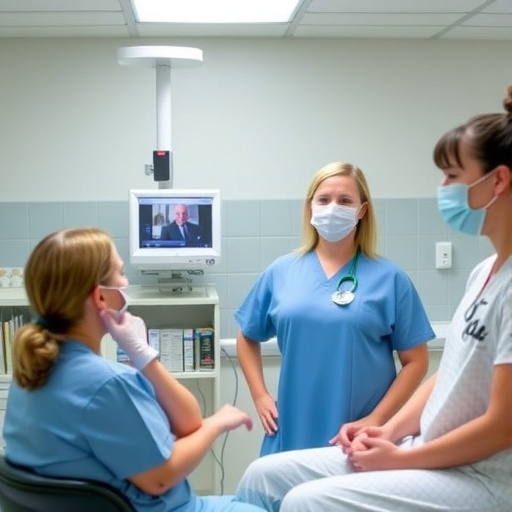
Participants in the study voiced their feelings towards simulation experiences in diverse ways. Many students reported significant increases in self-confidence post-simulation. They articulated that engaging in high-fidelity simulations allowed them to experience scenarios that they would eventually face as registered nurses. These experiences not only provided opportunities for skill development but also contributed to heightened self-assurance in their abilities to manage patient care effectively. However, the study also revealed that not all students felt equally empowered. A subset described experiences that left them feeling inadequate or unprepared, emphasizing the need for structured debriefing and guidance post-simulation to help all students process their learning and emotional responses.
Equally important, the study uncovered common themes surrounding peer interaction during simulations. Students noted that collaboration with peers fostered an environment of support and collective learning, further amplifying their confidence levels. When students felt they could rely on their teammates and share feedback, they reported a greater sense of achievement post-simulation, which aligns with educational theories positing that positive peer interaction significantly enhances learning outcomes.
Furthermore, the emotional component of simulation training cannot be overstated. The researchers highlighted the psychological tensions students experienced, especially when facing scenarios that involved high stakes, such as critical patient emergencies. While the adrenaline rush from these simulated experiences was intimidating, it also seemed to catalyze personal and professional growth. Students learned not only to manage their anxiety but also to channel it into effective performance, thereby internalizing lessons that would serve them well in their future careers.
The findings of this study resonate with existing literature on the importance of self-confidence in nursing. A well-recognized understanding in educational psychology is that self-efficacy is linked to better performance. The implications drawn from this research suggest that nursing faculties must deliberately foster environments where students can engage in meaningful simulations that both challenge and support personal development. This development is vital not only for students but also ultimately benefits patient outcomes in clinical care.
A significant aspect of the study is its call to action for nursing education stakeholders. The incorporation of simulation-based learning should not be treated as a standalone initiative but rather as part of a broader pedagogical strategy that addresses the various dimensions of student preparedness. Faculty development, curriculum design, and resource allocation must align to create meaningful and comprehensive simulation experiences that promote confidence and skill acquisition.
Interestingly, the researchers noted discrepancies in perceptions based on demographic factors such as age and prior healthcare experience. Older students or those with previous relevant experience often reported feeling more confident in simulations than their younger counterparts or those new to healthcare. These findings prompt a reflection on how educational programs can tailor simulation experiences to accommodate various student backgrounds, ensuring inclusivity and equitable learning opportunities.
The study concludes with several recommendations aimed at nursing educators and program administrators. Enhancing simulation experiences through adequate preparation, structured feedback sessions, and creating a psychologically safe environment where students feel comfortable taking risks are all essential elements that can lead to increased student self-confidence. Additionally, future research needs to focus on longitudinal studies to measure long-term impacts of simulation training on nursing competence and self-efficacy beyond the academic setting.
In summary, the exploration of self-confidence among nursing students in simulation-based education shines a necessary light on the complexities of nursing training. The insights garnered from this study pave the way for evolving educational practices that prioritize student experiences, psychological support, and skills development, ultimately aiming for a more competent and confident nursing workforce in the future.
Subject of Research: Self-confidence and perceptions of nursing students in simulation-based education
Article Title: Exploring nursing students’ self-confidence and perceptions in simulation-based education: a mixed-method approach
Article References: S, B., N, B.D. & Lakshmi, L. Exploring nursing students’ self-confidence and perceptions in simulation-based education: a mixed-method approach. BMC Nurs (2026). https://doi.org/10.1186/s12912-025-04273-5
Image Credits: AI Generated
DOI: 10.1186/s12912-025-04273-5
Keywords: Nursing education, Simulation-based learning, Self-confidence, Mixed-method research, Student perceptions, Nursing students.
Tags: boosting nursing students’ confidencechallenges in traditional nursing educationevolving nursing curriculumhands-on experience in nursing educationmixed-method approach in nursing researchnursing education simulationspractical competencies in healthcare educationqualitative and quantitative research in nursingrole of simulations in patient care readinessself-confidence in nursing studentssimulation-based learning effectivenessstudent perceptions of simulation training