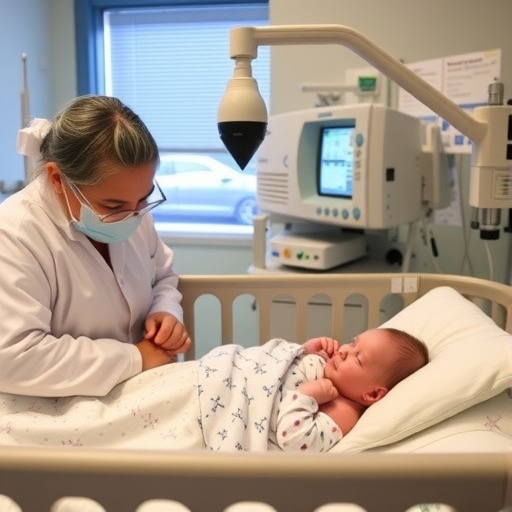
In a groundbreaking advancement for neonatal care, a team of researchers has unveiled a transformative quality improvement initiative designed to optimize the use of rapid genomic sequencing in a level IV Neonatal Intensive Care Unit (NICU). This innovative approach promises to revolutionize diagnostic procedures and personalize treatment plans for critically ill newborns, setting a new standard in neonatal precision medicine.
The deployment of rapid genomic sequencing technologies in NICUs holds unmatched potential to decode the complex genetic underpinnings of rare and often life-threatening conditions seen in neonates. However, the effective integration of such cutting-edge methodologies into the fast-paced and high-stakes environment of a level IV NICU has presented numerous logistical, operational, and clinical challenges. Addressing these barriers, the research spearheaded by D’Gama, Hu, Del Rosario, and colleagues meticulously developed and implemented a systematic protocol aimed at maximizing the clinical utility of this technology.
At the core of this initiative was an emphasis on streamlining the genomic sequencing workflow, from patient selection criteria through to result interpretation and clinical decision-making. The team crafted a multidisciplinary framework involving neonatologists, geneticists, bioinformaticians, and nursing staff to ensure comprehensive coordination. This collaboration was vital in enhancing not only the speed but also the accuracy of genetic diagnoses, ultimately leading to improved patient outcomes.
Crucially, the researchers focused on identifying the optimal time window post-admission during which rapid sequencing would yield the highest diagnostic benefit. By refining the timing, unnecessary delays were minimized, permitting earlier initiation of targeted therapies. This temporal optimization was supported by the introduction of digital alert systems and standardized order sets within the electronic health record, which collectively reduced administrative bottlenecks and enhanced adherence to the protocol.
The study also tackled the challenges inherent in interpreting the massive datasets generated by genomic sequencing. Advanced bioinformatics pipelines were integrated, facilitating rapid variant classification and prioritization based on pathogenicity and relevance to neonatal disease. This technological enhancement significantly decreased the turnaround time for actionable results and empowered clinicians to make informed therapeutic decisions without compromising precision.
Moreover, the initiative prioritized continuous education and training of NICU staff on the principles and implications of genomic medicine. Regular multidisciplinary meetings fostered a culture of genomic literacy and clinical vigilance, ensuring that the latest discoveries and technological updates were seamlessly integrated into patient care. This cultural shift was instrumental in bridging traditional clinical practices with emerging genomic insights.
An important facet of the quality improvement project entailed rigorous data monitoring and feedback loops designed to evaluate the impact of the optimized sequencing protocol on clinical outcomes. Metrics such as diagnostic yield, time to diagnosis, changes in management, and length of hospital stay were meticulously analyzed. The results underscored significant enhancements across these domains, underscoring the efficacy of the intervention.
Ethical considerations were at the forefront of this pioneering endeavor. The team established clear guidelines for consent, privacy, and data handling tailored to the sensitive nature of genomic information in neonatal contexts. This ethical framework ensured respect for patient autonomy and confidentiality while facilitating meaningful clinical use of genomic data.
Furthermore, the initiative demonstrated scalability and adaptability, suggesting that similar models could be deployed in other high-acuity pediatric settings. The standardized procedures and collaborative infrastructure provide a replicable template that other institutions can adopt to harness genomic sequencing for improved diagnostic precision and patient care.
The implications of this research extend beyond immediate clinical benefits. By enabling earlier and more accurate diagnoses, rapid genomic sequencing under optimized protocols can reduce the emotional and financial burdens on families while opening pathways for novel therapeutic interventions. This paradigm shift ushers neonatology into an era where genomic medicine plays a pivotal role in shaping individualized treatment strategies.
Importantly, this quality improvement effort reflects a broader trend toward precision medicine, showcasing how technological advancements must be coupled with workflow optimization and interdisciplinary collaboration to realize their full potential. The success in a level IV NICU—often reserved for the most fragile and complex cases—highlights the transformative capacity of genomics in even the most challenging clinical environments.
Looking forward, the researchers advocate for ongoing refinement of sequencing technologies and bioinformatic tools, alongside expanded training initiatives. Future work aims to incorporate real-time genomic monitoring and integrate multi-omics data to further personalize neonatal care. These advancements promise to elevate diagnostic accuracy and therapeutic precision to unprecedented levels.
In summary, the study published by D’Gama et al. marks a seminal step in neonatal intensive care, showcasing how systematic quality improvement initiatives can dramatically enhance the deployment of rapid genomic sequencing. This work not only improves survival and quality of life for vulnerable newborns but also sets a visionary benchmark for the integration of cutting-edge genomics in high-stakes clinical settings.
As the field progresses, continuous innovation, ethical stewardship, and interprofessional collaboration will remain crucial. The insights gleaned from this initiative are poised to inspire widespread adoption and refinement of genomic medicine protocols, ultimately benefiting neonates worldwide and changing the landscape of neonatal critical care forever.
Subject of Research:
Optimization of rapid genomic sequencing workflows and their clinical application in a level IV Neonatal Intensive Care Unit for improved diagnosis and management of critically ill newborns.
Article Title:
Quality improvement initiative to optimize use of rapid genomic sequencing in a level IV NICU
Article References:
D’Gama, A.M., Hu, R.S., Del Rosario, M.C. et al. Quality improvement initiative to optimize use of rapid genomic sequencing in a level IV NICU. J Perinatol (2026). https://doi.org/10.1038/s41372-025-02541-5
Image Credits: AI Generated
DOI: 12 January 2026
Tags: challenges in rapid sequencing integrationclinical decision-making in NICUenhancing accuracy in genetic diagnosticslevel IV NICU advancementsmultidisciplinary approach in neonatal careneonatal intensive care unit innovationsneonatal precision medicine initiativesoptimizing genomic workflow in NICUpersonalized medicine for newbornsquality improvement in neonatal healthcarerapid genomic sequencingrare genetic conditions in newborns