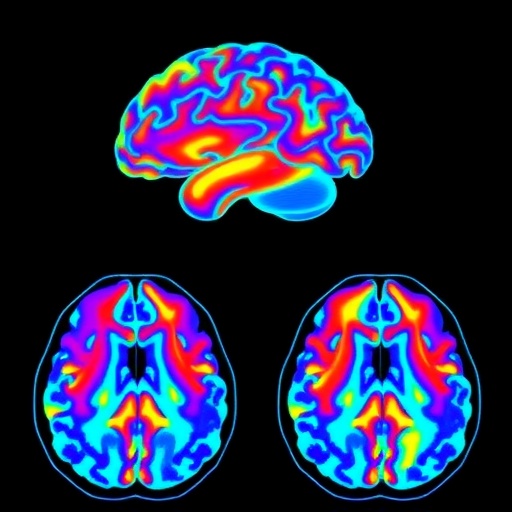
In a groundbreaking study, researchers have introduced an innovative framework known as Mod-SE(2), which utilizes geometric deep learning techniques to tackle the formidable challenges posed by brain tumor classification and segmentation in magnetic resonance imaging (MRI) scans. This significant advancement stands as a beacon of hope for medical professionals who rely on precise diagnostic tools for effective treatment planning and patient prognosis.
This novel approach centers on leveraging the intrinsic geometric properties of images to improve the classification and segmentation processes. Traditional convolutional neural networks (CNNs) have transformed medical image analysis, but they often struggle with the complex shapes and variances found in anatomical structures. By incorporating a geometric perspective, Mod-SE(2) enhances the model’s ability to understand and process the manifold that is represented by brain complexities, offering a contrast to the linear interpretations of classical methods.
The heart of Mod-SE(2) lies in its unique architecture that harmonizes spatial and spectral information. By treating the MRI data in a way that respects its geometric nature, this framework can more effectively interpret the varying shapes of brain tumors, which is crucial for both accurate diagnosis and targeted treatment planning. The model’s ability to perceive the image data in this multidimensional framework marks a substantial leap forward in medical imaging technologies.
Researchers have reported that Mod-SE(2) significantly outperforms existing techniques, achieving higher accuracy rates in both tumor classification and segmentation tasks. This performance boost can substantially impact clinical practice by enabling healthcare providers to deliver timely and tailored treatments based on more accurate imaging interpretations. The enhanced precision of tumor delineation means improved surgical planning and better-informed radiation therapies, ultimately leading to enhanced patient outcomes.
Moreover, the training process for Mod-SE(2) involves a substantial dataset of annotated MRI scans, allowing the model to learn the intricacies of brain tumor presentations across a diverse range of cases. This diversity is crucial, as tumors can exhibit a plethora of shapes, sizes, and appearances. This adaptive learning mechanism allows the framework to refine its understanding over time, constantly improving its predictive capabilities through rigorous exposure to new data.
A noteworthy feature of Mod-SE(2) is its ability to generalize effectively across various types of brain tumors. The framework is not solely tuned to one specific tumor type but is capable of adapting to recognize benign and malignant tumors alike. This versatility enables healthcare professionals to leverage the model across a wider variety of clinical situations, thus broadening its applicability in diverse healthcare settings.
The implications of this research extend beyond immediate clinical applications. As the field of artificial intelligence in medicine continues to evolve, frameworks like Mod-SE(2) help bridge the gap between complex data interpretation and refined clinical decision-making. This research paves the way for future studies aimed at further honing such models, potentially integrating multi-modal data sources—such as genetic, molecular, and other advanced imaging techniques—to refine tumor characterization.
Further exploration into the integration of Mod-SE(2) within existing medical infrastructures unveils challenges that need addressing for seamless adoption. The complex nature of clinical workflows means that any new technology must be compatible with current practices. Therefore, stakeholders in healthcare must work together to ensure that technological innovations do not only enhance capabilities but are also user-friendly and accessible to medical professionals.
Additionally, ongoing evaluation of the ethical implications surrounding the use of advanced AI in medical contexts cannot be overlooked. As researchers refine these revolutionary tools, ensuring transparency, consistency, and adherence to patient privacy standards is paramount. The dialogue surrounding AI adoption in healthcare must include discussions about the ethical implications of automated decisions made without human oversight.
Looking forward, the development of Mod-SE(2) underscores the impact of interdisciplinary collaboration in advancing healthcare solutions. Engineers, computer scientists, and medical professionals working together can unlock potential that no single discipline could achieve alone. The future of healthcare lies in harnessing these collaborative innovations for more personalized, effective patient care.
The research team’s commitment to transparency and collaboration through open-source sharing of their findings and framework can inspire a collective effort among researchers. By making the Mod-SE(2) model readily available, they enable further studies and enhancements, fostering a culture of innovation within the scientific community.
As families and patients alike wait for advancements in medical technology, studies like this provide a hopeful glimpse into a future where accurate diagnostics can lead to timely treatments and improved outcomes. The journey has only just begun, but the strides made by Mod-SE(2) exemplify the power of geometric deep learning in reshaping the landscape of medical imaging.
As this technology continues to develop and gain traction, the expectations for its practical applications run high. Lowering barriers to implementation, fostering interdisciplinary collaboration, and promoting ethical considerations will be vital components in translating these theoretical advancements into real-world benefits for patients and healthcare providers alike.
In the realm of medical diagnosis, where technology and healthcare intersect, the adoption and success of frameworks such as Mod-SE(2) may herald a new era of AI-driven health solutions providing clearer insights and refined strategies for tackling brain tumors, thereby transforming patient care.
The unfolding narrative surrounding Mod-SE(2) is not just about technological progress; it is a significant leap towards a more precise, efficient, and humane approach to healthcare, resonating with the ethos of medical science that seeks to eradicate suffering through accurate and timely interventions.
Subject of Research: Geometric Deep Learning Framework for Brain Tumor Classification and Segmentation
Article Title: Mod-SE(2): a geometric deep learning framework for brain tumor classification and segmentation in MRI images
Article References: Angelina, C.L., Xiao, FR., Vyas, S. et al. Mod-SE(2): a geometric deep learning framework for brain tumor classification and segmentation in MRI images. J Biomed Sci 33, 11 (2026). https://doi.org/10.1186/s12929-025-01213-y
Image Credits: AI Generated
DOI: https://doi.org/10.1186/s12929-025-01213-y
Keywords: Geometric Deep Learning, Brain Tumor Classification, MRI Segmentation, Medical Imaging, Artificial Intelligence
Tags: advanced brain tumor segmentation methodsbrain tumor classification techniquesconvolutional neural networks in healthcareeffective treatment planning with AIenhancing diagnostic tools for brain tumorsgeometric deep learning for MRIgeometric properties of medical imagesinnovative approaches to MRI analysismachine learning for medical imagingMod-SE(2) framework in medical imagingspatial and spectral information in MRItumor shape analysis in brain scans