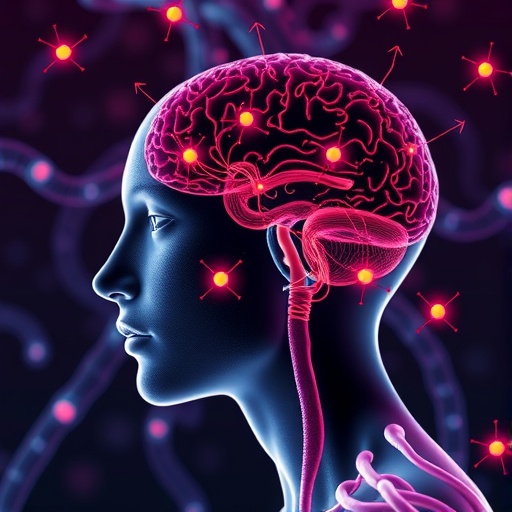
The intricate relationship between genetic predisposition and neuropsychiatric disorders has long been a subject of intense scientific scrutiny. In a groundbreaking study published recently in Nature Communications, a collaborative team led by Michael Deans, P., Retallick-Townsley, K.G., and Li, A. has unraveled critical functional insights pertaining to the polygenic risk factors of schizophrenia within human neurons. This seminal work not only advances our understanding of schizophrenia’s molecular underpinnings but also heralds a new era of precision neuroscience by leveraging human neuronal models to decode complex genetic interactions.
Schizophrenia, a debilitating disorder characterized by disruptions in thought processes, perceptions, and emotional responsiveness, has proven notoriously difficult to dissect due to its multifactorial etiology. Unlike monogenic diseases, schizophrenia arises from cumulative effects of numerous genetic variants, each exerting a modest influence. These polygenic risk factors collectively shape the susceptibility landscape, yet their concrete biological implications remain elusive. The team’s research confronts this knowledge gap head-on by employing sophisticated in vitro models derived from induced pluripotent stem cells (iPSCs) of individuals harboring various degrees of polygenic risk.
Central to the study is the innovative use of human neurons differentiated from these iPSCs, which recreate aspects of neurodevelopment under controlled laboratory conditions. Such neurons encapsulate the genetic milieu of the donors, effectively serving as living platforms to interrogate disease mechanisms. The researchers meticulously characterized neuronal morphology, synaptic connectivity, and electrophysiological properties across a spectrum of polygenic risk scores. This approach enables the isolation of functional abnormalities directly attributable to inherited genetic risk, circumventing confounding environmental variables inherent in clinical observations.
One of the most striking findings was the identification of distinct synaptic deficits in neurons corresponding to higher polygenic risk profiles. These neurons exhibited diminished synaptic density and altered neurotransmitter receptor expression, implicating disrupted synaptic communication as a pivotal pathophysiological hallmark. The alterations in synaptic architecture were corroborated by changes in electrophysiological recordings, where neurons from high-risk individuals demonstrated irregular firing patterns and reduced plasticity. Such functional deficits provide a molecular correlate to the cognitive and sensory integration impairments observed in schizophrenia patients.
Furthermore, the study delved into transcriptional landscape alterations caused by polygenic risks. By integrating RNA sequencing data, the authors uncovered dysregulation of gene networks involved in synapse formation, neuroinflammation, and neuronal metabolism. Notably, genes implicated in glutamatergic signaling pathways were consistently downregulated, aligning with existing hypotheses emphasizing glutamate dysfunction in schizophrenia pathology. This comprehensive multi-omics approach fortifies the link between genetic architecture and neurobiological disturbances.
An additional layer of complexity was unraveled through the examination of epigenetic modifications within these neurons. The researchers observed aberrant DNA methylation patterns and histone modifications that correlated with polygenic risk burdens. These epigenetic changes potentially modulate gene expression landscapes, suggesting that inherited genetic risk interfaces dynamically with the epigenome to sculpt disease phenotypes. This finding highlights the importance of considering both genetic and epigenetic dimensions when probing schizophrenia pathogenesis.
The implications of these discoveries are profound for therapeutic development. By pinpointing the cellular and molecular sequelae of polygenic risk, targeted interventions can be fashioned to restore synaptic integrity and normalize disrupted signaling pathways. For instance, compounds enhancing synaptic plasticity or modulating glutamate receptor activity could be prioritized for clinical trials. Additionally, the use of patient-derived neurons as personalized testing platforms accelerates the feasibility of precision medicine paradigms, offering hope for tailored treatment regimens based on individual genetic profiles.
Importantly, the research also underscores the heterogeneity intrinsic to schizophrenia. Variability in neuronal phenotypes across different polygenic risk spectra suggests a continuum rather than a binary disease state. This insight necessitates nuanced diagnostic criteria and stratified therapeutic approaches that account for diverse genetic backgrounds. Embracing such complexity will undoubtedly refine clinical strategies and improve patient outcomes.
The technical prowess deployed in this study exemplifies the frontier of neurogenetic research. Combining stem cell biology, advanced genomics, and electrophysiology, the team has effectively constructed a high-fidelity model to capture the multifaceted consequences of polygenic risk. This methodological blueprint sets a precedent for investigating other complex brain disorders influenced by multiple genetic factors, such as bipolar disorder and autism spectrum disorders.
Moreover, these findings advance the fundamental understanding of how cumulative genetic variations translate into functional dysregulation at the cellular level. By bridging the genotype-phenotype gap, this work provides a scaffold upon which future research can expand, exploring interactions between genes, environmental insults, and neurodevelopmental trajectories. Such integrative investigations are crucial for unraveling the labyrinth of psychiatric illnesses.
The study also stimulates dialogue about the ethical and societal implications of utilizing polygenic risk in predictive psychiatry. As genetic screening technologies burgeon, the prospect of identifying individuals at elevated risk for schizophrenia raises questions regarding privacy, stigmatization, and early intervention strategies. This research highlights the need for careful consideration of how genetic data is interpreted and applied in clinical contexts.
In summary, the comprehensive analysis spearheaded by Deans and colleagues represents a monumental leap in delineating the functional ramifications of schizophrenia’s polygenic architecture within human neurons. It melds genetic epidemiology with cellular neuroscience to illuminate pathways disrupted by inherited risk, offering tangible targets for next-generation therapeutics. As this field evolves, such insights will be indispensable in transforming schizophrenia from a mystifying clinical syndrome into a tractable neurobiological disorder amenable to precise intervention.
The scientific community eagerly anticipates the subsequent investigative phases that will extend these findings, including in vivo validation and exploration of gene-environment interplay. This work exemplifies how convergence of cutting-edge technologies and interdisciplinary collaboration can disentangle the complexities of brain disorders, paving the path toward a future where schizophrenia’s devastating impact is substantially mitigated.
Subject of Research: Functional effects of polygenic risk factors for schizophrenia in human neurons.
Article Title: Functional implications of polygenic risk for schizophrenia in human neurons.
Article References:
Michael Deans, P., Retallick-Townsley, K.G., Li, A. et al. Functional implications of polygenic risk for schizophrenia in human neurons. Nat Commun (2026). https://doi.org/10.1038/s41467-025-67959-z
Image Credits: AI Generated
Tags: advancing understanding of schizophrenia through researchbiological implications of polygenic risk factorscollaborative genetic research in mental healthdisruptions in thought processes in schizophreniaemotional responsiveness in neuropsychiatric disordersgenetic predisposition to neuropsychiatric disordershuman neuronal models for schizophrenia researchinduced pluripotent stem cells in psychiatric researchinsights into schizophrenia’s molecular underpinningsmultifactorial etiology of schizophreniapolygenic risk factors in schizophreniaprecision neuroscience and genetic interactions