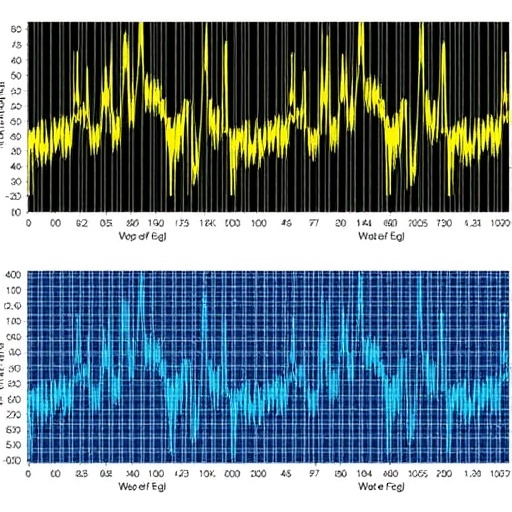
In a groundbreaking study led by researchers Hasnaoui and Djebbari, the potential of postictal electroencephalography (EEG) in predicting seizure recurrence is being analyzed with unprecedented depth. The significance of EEG in understanding brain activity patterns following seizures has been observed, yet the intricate relationship between these postictal states and subsequent seizures remains largely unexplored. This research aims to bridge that gap, offering insight into how such recordings may serve as valuable tools in clinical settings.
The research team has meticulously gathered data over a significant period, analyzing EEG readings taken postictally, which refers to the immediate recovery phase after a seizure. During this phase, the brain exhibits distinct electrical activity patterns that may carry predictive information about impending seizures. The nuances of these patterns are complex, and deciphering them could pave the way for better management strategies for epilepsy patients.
One of the primary objectives of this study is to identify specific biomarkers within the postictal phase that correlate with seizure recurrence. Current epilepsy management strategies often rely on retrospective assessments, making it challenging for clinicians to predict the likelihood of seizures accurately. By focusing on postictal EEG data, the researchers hope to develop a more proactive approach that could empower individuals with epilepsy and enhance their quality of life significantly.
The researchers utilized advanced analytical techniques to analyze the EEG measures, processing a vast amount of data collected from diverse patient populations. With the aid of machine learning algorithms, they refined the data analysis, looking for patterns that are not readily apparent to the human eye. This approach elevates the research, as machine learning can uncover subtleties within large datasets that traditional statistical methods may overlook.
Furthermore, the findings suggest a potential avenue for personalized treatment plans for epilepsy patients. By understanding how individual patients’ brains respond during the postictal phase, clinicians could tailor interventions more precisely. This individualized focus could mean the difference between patients living in fear of their next seizure and achieving greater freedom and control in their lives.
The implications of this research extend beyond merely identifying predictive markers; the study also underscores the need for healthcare systems to integrate advanced EEG monitoring techniques to gather meaningful data from patients. Hospitals and clinics that invest in such technology may discover that they can offer enhanced care, ultimately resulting in better seizure management outcomes.
Moreover, this study contributes to the ongoing dialogue within the scientific community regarding the importance of advancing epilepsy research. With nearly 50 million people affected by epilepsy globally, the need for innovative solutions is urgent. The insights derived from postictal EEGs may not only provide answers for individuals currently experiencing seizures but may also influence future research directions and therapeutic approaches.
There remains skepticism within parts of the medical community about the use of EEG as a predictive tool. Critics often argue that while EEGs provide a snapshot of brain activity, they may not accurately forecast future events. However, the rigorous methodology employed in this study lends credibility to the researchers’ assertions. The collaboration between neurologists, biomedical engineers, and data scientists highlights the multidisciplinary approach necessary to tackle this complex issue.
As the research continues to unfold, attention will be focused on replicating these findings in larger, more diverse clinical cohorts. Demonstrating that the predictive markers identified are consistent across various populations will be critical to establishing the utility of postictal EEGs in clinical practice. Future studies could further elucidate the subtle interactions that occur within neural networks during this critical recovery phase, potentially unveiling novel insights.
The researchers emphasize the importance of patient involvement in this study. By engaging individuals with epilepsy in the research process, the study not only improves the ethical landscape of research but also ensures that the findings will be relevant and applicable to those most affected by the condition. Real-world insights from patients can inform the researchers about their experiences, which can refine hypotheses and ultimately lead to more applicable results.
Ultimately, as the research progresses, its outcomes have the potential to reshape how healthcare professionals approach seizure management. The transformation of postictal EEGs from a mere diagnostic tool to a predictive method represents a significant shift in the paradigm of epilepsy treatment. If successful, these findings could contribute to reduced seizure frequency, improved patient outcomes, and, fundamentally, a new dawn of understanding in the neurophysiological mechanisms underlying seizure disorders.
In summary, Hasnaoui and Djebbari’s investigation into postictal EEGs marks an exciting advancement in the search for predictive markers of seizure recurrence. As the ramifications of their findings unfold, the potential exists for a paradigm shift in how epilepsy is approached within both clinical and research settings. Attention to these developments will be crucial as the global community continues to combat the challenges posed by epilepsy.
Through the synergy of modern technology and innovative research methodologies, the field stands at the precipice of a new era in epilepsy management. The advances in machine learning and data analytics hold tremendous promise for dissecting the complex tapestry of human brain function, heralding a future that could be radically different for those living with epilepsy. As the dialogue around this study expands, there is hope for transformation, understanding, and, eventually, healing.
Subject of Research: Investigating the Predictive Markers of Seizure Recurrence from Postictal EEGs
Article Title: Unlocking Insights from Postictal EEGs: Investigating Predictive Markers of Seizure Recurrence
Article References:
Hasnaoui, L.H., Djebbari, A. Unlocking Insights from Postictal EEGs: Investigating Predictive Markers of Seizure Recurrence. Ann Biomed Eng (2026). https://doi.org/10.1007/s10439-025-03961-2
Image Credits: AI Generated
DOI: https://doi.org/10.1007/s10439-025-03961-2
Keywords: EEG, epilepsy, postictal phase, seizure prediction, machine learning, biomarkers, personalized treatment, neurological research.
Tags: biomarkers for seizure predictionbrain activity patterns after seizuresclinical applications of EEGEEG readings in epilepsyepilepsy management strategiesHasnaoui and Djebbari studypostictal EEG analysispredicting seizure recurrenceproactive epilepsy treatmentresearch on seizure recurrenceseizure prediction toolsunderstanding postictal states