In a groundbreaking study published in npj Viruses, researchers have unveiled a promising new avenue for combating SARS-CoV-2 infections through the use of K5 polysaccharides. This innovative approach targets the viral spike protein’s proteolytic priming, a critical step required for the virus to successfully invade human cells. By inhibiting this process, K5 polysaccharides effectively disrupt the virus’s ability to establish infection, offering a potentially powerful addition to the arsenal against COVID-19 and its variants.
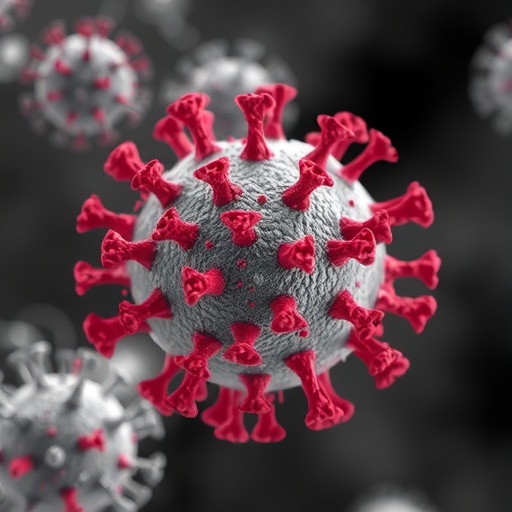
SARS-CoV-2, the virus responsible for the COVID-19 pandemic, relies heavily on its spike protein to mediate entry into host cells. This spike protein undergoes a series of structural and enzymatic modifications, notably proteolytic priming, which enables the virus to bind to the ACE2 receptor and fuse with the host cell membrane. Proteolytic cleavage of the spike at specific sites, such as the S1/S2 boundary and the S2’ site, is essential for activating the fusion mechanism. Interfering with this cleavage event has been a strategic target for therapeutic intervention.
The research team, led by Milanesi, Urbinati, and Zimmermann, focused on the unique properties of K5 polysaccharides, a class of complex carbohydrate molecules known for their biological activity. These polysaccharides exhibit a structural resemblance to heparan sulfates found on cell surfaces, which are known to interact with various viral proteins. The hypothesis was that K5 polysaccharides might compete with or obstruct interactions vital for the proteolytic processing of SARS-CoV-2 spike protein, thereby preventing viral entry.
Using a comprehensive series of in vitro assays, the scientists demonstrated that K5 polysaccharides effectively bind to the spike protein, particularly near the cleavage sites targeted by proteases such as TMPRSS2 and furin. This binding was shown to sterically hinder access of these proteases to their cleavage targets, resulting in significantly reduced spike priming. Consequently, the virus’s ability to penetrate host cells was markedly diminished, as measured by viral infectivity assays.
To understand the molecular mechanisms underpinning this inhibition, the team employed advanced biophysical techniques, including surface plasmon resonance and cryo-electron microscopy. These analyses revealed that K5 polysaccharides engage with the spike protein in a specific orientation and with high affinity, stabilizing its uncleaved conformation. This stabilization prevents the conformational changes typically triggered by proteolytic cleavage that are necessary for membrane fusion and viral entry.
Importantly, the antiviral effect of K5 polysaccharides extended across multiple SARS-CoV-2 variants, including those harboring mutations in the spike protein that confer increased transmissibility or partial immune escape. This suggests that the mechanism of action — blocking proteolytic activation — is robust and less susceptible to viral evasion compared to neutralizing antibodies that target mutable spike epitopes.
The study also addressed potential concerns regarding the safety and specificity of K5 polysaccharide treatment. In cellular toxicity assays, these compounds exhibited low cytotoxicity, with minimal impact on host cell viability even at concentrations effective against viral infection. Furthermore, their interaction profile indicated a specific targeting of viral components rather than indiscriminate binding to host cell proteins, reducing the risk of unwanted side effects.
Beyond their antiviral activity, K5 polysaccharides may exert additional benefits by modulating host immune responses. Previous literature has implicated heparan sulfate analogs in influencing inflammatory signaling pathways and coagulation cascades; hence, K5 polysaccharides might also contribute to reducing the severity of COVID-19 by tempering pathogen-induced hyperinflammation, although further research is needed to validate these effects.
Therapeutically, the wide-ranging biochemical properties of K5 polysaccharides open doors for various modes of administration, including inhalable formulations that deliver the compound directly to the respiratory tract, the primary site of SARS-CoV-2 entry and replication. This localized delivery could maximize antiviral efficacy while minimizing systemic exposure.
Moreover, the synergy between K5 polysaccharides and existing antiviral drugs or monoclonal antibodies was preliminarily explored, with early data suggesting additive or even potentiated effects. Combining proteolytic priming inhibitors with agents targeting other viral life cycle stages could enhance overall treatment outcomes and prevent resistance development.
The implications of this discovery extend beyond COVID-19. Since many enveloped viruses require proteolytic activation of their fusion proteins, K5 polysaccharides or their derivatives might represent a new class of broad-spectrum antiviral agents. The research team proposes further investigations into their use against influenza, respiratory syncytial virus (RSV), and other coronaviruses.
While these findings herald a promising advancement, the authors emphasize that comprehensive clinical trials are necessary to confirm efficacy and safety in humans. Dose optimization, pharmacokinetics, and long-term impact studies will be essential steps before K5 polysaccharides can enter clinical practice.
In conclusion, the study by Milanesi et al. delineates a novel therapeutic strategy that targets the fundamental mechanism of SARS-CoV-2 spike protein activation. By preventing proteolytic priming with K5 polysaccharides, it is possible to block viral entry effectively, offering hope for new treatments capable of controlling COVID-19 and potentially other viral diseases characterized by similar molecular mechanisms.
Subject of Research: Inhibition of SARS-CoV-2 infection via blockade of spike protein proteolytic priming by K5 polysaccharides.
Article Title: K5 polysaccharides inhibit SARS-CoV-2 infection by preventing spike-proteolytic priming.
Article References: Milanesi, M., Urbinati, C., Zimmermann, L. et al. K5 polysaccharides inhibit SARS-CoV-2 infection by preventing spike-proteolytic priming. npj Viruses 4, 3 (2026). https://doi.org/10.1038/s44298-025-00163-4
Image Credits: AI Generated
DOI: https://doi.org/10.1038/s44298-025-00163-4
Tags: ACE2 receptor bindingantiviral strategies against COVID-19complex carbohydrates in medicineCOVID-19 therapeutic interventionsheparan sulfate analogsinnovative COVID-19 researchK5 polysaccharidesproteolytic priming blockadeSARS-CoV-2 spike protein inhibitionstructural biology of virusestherapeutic potential of polysaccharidesviral entry mechanisms