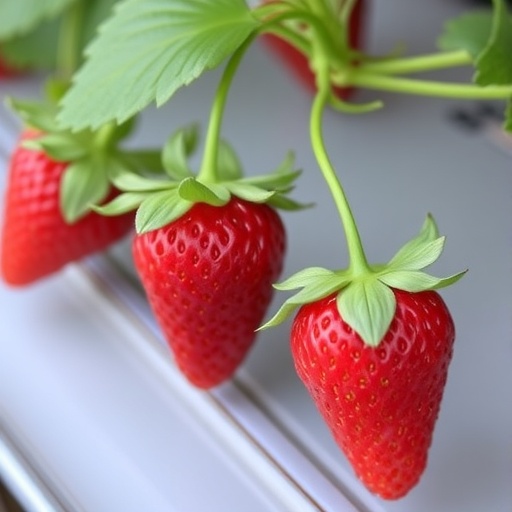
In a groundbreaking study published in Scientific Reports, researchers Khajeh Sorkhoeih, Hamidi Moghaddam, and Seyedi delve deep into the effects of salicylic acid on heat-stressed strawberries. This research addresses imminent challenges in agriculture as climate change continues to accelerate, leading to increased heat stress on crops. Strawberry plants, known for their sensitivity to temperature fluctuations, face severe yield and quality reduction under extreme heat conditions. This study provides essential insights into how salicylic acid, a natural plant hormone, can potentially alleviate these adversities.
The significance of this research cannot be overstated. With the global average temperature on the rise, many cultivars of strawberries find themselves under stress, impacting not just agricultural output but also fruit quality and metabolic defense mechanisms. The unique aspect of this study is its focus on cultivar-specific responses to treatment with salicylic acid. Not all strawberry varieties react similarly to heat stress or to the application of this compound, which raises intriguing questions about the biology behind these responses.
Salicylic acid is known to act as a signaling molecule within plants, playing a pivotal role in their defense responses against biotic and abiotic stressors. The researchers hypothesize that salicylic acid could modulate the physiological and biochemical pathways of heat-stressed strawberry cultivars, enhancing both yield and quality of the fruits. Their findings indicate varying levels of effectiveness among different cultivars, suggesting that breeders can tailor approaches based on specific varietal traits.
Experiments conducted as part of the study took into consideration several environmental stress factors impacting the strawberries, particularly elevated temperatures that extend beyond the optimal growth range. The experimental design involved treating several strawberry cultivars with salicylic acid and subsequently monitoring their growth, fruit quality, and metabolic changes. Measurements were taken for parameters such as fruit weight, taste profiles, and stress-related metabolites, providing a comprehensive understanding of the effects.
The results unveiled in the study demonstrate that salicylic acid significantly enhances fruit yield in certain cultivars while simultaneously preserving quality attributes such as sweetness, texture, and color. This is particularly crucial for commercial growers who prioritize both quantity and quality in their production processes. The average consumer may not immediately appreciate the scientific intricacies at play, but the end product—juicy, flavorful strawberries—reflects the success of such interventions.
Moreover, the study outlines a clear relationship between salicylic acid treatment and the activation of defense metabolism pathways. These pathways enable the plants to better withstand the adverse effects of heat stress, and they offer a fascinating glimpse into plant resilience. The interplay of hormones like salicylic acid with stress response mechanisms highlights the possibility of enhancing crop resilience through informed agricultural practices.
Despite the promise shown by salicylic acid, the researchers caution against a one-size-fits-all approach. The variability observed across different strawberry cultivars underscores the need for personalized agricultural strategies. Each cultivar’s unique genetic makeup can significantly influence how it responds not only to heat stress but also to salicylic acid treatment. This finding is pivotal for agricultural scientists and farmers aiming to optimize crop performance under unpredictable climate conditions.
The study emphasizes that ongoing research is critical as it lays the foundation for further investigations into plant responses to environmental stresses. Understanding the mechanisms behind these responses can facilitate the development of new agricultural techniques that incorporate natural solutions like salicylic acid. Such measures could lead to a more sustainable and resilient agriculture system, one that is capable of adapting to the changing climate influences.
In conclusion, the work presented by Khajeh Sorkhoeih and colleagues adds a vital piece to the puzzle of how to navigate the challenges of heat-induced stress in strawberry crops. Their focus on cultivar-specific responses not only opens avenues for future studies but also provides immediate strategies for growers. By leveraging natural compounds like salicylic acid, we can bolster our fruit crops’ defenses against increasing temperatures, contributing to food security and sustainable agricultural practices.
As we anticipate further climatic changes, the implications of this research extend beyond strawberries to potentially other crops facing similar heat-related challenges. The integration of these findings has the potential to transform agricultural methodologies, encouraging a shift toward more resilient crop management practices. By using salicylic acid judiciously, we could effectively mitigate some adverse effects of climate change on food production.
This study beckons the question: could salicylic acid be the key to a new era in agricultural resilience? Only time will tell as researchers continue to unearth the complexities of plant responses to stress. The future of agricultural science lies in such explorations, paving the way for innovations that can safeguard our crops against the relentless heat of climate change.
Furthermore, as food scientists and agronomists collaborate, their concerted efforts may result in the creation of new strawberry cultivars that naturally excel under heat stress. By harnessing the information derived from this study, breeding programs could prioritize traits that enhance heat tolerance along with fruit quality. The intersection of science and agriculture continues to be a fertile ground for innovation, particularly as global temperatures continue to rise.
In light of these findings, the overall message resonates with hope and curiosity—a blend of ancient agricultural wisdom and modern scientific inquiry. As we ponder the future of food production in an era marked by environmental volatility, studies such as these remind us of nature’s intricate balance and the potential of our resources to work in harmony with it.
The research on salicylic acid and its impact on heat-stressed strawberries is more than just a scientific venture; it stands as a testament to human ingenuity, resilience, and the quest for sustainable farming. As we look forward to future studies that build on this foundation, the agricultural community eagerly awaits the next steps in ensuring our crops can continue to thrive amidst the challenges that lie ahead.
Subject of Research: Effects of salicylic acid on heat-stressed strawberry cultivars
Article Title: Salicylic acid induces cultivar specific compromises in yield, fruit quality and defense metabolism of heat stressed strawberry
Article References:
Khajeh Sorkhoeih, M., Hamidi Moghaddam, A. & Seyedi, A. Salicylic acid induces cultivar specific compromises in yield, fruit quality and defense metabolism of heat stressed strawberry.
Sci Rep (2026). https://doi.org/10.1038/s41598-026-35412-w
Image Credits: AI Generated
DOI:
Keywords: salicylic acid, heat stress, strawberry cultivars, agricultural resilience, fruit quality, defense metabolism
Tags: agricultural challenges due to heat stressclimate change and strawberry cultivationcultivar-specific responses to salicylic acideffects of salicylic acid on crop yieldenhancing crop resilience to climate changeheat stress impact on strawberriesimproving strawberry fruit qualitymetabolic defense mechanisms in strawberriesnatural plant hormones in agriculturesalicylic acid in strawberriessignaling molecules in plant stress responsesstrawberry plant hormone research