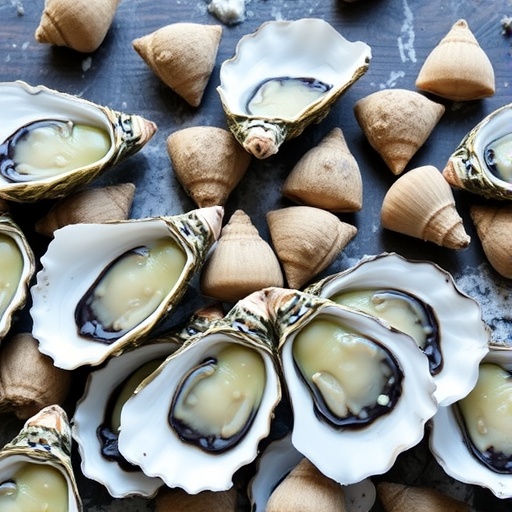
In recent years, the quest for sustainable food sources has led scientists and environmentalists to reexamine the untapped potential of bluefoods—edible aquatic organisms that can be cultivated or harvested with minimal environmental footprint. Among these, oysters have emerged as an intriguing candidate. Not only do oysters provide a rich source of nutrition, but their unique ecological role offers promising avenues for sustainable aquaculture and environmental restoration. The latest correction issued for the 2026 article “Oysters, a sustainable bluefood?” sheds light on the nuanced considerations surrounding oyster cultivation, highlighting both its benefits and challenges in the context of global food security and ecosystem health.
Oysters, bivalve mollusks found along many of the world’s coastlines, have long been valued for their culinary appeal. Yet, beyond their gastronomic allure, they serve an important ecological function through their filter-feeding behavior. By consuming phytoplankton and suspended particulate matter, oysters can improve water quality and clarity. This natural filtration process has the potential to mitigate eutrophication—the over-enrichment of waters with nutrients that leads to harmful algal blooms and oxygen depletion. Thus, oyster reefs can contribute significantly to coastal ecosystem resilience, making their cultivation a dual-purpose activity with both food production and environmental remediation benefits.
The sustainability profile of oysters is compelling when compared to many terrestrial protein sources. Unlike cattle, whose production is associated with high greenhouse gas emissions, land use, and freshwater scarcity, oyster farming requires neither feed inputs nor freshwater. Oysters extract all their nutrition from filter feeding and thus do not compete with traditional agriculture resources. Furthermore, their farm structures can coexist with other forms of marine life, potentially fostering biodiversity rather than diminishing it. These attributes position oysters as a model bluefood in efforts to reduce the environmental footprint of global protein supply chains.
However, recent investigations underscore that oyster farming is not without its challenges. One critical issue pertains to the environmental conditions necessary for sustainable oyster aquaculture. Factors such as water temperature, salinity, dissolved oxygen levels, and pollution significantly influence oyster growth rates and mortality. Climate change poses additional risks, with ocean acidification threatening the development of oyster shells by lowering carbonate ion availability. These complex biogeochemical interactions require novel management strategies to ensure oyster farms do not become ecological liabilities but remain sustainable contributors to bluefood production.
The correction issued for the 2026 study emphasizes the importance of rigorous environmental monitoring and adaptive aquaculture practices. It highlights that while oysters possess innate environmental benefits, improper site selection and farming intensities can lead to localized negative impacts, such as nutrient loading from farm waste and habitat modification. Responsible oyster farming, therefore, demands integration of environmental science, hydrodynamic modeling, and socio-economic considerations to optimize outcomes. This integrated approach can help reconcile bluefood production with conservation goals.
Crucially, oysters also serve as a vector for understanding the intersection of food safety and marine resource sustainability. Being filter feeders, they can bioaccumulate pathogens, heavy metals, and other contaminants present in their environment. This necessitates stringent quality control and monitoring frameworks to safeguard consumer health. Advancements in molecular detection techniques now facilitate rapid identification of harmful agents in oyster populations, enhancing our ability to manage risks while expanding production. Such scientific progress underscores the need for combining biotechnology with traditional aquaculture to drive sustainable bluefood innovation.
Nutritionally, oysters boast a remarkable profile. They are rich in essential micronutrients including zinc, iron, and vitamin B12, alongside high-quality proteins and omega-3 fatty acids. These qualities position oysters as an important dietary supplement, particularly in regions facing micronutrient deficiencies and protein scarcity. The challenge lies in scaling oyster supply to meet increasing global demands without compromising ecosystems. Innovative farming technologies, such as off-bottom culture and integrated multi-trophic aquaculture, are being explored to boost yield sustainably while preserving environmental integrity.
The socio-economic dimension of oyster farming is equally compelling. Many coastal communities depend on oyster aquaculture for livelihoods, and its expansion can catalyze local economic development, creating jobs and supporting traditional knowledge systems. Moreover, oyster farms have the potential to act as carbon sinks by promoting biosequestration through shell formation and organic matter deposition. This characteristic adds to their value in climate change mitigation portfolios. Aligning economic incentives with ecological stewardship will be key to achieving durable sustainability outcomes.
An emerging frontier in oyster research involves genetic and microbiome studies. By unraveling genetic markers for disease resistance and growth traits, breeders aim to develop resilient oyster strains suitable for diverse environmental conditions. Simultaneously, understanding the oyster-associated microbiome could open doors to probiotic interventions that enhance health and performance. These cutting-edge biotechnological approaches underscore how modern science is transforming traditional aquaculture into precision bluefood systems tailored for future challenges.
The corrected analysis also calls for cautious optimism. While oysters exemplify many principles of sustainable bluefood, their cultivation must be coupled with comprehensive policy frameworks that address environmental standards, market regulations, and social equity. Policymakers must consider potential conflicts with other maritime industries such as fishing, tourism, and shipping, to avoid unintended consequences. Multi-stakeholder collaboration, underpinned by transparent science communication, will be essential to mainstream oysters as a cornerstone of sustainable food systems.
By advancing research, monitoring, and governance in oyster aquaculture, scientists and practitioners are paving the way for replicable models of sustainable bluefood production. This holds promise not only for meeting protein and nutrient demands but also for restoring degraded coastal habitats that underpin marine biodiversity. As the global population edges toward 10 billion, such integrative solutions, combining tradition with innovation, become indispensable in crafting resilient food futures.
In conclusion, oysters occupy a unique nexus between environmental sustainability, nutritional wealth, and socio-economic opportunity. Their natural filtering capacity, low resource demands, and nutritional benefits provide compelling reasons to embrace oyster farming within comprehensive bluefood strategies. However, achieving sustainability at scale requires overcoming ecological, technological, and governance challenges through interdisciplinary efforts. The forthcoming decades will reveal whether oysters can live up to their promise, serving as a beacon for the potential of aquaculture in shaping a healthier, more sustainable planet.
Subject of Research: Sustainable aquaculture and environmental impacts of oyster farming as a bluefood source.
Article Title: Author Correction: Oysters, a sustainable bluefood?
Article References: Domech, P.C., Cooney, R., Tahar, A. et al. Author Correction: Oysters, a sustainable bluefood?. npj Sustain. Agric. 4, 2 (2026). https://doi.org/10.1038/s44264-025-00117-6
Image Credits: AI Generated
Tags: bivalve mollusks ecological rolebluefood environmental impactchallenges of oyster cultivationcoastal ecosystem restorationecological benefits of oysterseutrophication mitigation through oystersnutritional value of oystersoyster aquaculture sustainabilityoysters and global food securityoysters and water quality improvementoysters as sustainable seafoodsustainable aquaculture practices