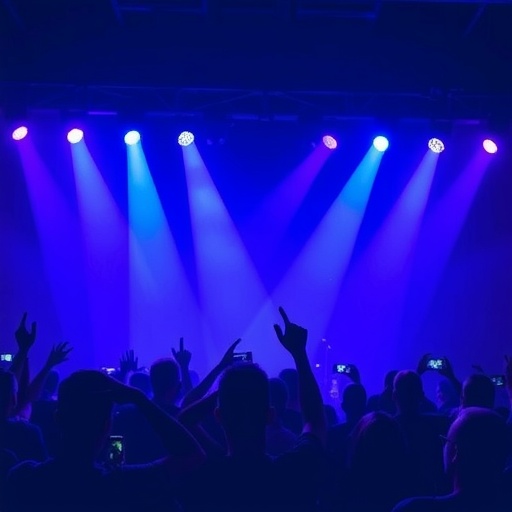
In a groundbreaking study published in Scientific Reports, researchers have unveiled startling evidence concerning the auditory implications of large-scale music events. The study, led by a team of experts including De Poortere, Van Ransbeeck, and Keshishzadeh, focuses on subclinical hearing damage that can occur even without immediate symptoms, highlighting a significant public health concern that has yet to be widely acknowledged.
The allure of large music festivals is undeniable. The thrill of live performances, the euphoric atmosphere, and the ability to connect with a crowd create unforgettable experiences for thousands of attendees. However, amidst the enjoyment lurks a potential danger that the average concert-goer often overlooks: the sound levels at such events are increasingly becoming a threat to auditory health. The researchers employed a robust methodology to investigate this phenomenon, incorporating a range of acoustic measurements, auditory tests, and surveys to understand the degree of exposure and its subsequent effects.
One of the most compelling aspects of the study is the concept of subclinical hearing damage. This term refers to alterations in hearing capability that are not immediately apparent through traditional hearing tests. Many individuals may leave a concert feeling fine, only to encounter gradual hearing loss over time. The researchers suggest that loud environments can lead to unnoticed, yet potentially irreversible, changes in hair cells within the inner ear, critical components for translating sound into neural signals. These changes may accumulate, ultimately resulting in more pronounced auditory issues later in life.
The study emphasizes the need for a paradigm shift in how we perceive sound exposure at concerts. Unlike typical settings where noise levels can be monitored and controlled, the unpredictable nature of live performances presents unique challenges. Peak sound levels can soar well above recommended safe limits, often exceeding 100 decibels. Exposure to such intense noise levels, especially over prolonged periods, raises the risk of damage not only to hearing but also to overall auditory processing.
To illustrate the gravity of the situation, the researchers utilized a mixed-method approach, combining quantitative data from sound level monitors with qualitative assessments from concert-goers. This innovative strategy allowed them to capture real-world scenarios effectively. Preliminary findings showed a staggering percentage of attendees experienced temporary shifts in their hearing ability after concerts. Many reported a sensation akin to muffled hearing—a tell-tale sign that the auditory system had been stressed beyond its capacity.
Furthermore, the researchers discovered a striking correlation between high decibel levels and an increased likelihood of experiencing auditory fatigue. This subtle fatigue can manifest as difficulty in discerning speech or background noise, often mistaken for stress or fatigue due to the event itself. Importantly, the long-term impacts of repeated exposure to such environments are still not fully understood, necessitating further research into the cumulative effects of sound pressure levels on hearing health.
As the festival culture continues to flourish, the implications of this research extend beyond mere awareness. The team advocates for implementing sound management protocols at music events, which would involve monitoring decibel levels in real-time to ensure they remain within a safe threshold. The potential for sound engineering innovations offers exciting possibilities, with technologies being developed that could enable sustainable enjoyment of live music without compromising auditory health.
Public health campaigns targeting event organizers, performers, and audiences alike could be instrumental in driving change. Educating music lovers about the risks associated with excessive noise exposure is crucial. Simple measures such as the use of earplugs, strategic positioning away from speaker stacks, and taking breaks from loud sounds could significantly mitigate the risks associated with concert attendance.
Moreover, the study stresses the importance of regular hearing check-ups for individuals who frequently attend concerts or work in the music industry. Preventive strategies, including early detection and intervention, are essential to combat the potentially detrimental outcomes highlighted in the research. Individuals should be proactive in monitoring their auditory health, understanding that prevention is far more effective than treating hearing loss after it occurs.
In conclusion, while the allure of vibrant music events remains, it is imperative to acknowledge and address the associated risks to hearing health. The findings from this critical research serve as a clarion call for a collective effort to safeguard the auditory well-being of concert-goers. Industry stakeholders, researchers, and audience members must work collaboratively to foster a culture of sound awareness and protect this integral aspect of life that enriches human experiences.
As we celebrate the joy of music, let us not forget the importance of hearing preservation. The findings revealed by De Poortere et al. serve as a stark reminder that our ability to enjoy music now can have implications for our auditory health in the future.
Subject of Research: Impact of large-scale music events on auditory health, specifically subclinical hearing damage.
Article Title: Large-scale music events can cause subclinical hearing damage.
Article References:
De Poortere, N., Van Ransbeeck, W., Keshishzadeh, S. et al. Large-scale music events can cause subclinical hearing damage. Sci Rep (2026). https://doi.org/10.1038/s41598-025-30382-x
Image Credits: AI Generated
DOI: 10.1038/s41598-025-30382-x
Keywords: Auditory health, subclinical hearing damage, music events, sound exposure, public health.
Tags: acoustic measurements in concertsattendees auditory healthauditory implications of concertsgradual hearing loss symptomslarge music events health riskslive music performance safetylong-term effects of loud musicmusic festival sound exposurepublic health concerns hearing lossresearch on hearing damagesound levels at music festivalssubclinical hearing damage