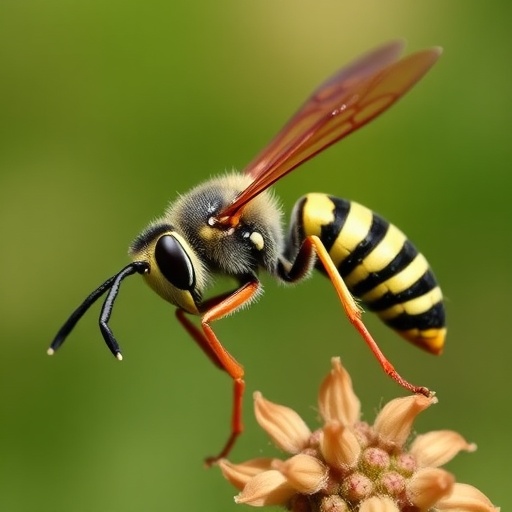
The intricate relationships that exist between various agricultural practices and the ecological interactions in agroecosystems are increasingly gaining attention from researchers and farmers alike. A study led by Elinisa et al., published in the journal Discover Agriculture, delves into the dynamic interplay between field management practices, altitude, and seasonal variations, and how these factors influence the abundance and behavior of wasp populations in cucurbit agroecosystems. This research offers a window into the ecological roles that these insects play and how their dynamics can be managed for enhanced agricultural productivity.
The role of wasps as natural predators in agricultural landscapes is well-documented. They are known to regulate pest populations, thereby supporting the sustainability of various crops, including cucurbits. Cucurbits, which encompass a variety of squashes, cucumbers, and melons, are susceptible to numerous pests that can destroy yields. The effectiveness of wasps as biological controls hinges on understanding how environmental factors and agricultural practices can either promote or hinder their populations. This study addresses those critical questions.
Field management practices, including tillage and pesticide application, have significant impacts on wasp communities. The research highlights how conventional practices may favor certain pest populations while simultaneously disrupting beneficial wasp species. By analyzing various field management strategies, the authors found that practices promoting biodiversity, such as crop rotation and reduced pesticide use, can enhance the abundance of beneficial wasps. These findings emphasize the importance of adopting integrated pest management approaches that consider the ecological roles of wasps.
In addition to management practices, altitude plays a pivotal role in shaping wasp dynamics. Different altitudinal levels present unique microclimates that significantly impact insect behavior, reproduction, and abundance. The study conducted by Elinisa et al. indicated that wasp populations tend to be higher at certain elevations due to optimal temperatures and vegetation diversity that provide adequate foraging and nesting sites. Understanding these variations can guide farmers in selecting appropriate sites for cucurbit cultivation based on wasp abundance.
Seasonality is another critical factor in the dynamics of wasp populations. As the seasons change, so do the environmental conditions that influence the activity and generational cycles of these insects. The study documented significant fluctuations in wasp populations between the dry and wet seasons. During wetter periods, an increase in flowering plants provides additional food sources, supporting more substantial wasp populations. This finding underscores the necessity for farmers to adapt their management practices seasonally to maximize natural pest control.
The interplay between these factors highlights the need for an integrated approach to agricultural practices. Farmers must consider altitudinal differences and seasonal fluctuations in their pest management strategies. The insights from this research could be pivotal in guiding agricultural policies and practices that prioritize ecological balance while maximizing productivity.
Graphic representations in the study illustrate the relationships among management practices, altitude, and wasp abundance, providing a visual understanding of these complex interactions. These visuals not only help convey scientific data but also serve as educational tools for farmers and stakeholders in the agricultural sector.
As agriculture faces challenges such as climate change and biodiversity loss, the research by Elinisa and colleagues presents a timely reminder of the benefits of sustainable practices. Implementing the findings of this study could not only help in maintaining wasp populations but also promote healthier ecosystems that foster resilience against pests and diseases.
By encouraging a diverse range of beneficial insects, farmers can reduce their reliance on chemical pesticides, which have been associated with environmental degradation and health concerns. The study advocates for a paradigm shift in how we view pest management, urging stakeholders to recognize the value of natural ecosystems and the vital services they provide.
Education and awareness are critical components of implementing these findings successfully. Workshops and extension services can play a valuable role in disseminating knowledge to farmers about the importance of maintaining wasp populations and the practices that support them. Engaging the agricultural community in these discussions can lead to more resilient agroecosystems.
The implications of this research extend beyond the immediate agricultural context, influencing broader environmental policies. As ecosystems continue to reshape due to anthropogenic pressures, studies like this contribute to our understanding of biodiversity’s role in food security and sustainable agriculture.
In conclusion, the research conducted by Elinisa and colleagues presents compelling evidence of the complex interplay between management practices, altitude, and seasonality on wasp dynamics in cucurbit agroecosystems. By adopting more ecologically sound farming practices, farmers not only enhance their productivity but also contribute to preserving biodiversity and ensuring the sustainability of agricultural landscapes.
These findings urge a reevaluation of current agricultural practices and propose new pathways to advance both productivity and ecological stewardship, making a significant case for the integration of biological control agents like wasps into modern agricultural systems.
Furthermore, ongoing research in this field will be vital for addressing emerging challenges in agriculture and ensuring that farm ecosystems remain resilient and productive in the face of environmental changes.
Subject of Research: The influence of field management practices, altitude, and seasonality on the abundance and dynamics of wasps in cucurbit agroecosystems.
Article Title: Influence of field management practices, altitude and seasonality on abundance and dynamics of wasps in cucurbit agroecosystems.
Article References:
Elinisa, N.K., Kabota, S.A., Busungu, C.S. et al. Influence of field management practices, altitude and seasonality on abundance and dynamics of wasps in cucurbit agroecosystems. Discov Agric 4, 1 (2026). https://doi.org/10.1007/s44279-025-00443-w
Image Credits: AI Generated
DOI: https://doi.org/10.1007/s44279-025-00443-w
Keywords: wasps, cucurbit agroecosystems, field management practices, altitude, seasonality, biodiversity, pest management
Tags: agricultural practices and pest controlbiological control in agriculturecucurbit agroecosystemsecological roles of wasps in farmingeffects of pesticide on beneficial insectsfield management strategies for waspsimpact of altitude on waspsintegrated pest management in cucurbitsresearch on wasp abundance and behaviorseasonal variations in wasp behaviorsustainable agricultural practiceswasp population dynamics