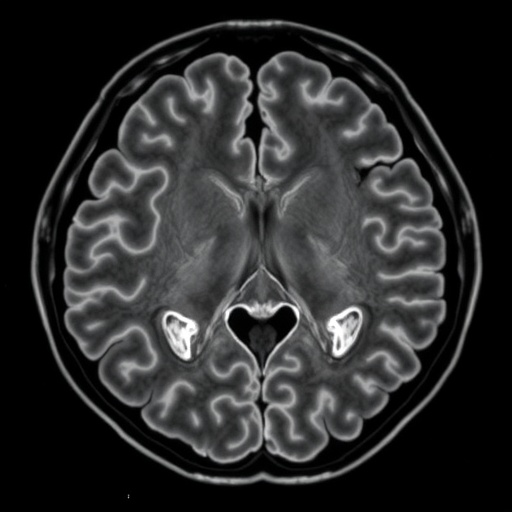
In an era where forensic science constantly evolves to embrace innovative technology, a recent study published in the International Journal of Legal Medicine has showcased a groundbreaking approach for forensic age estimation using low-field magnetic resonance imaging (MRI). The research, conducted by Ottow, Schmidt, Schulz, and colleagues, introduces the use of 0.31 Tesla MRI applied to the distal radius — a part of the wrist — as a novel, non-invasive method for determining age in living individuals. This pioneering technique could mark a significant advancement in forensic medicine and legal investigations worldwide.
Age estimation plays a crucial role in numerous legal contexts, such as immigration cases, criminal investigations, and age verification disputes, where the accurate determination of an individual’s chronological age has ethical and legal implications. Traditional methods primarily rely on X-ray imaging or histological analysis of bones and teeth, which involves exposure to ionizing radiation or invasive procedures, often subject to legal and ethical constraints. The advent of MRI-based approaches aims to circumvent these concerns, offering safer, radiations-free alternatives that preserve the integrity of biological tissues.
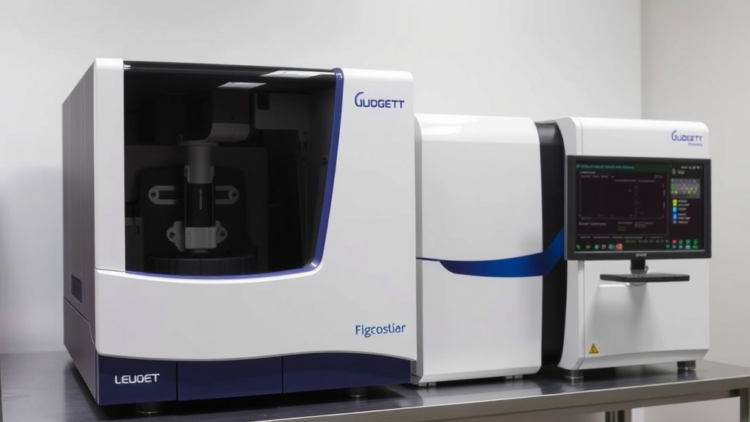
The low-field MRI employed by Ottow and colleagues operates at 0.31 Tesla, significantly lower than the standard high-field MRI systems typically used in clinical settings, which range from 1.5 to 3 Tesla. Low-field MRI devices offer several advantages, including reduced cost, decreased infrastructural demands, and increased portability. However, the main challenge lies in maintaining image resolution and contrast sufficient for forensic age estimation, given the lower magnetic field strength and consequently diminished signal-to-noise ratio.
Focusing on the distal radius, the researchers chose this anatomical region due to its relevance in skeletal maturity assessment. The distal radius undergoes predictable physiological changes during adolescence and early adulthood, making it an informative site for age diagnostics. Unlike more complex and variable skeletal landmarks, the distal radius cartilage and ossification patterns provide consistent markers that can be quantitatively evaluated.
Using precise imaging protocols optimized for low-field MRI, the team captured detailed images of the distal radius in a cohort of living subjects spanning a wide age range. These images allowed the researchers to assess growth plate morphology, ossification centers, and the state of cartilage degradation, all critical parameters correlated with chronological age. Their findings revealed a strong concordance between MRI parameters and established age benchmarks, demonstrating the method’s robustness.
The implications of this study extend beyond technical advancement; it heralds a paradigm shift toward more ethical forensic practices. By avoiding ionizing radiation, especially in minors and vulnerable populations, low-field MRI facilitates safer longitudinal studies and repeat assessments without health risks. It also opens doors for age estimation in regions with limited access to high-field MRI systems but where legal age disputes are prevalent.
Moreover, the low operational cost and simplified maintenance of the 0.31 Tesla MRI scanner make it a viable option for forensic departments globally, including in developing countries. This democratization of technology could improve the consistency and reliability of age estimation, fostering fairer judicial processes. The portability factor could also facilitate field applications during immigration crises or mass disaster scenarios.
Despite these promising results, the authors acknowledge certain limitations inherent to low-field MRI. The lower resolution compared to high-field imaging necessitates comprehensive validation across diverse populations and larger sample sizes to fine-tune diagnostic criteria. Furthermore, variations in skeletal development due to ethnicity, nutrition, and health status warrant further exploration to avoid potential biases and ensure broad applicability.
Future directions proposed by the research team include integrating advanced image processing and artificial intelligence algorithms to enhance the interpretative accuracy of low-field MRI scans. Machine learning models trained on annotated datasets could automate the identification of key ossification stages, expediting analysis and reducing subjective variability among forensic experts.
The study’s success underscores the transformative potential of interdisciplinary collaboration, where radiology, forensic science, and computer engineering converge to solve complex medico-legal challenges. Such integration enhances both efficiency and ethical standards, setting new benchmarks for forensic age estimation practice.
As forensic medicine continues to advance, the adoption of non-invasive, environmentally sustainable technologies like low-field MRI will likely become standard practice. This research not only contributes valuable evidence supporting such a shift but also invites policymakers and legal authorities to reconsider existing age assessment protocols to incorporate these scientific innovations.
In sum, Ottow and colleagues have demonstrated convincing evidence that 0.31 Tesla low-field MRI of the distal radius is a viable, reliable, and ethical method for forensic age estimation in living subjects. This development promises safer procedures, increased accessibility, and improved accuracy, potentially revolutionizing forensic investigations worldwide.
The study’s publication in 2026 marks an important milestone in forensic imaging technology, igniting discussions across scientific, legal, and ethical domains. The ongoing research inspired by this work will undoubtedly refine age estimation techniques and their application, ultimately reinforcing the integrity of legal processes dependent on accurate biological age determination.
By prioritizing patient safety, ethical responsibility, and technological feasibility, this innovative approach aligns with the future vision of forensic science — one that harmonizes scientific precision with human dignity and social justice. The community eagerly awaits further advancements grounded in this foundational research.
Subject of Research:
Forensic age estimation in living individuals using low-field MRI technology.
Article Title:
Forensic age estimation in the living by 0.31 Tesla low-field MRI of the distal radius.
Article References:
Ottow, C., Schmidt, S., Schulz, R. et al. Forensic age estimation in the living by 0.31 Tesla low-field MRI of the distal radius. Int J Legal Med (2026). https://doi.org/10.1007/s00414-025-03705-w
Image Credits: AI Generated
DOI:
https://doi.org/10.1007/s00414-025-03705-w
Tags: 0.31 Tesla MRI applicationsadvancements in forensic medicinecomparison of imaging techniquesdistal radius imagingethical implications of age estimationforensic age estimationinnovative forensic science techniqueslegal contexts for age determinationlegal investigations and age verificationlow-field MRI technologynon-invasive forensic methodsradiations-free imaging alternatives