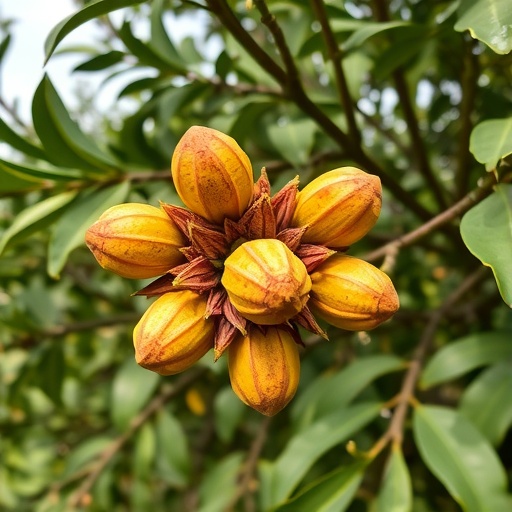
In a groundbreaking study published in BMC Complementary Medicine and Therapies, researchers have showcased the remarkable potential of natural extracts from the Prosopis Africana plant, traditionally known for its medicinal properties. This study takes a deep dive into the anti-biofilm and anti-quorum sensing capabilities of both leaves and stems of this species, revealing significant implications for dental care and beyond. The findings not only highlight the efficacy of these extracts against biofilm formation but also provide insights into their cytotoxic properties, paving the way for future applications in medicinal formulations.
The research led by Alimata, Ablassé, and Moussa et al. employed advanced analytical techniques, including Ultra Performance Liquid Chromatography coupled with Ultraviolet-Visible Spectroscopy, Diode Array Detection, and tandem Mass Spectrometry with Quadrupole Time-of-Flight (UPLC-UV/DAD-MS/MS/QTOF). These sophisticated methods allowed the team to profile the bioactive compounds present in the Prosopis Africana extracts, ensuring a robust understanding of their chemical composition. By identifying these compounds, the researchers laid a foundation for exploring their therapeutic mechanisms.
Biofilms, often cited as formidable hurdles in the field of dentistry, represent clusters of bacteria that adhere to surfaces, forming protective barriers. They are notorious for their resilience and resistance to conventional treatments, a challenge that has spurred extensive research into alternative approaches. The extracts from Prosopis Africana demonstrated promising anti-biofilm activity in vitro, suggesting their potential as natural alternatives for managing dental biofilm-related issues. This is particularly significant given the increasing prevalence of antibiotic-resistant bacterial strains in clinical settings.
The collaborative research team emphasized the importance of understanding quorum sensing mechanisms in biofilm development. Quorum sensing refers to the communication process that bacteria use to coordinate their behavior once they reach a certain population density. The extracts from Prosopis Africana were found to interfere with these signaling pathways, thereby inhibiting biofilm formation and maturation. Such interference could lead to innovative therapeutic methods that lessen the reliance on traditional antibiotics, an urgent need in our current healthcare landscape.
Furthermore, the cytotoxic evaluation of the extracts revealed that they exhibited selective toxicity against specific bacterial strains. This selectivity is a crucial feature for any potential therapeutic agent, as it would minimize collateral damage to beneficial microbiota, which play essential roles in oral health and overall well-being. This finding underscores the potential of Prosopis Africana extracts as adjunctive therapies in dental care.
The researchers also noted the significance of the traditional knowledge surrounding the use of Prosopis Africana in various cultures. This plant has been utilized in African herbal medicine for centuries, often praised for its anti-inflammatory and antimicrobial properties. The study not only validates these traditional uses but also highlights an important trend in modern medicine: the search for therapeutic leads in natural sources that have been historically underutilized in scientific exploration.
In an era where the pharmaceutical industry is grappling with the challenges of drug resistance and the need for sustainable solutions, the exploration of plants like Prosopis Africana offers a beacon of hope. The findings from this study can potentially influence future research models that prioritize the exploration of ethnomedicinal plants, suggesting a shift toward more holistic approaches that integrate traditional knowledge with contemporary scientific methods.
Moreover, the implications of this research extend beyond dental care and touch upon broader health challenges. The anti-biofilm and antimicrobial properties of Prosopis Africana could be harnessed in various fields of medicine, including gastroenterology and chronic wound management. As biofilm-associated infections continue to pose significant health risks, the need for innovative strategies has never been more pressing.
As the scientific community scrutinizes the full implications of this research, it is vital that further studies are conducted to understand the pharmacokinetics and bioavailability of the bioactive compounds present in Prosopis Africana extracts. Establishing clear mechanisms of action will be crucial for designing effective therapeutic products.
In conclusion, the work of Alimata and colleagues presents a promising trajectory for harnessing the medicinal properties of native flora. Their findings serve as a reminder of the intricate relationship between traditional practices and modern scientific inquiry, and they help to bridge the gap between folklore and established therapeutic protocols. The study not only speaks to the potential applications of Prosopis Africana in dentistry but also foreshadows a renaissance of interest in natural products as vital components of healthcare.
As we move forward, the ongoing dialogue between traditional medicine practitioners and contemporary researchers is essential. By forging partnerships that respect and utilize the knowledge passed down through generations, the scientific community can innovate more effectively while also honoring the roots of herbal medicine. The future of healthcare may very well thrive on such synergistic relationships, centered around the sustainable use of nature’s pharmacy.
The findings bring to light the importance of rigorous scientific validation of traditional knowledge. Such research not only has implications for the development of new treatments but also fosters respect for indigenous practices and the sustainable use of biodiversity. In times of increasing global health challenges, embracing such integrative approaches may well provide the key to unlocking new realms of medical knowledge and healing.
Subject of Research: Anti-biofilm and anti-quorum sensing potential of Prosopis Africana extracts in dental care.
Article Title: Anti-biofilm, anti-quorum sensing potential, cytotoxicity, and UPLC-UV/DAD-MS/MS/QTOF profiling of Prosopis Africana (Guill. & Perr.) Taub. leaves and stems extracts: benefits of a traditional medicine in dental care.
Article References:
Alimata, B., Ablassé, R., Moussa, C. et al. Anti-biofilm, anti-quorum sensing potential, cytotoxicity, and UPLC-UV/DAD-MS/MS/QTOF profiling of Prosopis Africana (Guill. & Perr.) Taub. leaves and stems extracts: benefits of a traditional medicine in dental care.
BMC Complement Med Ther 25, 445 (2025). https://doi.org/10.1186/s12906-025-05174-5
Image Credits: AI Generated
DOI: https://doi.org/10.1186/s12906-025-05174-5
Keywords: Prosopis Africana, anti-biofilm, anti-quorum sensing, dental care, traditional medicine, UPLC-UV/DAD-MS/MS/QTOF, bioactive compounds, cytotoxicity, natural extracts, antibiotic resistance.
Tags: advanced analytical techniques in herbal medicineanti-quorum sensing properties in dentistrybioactive compounds in dental carebiofilm resistance in dental treatmentscytotoxic effects of plant extractsinnovative approaches to dental caremedicinal properties of Prosopis Africananatural extracts for biofilm preventionnatural solutions for oral hygieneProsopis Africana dental health benefitstherapeutic mechanisms of Prosopis Africanatraditional medicine and modern research