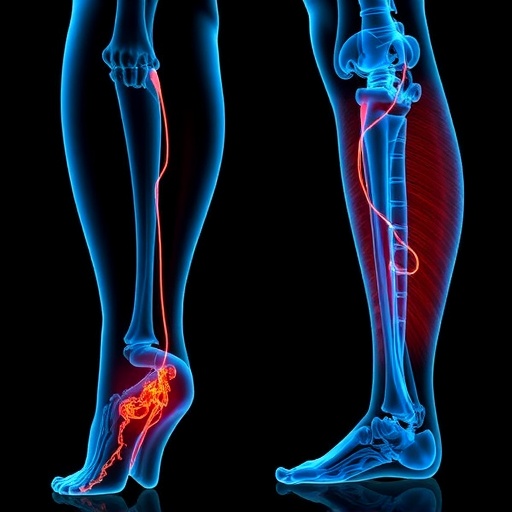
In an increasingly interconnected realm of medicine and traditional therapies, the emergence of HXSJ decoction as a potential remedy for venous leg ulcers has raised significant interest among researchers and clinicians alike. Venous leg ulcers represent a painful and debilitating condition caused by poor venous circulation. These chronic wounds not only affect patients’ quality of life but also impose a substantial burden on healthcare systems worldwide. The research conducted by Pan, Xiong, Li, and colleagues sheds light on a possible therapeutic mechanism connecting this traditional decoction with the novel concept of ferroptosis—a form of regulated cell death linked to oxidative stress and iron metabolism.
Ferroptosis, a term gaining traction in contemporary research, is particularly intriguing for its role in various pathological conditions, including cancer and neurodegenerative disorders. It involves the accumulation of lipid peroxides to lethal levels and has been implicated in the exacerbation of tissue damage and inflammation. This makes ferroptosis a compelling target when seeking to understand how venous leg ulcers might develop and persist. By probing the relationship between venous leg ulcers and ferroptosis, the researchers anticipate uncovering strategies that might mitigate these chronic wounds through manipulation of ferroptotic pathways.
HXSJ decoction, a traditional herbal formulation with historical roots in Chinese medicine, is believed to hold various pharmacological benefits that could directly influence the healing process of venous leg ulcers. Consisting of multiple ingredients, this decoction has not only been utilized for its wound-healing properties but also for its purported effects on inflammation and circulation. Drawing from ancient wisdom, the decoction serves as a bridge between tradition and contemporary science, aiming to elucidate its complex biological interactions.
The incorporation of HXSJ decoction into treatment plans for venous leg ulcers may lead to improved outcomes, particularly when its effects on ferroptosis are thoroughly understood. Researchers propose that specific components within the decoction may interact with oxidative stress pathways, potentially mitigating the damaging effects associated with ferroptosis and promoting cellular health. Such insights could pave the way for adjunctive therapies that combine traditional and modern medical approaches, enhancing the repertoire of treatment options available for chronic wound care.
One of the primary mechanisms posited by the researchers is that HXSJ decoction could modulate reactive oxygen species (ROS) levels. Excessive ROS production is a hallmark of ferroptotic cell death, and by restoring a balance between oxidants and antioxidants, the decoction might provide a protective effect on tissues affected by venous leg ulcers. This modulation could facilitate the healing process, allowing for better cellular regeneration and improved wound closure rates, pivotal factors in the management of hard-to-heal ulcers.
Building upon existing clinical evidence, the study emphasizes the importance of multidisciplinary approaches in treating venous leg ulcers. Integrating alternative therapies such as HXSJ decoction with conventional care modalities could enhance patient outcomes by addressing not only the symptoms but also underlying pathophysiological mechanisms. This concept aligns with the growing recognition of personalized medicine, wherein treatments are tailored to the individual needs of patients, particularly considering their unique biological and psychological profiles.
Furthermore, the authors highlight the potential of HXSJ decoction to influence angiogenesis—the formation of new blood vessels—which is crucial in wound healing. Enhanced blood flow enriched with nutrients and oxygen is paramount for the repair of damaged tissues. The interaction between herbal medicine and angiogenic factors represents a fascinating area of exploration, with implications for both modern pharmacology and ancient healing practices.
In recent years, the role of iron in health and disease has emerged as a significant area of interest. Beyond its well-known functions in oxygen transport and metabolism, iron dysregulation is increasingly linked to chronic inflammation and cell death mechanisms, including ferroptosis. The research team underscores that by addressing iron homeostasis through HXSJ decoction, it may be possible to promote a more favorable healing environment for patients suffering from venous leg ulcers.
The implications of this research extend beyond the immediate consideration of venous leg ulcers. As interest in ferroptosis continues to grow in various fields of medical research, findings related to HXSJ decoction could have broader applications in treating other conditions characterized by oxidative stress and tissue damage. Such insights may well inform future therapeutic strategies not only in wound care but also in addressing other chronic diseases linked to ferroptotic mechanisms, enhancing the overall quality of life for affected individuals.
In conclusion, the study by Pan, Xiong, Li, and colleagues represents an important step in bridging the gap between traditional medicine and modern scientific inquiry. The proposed mechanisms linking HXSJ decoction to ferroptosis in venous leg ulcers highlight the potential for innovative treatment strategies that harness the strengths of both disciplines. As research continues to evolve, the incorporation of traditional formulations into clinical practice may not simply represent a complementary approach but rather a transformative one—yielding more effective, holistic applications in chronic wound management.
With continuous investigation, we may soon witness the fruition of such integrative therapies, fortifying the idea that our understanding of health and healing should embrace multiple perspectives. Emphasizing the need for collaboration across various healthcare fields could ultimately lead to a brighter horizon for patients grappling with the impactful burden of chronic wounds, promoting a future where traditional knowledge and modern science coalesce for the greater good.
In summary, HXSJ decoction offers a potential novel therapeutic approach for venous leg ulcers via its effects on ferroptosis, inviting healthcare professionals to reassess the possibilities inherent in traditional medicine.
Subject of Research: The potential mechanism underlying HXSJ decoction in the treatment of venous leg ulcers based on the association with ferroptosis.
Article Title: Potential mechanism underlying HXSJ decoction in the treatment of venous leg ulcers: based on the association between venous leg ulcers and ferroptosis.
Article References: Pan, S., Xiong, L., Li, J. et al. Potential mechanism underlying HXSJ decoction in the treatment of venous leg ulcers: based on the association between venous leg ulcers and ferroptosis.
BMC Complement Med Ther 25, 451 (2025). https://doi.org/10.1186/s12906-025-05184-3
Image Credits: AI Generated
DOI: https://doi.org/10.1186/s12906-025-05184-3
Keywords: Ferroptosis, HXSJ decoction, venous leg ulcers, traditional medicine, oxidative stress, wound healing, iron metabolism, angiogenesis.
Tags: cellular death pathways in ulcerschronic wound healing strategiesferroptosis and chronic woundsherbal remedies for leg ulcersHXSJ decoctioninnovative treatments for venous leg ulcersiron metabolism and tissue damagemechanisms of ferroptosisoxidative stress in venous ulcerstherapeutic applications of HXSJ decoctiontraditional medicine and modern researchvenous leg ulcers treatment