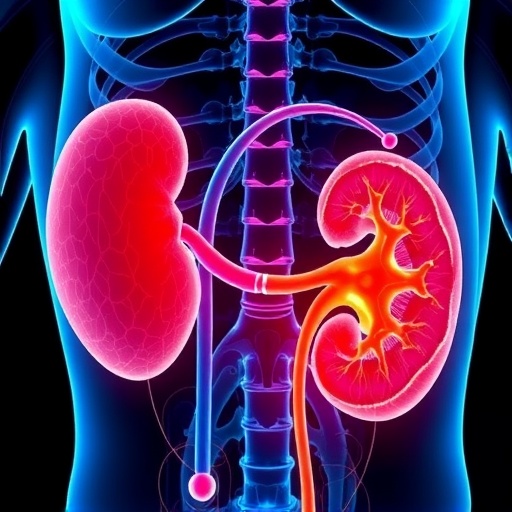
In a groundbreaking study published in Scientific Reports, researchers have uncovered critical insights into the role of calcium ions in facilitating a form of cell death known as pyroptosis, pertinent to the formation of calcium oxalate kidney stones. The work of Xiang, Lv, Luo, and colleagues not only adds to our understanding of kidney stone pathology but also highlights the intricate pathways that govern renal cell responses to cellular stressors. This research presents a confluence of cellular biology and nephrology, embodying the complexities inherent in bodily processes.
Calcium oxalate stones are the most prevalent type of kidney stones, affecting millions globally. These stones form through a multifactorial process, where factors like supersaturation of urinary components, pH, and urine volume contribute to their development. However, the recent findings by the research team indicate that intracellular mechanisms, particularly those involving calcium ions (Ca²⁺), play a pivotal role in regulating stone formation processes through pyroptosis, a regulated form of inflammatory cell death. This insight offers a novel perspective on renal pathophysiology and may pave the way for innovative therapeutic interventions.
Pyroptosis is characterized by cell swelling, membrane rupture, and the release of inflammatory cytokines. It serves as a defense mechanism against infections but can also contribute to tissue damage under pathological conditions. The researchers delineated that in the context of renal cells, an influx of Ca²⁺ ions triggers signaling cascades that lead to pyroptosis. This death pathway becomes particularly activated in the presence of high levels of calcium, suggesting that kidney cells may have evolved mechanisms to regulate their intracellular calcium concentrations under various physiological and pathological conditions.
Utilizing a combination of advanced imaging techniques and molecular analysis, the researchers were able to closely observe how Ca²⁺ influences cellular behavior in renal cells exposed to calcium oxalate crystals. Their results revealed that excessive intracellular Ca²⁺ not only triggers pyroptosis but also enhances the adhesive properties of renal cells, facilitating a greater propensity for stone formation. This discovery raises critical questions about the balance of calcium levels within the kidneys and how chronic overexposure may lead to detrimental outcomes.
Interestingly, the study also sheds light on potential therapeutic targets. By understanding the precise molecular pathways activated by Ca²⁺, researchers can potentially develop drugs that modulate these pathways. In particular, the inhibition of the pyroptotic pathway might offer a preventative strategy against kidney stone formation, reducing the burden of this painful condition. This is particularly important considering the limitations of existing treatments that mainly focus on dietary modifications or invasive procedures like lithotripsy.
The authors emphasize that their findings underscore the importance of calcium homeostasis in renal physiology. The kidneys play a crucial role in regulating mineral balance, and disturbances in calcium signaling can have widespread implications, not just for stone formation but also for general kidney health. As such, this study prompts further investigation into how dietary calcium intake and supplementation may influence kidney health and the risk of stone disease.
Moreover, the implications of calcium-induced pyroptosis extend beyond urology. This research could have broader applications in understanding how calcium dysregulation contributes to other inflammatory diseases that involve cell death. For example, conditions such as atherosclerosis, neurodegeneration, and even certain cancers may be influenced by similar mechanisms, suggesting a need for a more universal approach in studying cell death pathways related to calcium.
The response to calcium influx in renal cells also offers a window into the innate immune response. The processes triggered by cellular distress due to mineral imbalance might reflect an evolutionary response to maintain homeostasis. This invokes a broader dialogue about how cellular responses to stressors evolve and adapt over time, particularly in organs as vital as the kidneys. The intersection of immunology with renal pathophysiology represents an exciting frontier in medical research, opening doors to interdisciplinary collaboration.
Furthermore, the clinical implications of these findings cannot be overstated. Kidney stones significantly impede quality of life and pose substantial economic burdens on healthcare systems. Understanding the molecular underpinnings of stone formation creates opportunities for better diagnostic tools, preventive measures, and treatments tailored to individual patient profiles. The spotlight on cellular mechanisms driven by calcium may inspire new avenues for research and innovation in therapeutic modalities, possibly reducing the incidence of recurrent stone formation.
The researchers note that while their findings are promising, further studies are essential to translate these laboratory insights into clinical practice. Future research could explore longitudinal studies to track calcium levels and stone formation in patients, as well as clinical trials assessing potential therapies targeting the pyroptotic pathways induced by Ca²⁺. By bridging the gap between bench and bedside, there lies potential for significant advancements in the management of kidney stone disease.
As the study highlights the interplay between cellular signaling and kidney stone formation, it signals a paradigm shift in how we view mineral-related diseases. Emphasizing the need for a comprehensive understanding of renal physiology and pathology, this research serves as a stepping stone towards integrating molecular biology into clinical frameworks, fostering collaborative efforts across specialties. It is ultimately a reminder that the complexities of human health often hinge on the delicate balance of biochemical signals.
In conclusion, the intriguing revelations regarding the role of calcium ions in pyroptosis and kidney stone formation underscore the necessity for increased awareness and research efforts directed at this critical area of health. As science evolves, the potential for innovative preventative strategies arises, promising hope not just for individuals suffering from kidney stones, but for our broader understanding of mineral dysregulation and its implications for human health.
By expanding the dialogue around calcium’s role in renal health, researchers pave the way for a future where effective interventions can mitigate the prevalence of kidney stones. Continued exploration of this exciting frontier promises to unravel the complexities of renal biology and dysfunction, holding the potential to transform our approach to kidney disease and its myriad complications.
Subject of Research: Calcium-induced pyroptosis pathway and its role in kidney stone formation.
Article Title: Correction: Mechanistic studies of Ca2+-induced classical pyroptosis pathway promoting renal adhesion on calcium oxalate kidney stone formation.
Article References:
Xiang, J., Lv, M., Luo, Y. et al. Correction: Mechanistic studies of Ca2+-induced classical pyroptosis pathway promoting renal adhesion on calcium oxalate kidney stone formation.
Sci Rep 15, 45739 (2025). https://doi.org/10.1038/s41598-025-33377-w
Image Credits: AI Generated
DOI: 10.1038/s41598-025-33377-w
Keywords: Calcium ions, pyroptosis, kidney stones, renal health, calcium oxalate, calcium homeostasis, inflammation, nephrology, cellular signaling.
Tags: calcium ions role in pyroptosiscalcium oxalate kidney stones researchcellular stress responses in nephrologyinflammatory cell death mechanismsintracellular mechanisms in stone formationkidney stones calcium oxalate formationnephrology and cellular biology intersectionnovel research on kidney stone preventionrenal pathophysiology insightstherapeutic interventions for kidney stonesunderstanding pyroptosis in kidney healthurinary component supersaturation effects