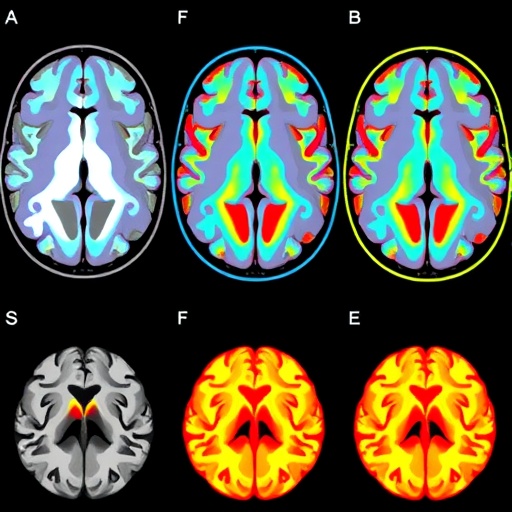
In the rapidly evolving landscape of medical technology and artificial intelligence, a groundbreaking development has emerged that promises to revolutionize brain tumor detection methodologies. The research conducted by Rastogi et al. presents an innovative approach called XcepFusion, which leverages a hybrid transfer learning framework encompassing advanced techniques such as layer pruning and freezing. This work is set to reshape how we approach diagnostic imaging, drawing significant attention from medical professionals and researchers alike.
The core of this study revolves around the application of artificial intelligence in medical imaging, particularly in identifying brain tumors. Brain tumors represent a critical area of concern, with early detection being paramount to improving patient outcomes. Traditional methods of diagnosis often rely heavily on human interpretation of images, which can lead to inconsistencies and errors. The introduction of XcepFusion seeks to mitigate these challenges by harnessing the power of AI to offer precise and reliable diagnostics.
XcepFusion utilizes transfer learning, a technique that allows models trained on vast datasets to apply their knowledge to specific tasks, such as brain tumor detection. In essence, this approach capitalizes on pre-trained models that possess a wealth of general knowledge, refining them to focus on particular aspects of brain imaging. This methodology not only speeds up the training process but also enhances the accuracy of the results, presenting a significant advantage over conventional image analysis techniques.
Layer pruning and freezing represent two pivotal strategies in optimizing the transfer learning framework. Pruning involves the removal of non-essential neurons from the neural network, streamlining it for the specific task of tumor detection. This makes the model not only faster but also more efficient in processing images, which is particularly crucial in fast-paced clinical environments. Conversely, freezing some layers of the model allows the system to retain essential learned features while adjusting other parts to optimize performance for specific tasks, ensuring that the model is both robust and agile.
The integration of these techniques in XcepFusion aims to tackle the significant challenge of diagnostic accuracy in brain tumor detection. A considerable amount of literature suggests that artificial intelligence can outperform human specialists in specific imaging tasks, and this research builds upon that foundation. By pinpointing characteristics in imaging data that may elude even the most trained eyes, AI-driven models can flag potential tumors that require further investigation.
In their study, Rastogi and colleagues meticulously documented their methodologies and the outcomes of their experiments. They conducted extensive validation to measure the performance of XcepFusion against existing diagnostic methods. The results were promising; the model displayed a notable increase in detection rates for various types of brain tumors, underscoring the potential for AI to enhance clinical decision-making and patient care.
Furthermore, XcepFusion’s development included a comprehensive training regimen utilizing diverse datasets, which encompassed different imaging modalities and tumor types. Such diversity is critical, as it ensures that the model can generalize effectively across various patient populations and clinical scenarios. The researchers carefully curated the data to avoid biases that could skew results, highlighting their commitment to ethical AI practices in healthcare.
As the study progresses, questions surrounding implementation and scalability arise. One of the significant advantages of XcepFusion lies in its potential for integration into existing healthcare infrastructures. With hospitals increasingly adopting AI technologies, the transition to using models like XcepFusion could be seamless, further enhancing diagnostic capabilities across the board.
The implications of this research extend beyond just tumor detection. The insights gleaned from XcepFusion may pave the way for advancements in other areas of medical imaging as well. For instance, the hybrid approach utilized here could serve as a blueprint for developing models aimed at detecting various ailments across different organs. The versatility of AI in medical applications continues to inspire further research and development in the field.
In addition to the technical innovations, the study also addresses the crucial aspect of interpretability in AI models. A significant barrier to adopting AI in medical settings is the “black box” nature of many algorithms. Rastogi et al. have emphasized the importance of interpretability in their work, providing clinicians with insights into how decisions are made by the AI model. This transparency fosters trust among medical professionals and patients alike, facilitating a smoother integration of these technologies into routine diagnostic processes.
The publication of this research in a reputable scientific journal underscores its credibility and the authors’ commitment to disseminating knowledge within the scientific community. As the findings spread across various platforms, the potential for XcepFusion to create a ripple effect throughout the medical field is substantial. Awareness of its existence may spur further research, collaborations, and investments aimed at augmenting AI’s role in healthcare.
Looking ahead, the anticipated impact of XcepFusion on patient outcomes is a driving factor behind this research. Early and accurate detection of brain tumors can lead to timely interventions, a crucial element in improving survival rates. As patients navigate the complex landscape of medical treatments, tools like XcepFusion could streamline the diagnostic journey, ultimately leading to enhanced quality of care.
In conclusion, Rastogi et al.’s work on XcepFusion epitomizes a significant leap forward in the intersection of artificial intelligence and medical diagnostics. As researchers continue to refine these innovative techniques, the hope is that the model will contribute to a future where brain tumor detection is prompt, accurate, and fundamentally transformed. With ongoing advancements, combined with a commitment to ethical practices and interpretability in AI, the promise of AI-driven diagnostics may soon become a cornerstone in transforming healthcare delivery.
Subject of Research: Brain Tumor Detection using AI
Article Title: XcepFusion for brain tumor detection using a hybrid transfer learning framework with layer pruning and freezing.
Article References:
Rastogi, D., Johri, P., Kadry, S. et al. XcepFusion for brain tumor detection using a hybrid transfer learning framework with layer pruning and freezing. Sci Rep (2025). https://doi.org/10.1038/s41598-025-33970-z
Image Credits: AI Generated
DOI: 10.1038/s41598-025-33970-z
Keywords: Brain Tumor Detection, Artificial Intelligence, Transfer Learning, Layer Pruning, Layer Freezing.
Tags: advanced techniques in medical technologyartificial intelligence in medical imagingbrain tumor detection methodschallenges in traditional tumor diagnosisdiagnostic imaging innovationsearly detection of brain tumorsenhancing patient outcomes with AIhybrid transfer learningimproving diagnostic accuracy with AIlayer pruning in AI modelspre-trained models for medical diagnosticsXcepFusion approach