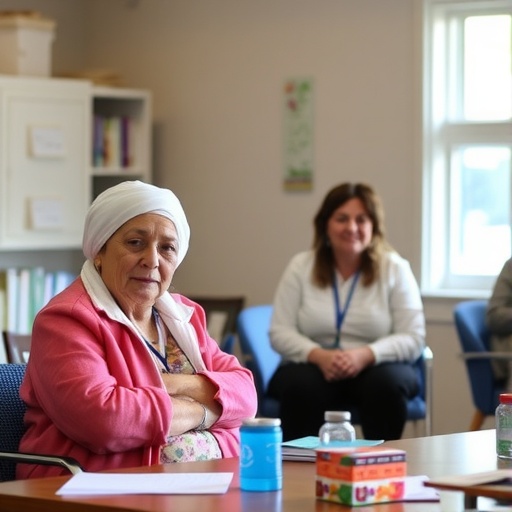
In a groundbreaking study, researchers have ventured into the intricate realm of community well-being by examining residents’ perspectives on a resident-centered neighborhood approach to health support. This insightful qualitative study sheds light on how a participatory framework can enhance health outcomes among community members. The implications of these findings extend beyond mere academic discourse; they have the potential to reshape how health services are tailored to fit the unique needs of communities.
At the core of this research is the acknowledgment that health does not exist in a vacuum. Rather, it is influenced by a multitude of factors, including social determinants, community engagement, and local resources. The researchers, led by the acclaimed A. Bosdijk, alongside eminent colleagues A.P. Nieboer and J.M. Cramm, recognize that residents are the best experts on their own lived experiences. Their insights into maintaining health through a supportive neighborhood context provide crucial data for developing effective health policies.
The researchers adopted a qualitative approach, conducting in-depth interviews with a diverse set of residents. These discussions delved into what the concept of a resident-centered neighborhood means to individuals from different backgrounds. One of the emerging themes from these interviews is the significance of social cohesion—a critical ingredient for fostering health. Residents described how strong social ties within their community acted as a buffer against stressors, ultimately enhancing psychological well-being.
Furthermore, the data revealed that access to local resources such as health services, recreational areas, and community centers significantly influenced residents’ health outcomes. Participants emphasized the necessity for services that are not only accessible but also tailored to reflect the specific needs and preferences of the community. The study suggests that when health interventions consider the context in which people live, they are more likely to succeed.
Another key finding from the study is the importance of empowerment among residents. Participants expressed a desire to be actively involved in discussions about health-related initiatives affecting their neighborhood. This suggests that health policies which enable residents to contribute to decision-making processes may be more effective. Empowerment fosters a sense of ownership, leading residents to engage more readily with health programs and services.
Interestingly, the study also illuminated the role of technology in facilitating these interactions. Many respondents noted how digital platforms, such as local forums and social media groups, could enhance community engagement. These tools allow for real-time communication of health issues and needs, opening pathways for swift, community-driven responses.
The transformative potential of a resident-centered approach is evident not just in improving health outcomes, but also in elevating the overall quality of life. As neighborhoods become more a hub for connection and engagement, residents can experience an enriched sense of belonging and purpose. This sense of community is vital, particularly in addressing public health crises—enabling collective action and resilience in the face of challenges.
Despite the promising findings, the researchers call for caution in the adoption of this approach. They highlight that each neighborhood has its unique dynamics and challenges, which must be thoroughly understood before implementing resident-centered strategies. A one-size-fits-all model could inadvertently lead to disparities rather than equitable health outcomes.
The study’s conclusions advocate for further research into the nuances of these findings, suggesting that future studies should explore how different communities can adapt resident-centered health initiatives to their unique contexts. Policymakers are urged to take these perspectives into account, ensuring that health frameworks are not just designed with the target population in mind but also involve them in shaping services to better meet their specific needs.
Moreover, the implications of this research extend into the policies governing urban development and health service funding. When lawmakers prioritize resident input in health strategies, they create an environment conducive to proactive health management. This ultimately helps to alleviate pressure on healthcare systems by addressing issues at their root within the community.
Finally, the exploration of resident perspectives on health transcends the academic realm, emphasizing the vital role that community-driven insights play in shaping public health initiatives. By fostering a culture of collaboration between residents and health service providers, the pathway toward healthier communities becomes clearer, ultimately paving the way for a future where health is a shared responsibility and a community asset.
Through understanding and embracing the strengths of a resident-centered neighborhood approach, we can envision a more inclusive health landscape where each individual’s voice contributes to the broader narrative of health advancement. With this study, Bosdijk, Nieboer, and Cramm have laid a critical foundation that beckons us all to contribute to the dialogue about the future of community health.
Subject of Research: Residents’ perspectives on a resident-centered neighborhood approach to support health.
Article Title: Residents’ perspectives on a resident-centered neighborhood approach to support health: a qualitative study.
Article References:
Bosdijk, A., Nieboer, A.P. & Cramm, J.M. Residents’ perspectives on a resident-centered neighborhood approach to support health: a qualitative study.
BMC Health Serv Res (2025). https://doi.org/10.1186/s12913-025-13966-1
Image Credits: AI Generated
DOI: 10.1186/s12913-025-13966-1
Keywords: resident-centered approach, community health, qualitative study, social determinants of health, community engagement, health outcomes.
Tags: community engagement in healthcommunity well-beingenhancing health outcomes through communityhealth policy developmentinsights from community residentslocal resources for health improvementneighborhood health support systemsparticipatory health frameworksqualitative research in public healthresident-centered health solutionssocial cohesion in neighborhoodssocial determinants of health