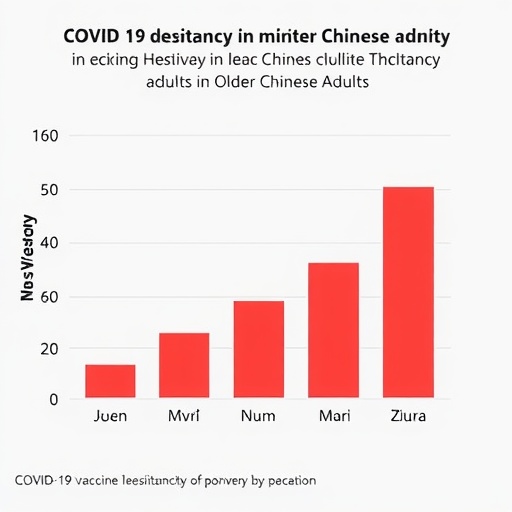
In the era marked by the global pandemic, the rollout of COVID-19 vaccines has become a critical component of public health strategy worldwide. Yet, despite the overarching aim of achieving herd immunity, a significant segment of the population remains hesitant towards vaccination, particularly among older adults. A new study, spearheaded by Zhang, E., Dai, Z., and Shang, S., delves into this alarming phenomenon of vaccine hesitancy among older adults in the aftermath of China’s transition from its stringent zero-COVID policy to a more open approach. The research offers valuable insights into the psychological, social, and informational barriers that inhibit older adults from accepting the vaccine, while also employing predictive modeling to understand these barriers intricately.
The study foregrounds the need to address vaccine hesitancy, exacerbated by the psychological burden of the COVID-19 crisis. As the pandemic unfolded, concerns around the safety and efficacy of vaccines emerged, largely fueled by misinformation and an overload of conflicting information. Older adults, who often have pre-existing health conditions and may be more risk-averse, found themselves at a crossroads, caught between their health concerns and the urgency laid out by authorities to get vaccinated. The researchers argue that this demographic’s unique vulnerability necessitates tailored outreach strategies to better inform and encourage them towards vaccination.
By leveraging predictive modeling, the researchers were able to identify specific factors contributing to vaccine hesitancy among older adults. They discovered that emotional responses, such as fear and anxiety surrounding potential side effects, played a significant role in shaping attitudes toward vaccination. Additionally, external influences, such as family opinions and media portrayals of vaccines, were shown to sway the decisions of older adults significantly. This highlights a critical area for intervention as public health campaigns targeting older adults must consider not just the clinical efficacy of vaccines but also the emotional and psychological aspects that drive their decision-making processes.
Moreover, the researchers highlighted the impact of digital literacy on vaccine hesitancy. Many older adults may not have the same level of access to information or digital platforms that younger generations take for granted. Consequently, misinformation can spread unchecked among populations that are less familiar with technology or skeptical of online resources. By addressing gaps in digital literacy through community engagement and educational initiatives, public health officials can create a more informed and empowered older demographic who are more likely to accept vaccination.
The study also takes into account the cultural context in post-zero-COVID China, where traditional beliefs and values often intersect with modern scientific understandings. The researchers found that cultural perceptions of health, illness, and trust in government institutions significantly influenced older adults’ willingness to accept vaccines. Understanding these cultural dimensions is essential for crafting messages that resonate with this demographic, ultimately fostering a more conducive environment for vaccination acceptance.
In light of these multifaceted findings, the researchers propose a series of targeted interventions to reduce vaccine hesitancy among older adults. This includes creating community-centric information campaigns that not only address concerns about vaccine safety and effectiveness but also emphasize the importance of vaccination in protecting not just individual health but also the broader community. Collaborative efforts with community leaders and healthcare providers can also facilitate trust-building, which is pivotal in dispelling fears associated with vaccines.
Moreover, the research underscores the importance of continuous monitoring and evaluation of vaccine attitudes, as dynamics can shift rapidly in response to new information or changes in the public dialogue surrounding COVID-19 and vaccinations. Incorporating feedback mechanisms from older adults about their concerns and insights can generate useful data for public health officials, subsequently informing ongoing strategies to tackle hesitancy.
As the study unfolds, it serves as a compelling reminder of the intricate interplay between health communication, public perception, and behavioral science. By integrating predictive modeling into the analysis of vaccine hesitancy, the researchers pave the way for a more nuanced understanding that can equip public health professionals with the tools to design more effective interventions. This, they argue, is not just vital for COVID-19 vaccinations but sets a precedent for addressing future vaccine hesitancies that may arise for other pathogens.
The findings from this study hold significant implications, highlighting the necessity of a holistic approach to vaccine uptake among older adults. It calls for concerted efforts that transcend mere informational campaigns. Instead, a combination of empathy, emotional support, community trust, and accessible resources can facilitate a more comprehensive strategy to increase vaccination rates. In the face of an ongoing pandemic and potentially emerging health crises, understanding and addressing vaccine hesitancy among vulnerable populations such as older adults is both a moral and public health imperative.
As we move forward, the challenges posed by vaccine hesitancy cannot be underestimated. Zhang and colleagues’ work sheds light on the pressing need for an informed and adaptable approach to public health messaging. By focusing on the specific needs and fears of older adults, health experts can lay a stronger foundation for vaccine acceptance, ultimately contributing to the larger goal of public health safety amidst ongoing global health challenges.
Among the critical lessons drawn from this study is that fostering vaccine acceptance requires more than just scientific information; it calls for a deep understanding of human behavior, motivation, and the societal factors that influence health decisions. As we face health crises in an increasingly complex world, this research serves as a clarion call for health officials to innovate and adapt strategically, ensuring that vulnerable populations are prioritized and supported.
In conclusion, the work of Zhang, E., Dai, Z., and Shang, S. not only illuminates the underlying factors of vaccine hesitancy among older adults in a post-zero-COVID China but also provides a framework for addressing these issues effectively. It reminds us that public health is a collective endeavor requiring compassion, understanding, and proactive engagement to protect and maintain the health of communities.
Subject of Research: COVID-19 vaccine hesitancy among older adults in post-zero-COVID China.
Article Title: Understanding COVID-19 vaccine hesitancy among older adults in post-zero-COVID China: a predictive modeling study.
Article References: Zhang, E., Dai, Z., Shang, S. et al. Understanding COVID-19 vaccine hesitancy among older adults in post-zero-COVID China: a predictive modeling study. BMC Geriatr (2025). https://doi.org/10.1186/s12877-025-06758-z
Image Credits: AI Generated
DOI: Not provided in the text.
Keywords: COVID-19, vaccine hesitancy, older adults, public health, predictive modeling, misinformation, cultural factors, digital literacy, community trust.
Tags: addressing vaccine hesitancy in elderly populationsbarriers to vaccine uptakeChina’s COVID-19 policy transitionCOVID-19 vaccine hesitancy in older adultsmisinformation and vaccinationolder adults and health concernsoutreach strategies for older populationspredictive modeling in vaccine researchpsychological barriers to vaccinationpublic health strategies for vaccinationsafety and efficacy of COVID-19 vaccinesvaccine acceptance among seniors