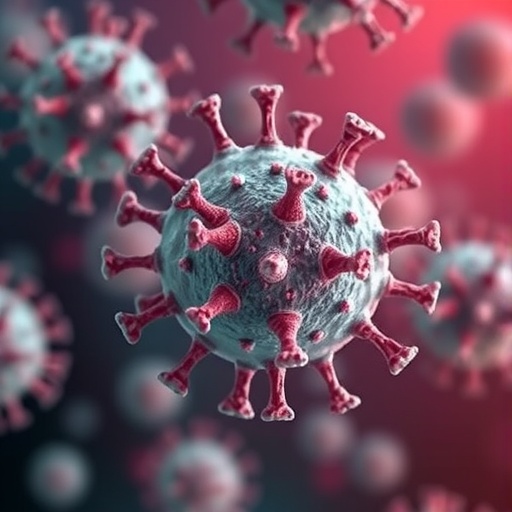
In a groundbreaking advancement poised to transform the landscape of viral therapeutics, researchers have identified a new class of potent antibodies capable of neutralizing not only the deadly Marburg virus but also the closely related Ravn virus. These discoveries, recently published in the prestigious journal npj Viruses, herald a significant step forward in the fight against filoviruses, notorious for triggering severe hemorrhagic fevers with high mortality rates. Given the lack of effective antivirals or vaccines against these pathogens, the successful isolation and characterization of cross-neutralizing antibodies could redefine therapeutic strategies and improve outbreak management worldwide.
The Marburg virus (MARV) and its sibling, the Ravn virus (RAVV), both members of the Filoviridae family, are culprits behind sporadic yet often devastating viral hemorrhagic fever outbreaks. These viruses share remarkable genetic and structural similarities, particularly in their surface glycoproteins that facilitate cellular entry. Despite this kinship, subtle antigenic differences have historically hampered the development of broadly reactive therapeutics. The recent study by Saito et al. breaks this impasse, demonstrating how specific antibody candidates can surmount these molecular challenges, binding effectively to conserved epitopes present on both viruses.
Crucial to this breakthrough was the sophisticated screening methodology employed to sift through an extensive repertoire of B cells derived from survivors and immunized models. Using state-of-the-art single-cell sequencing and high-throughput binding assays, the investigators mapped the antibody landscape with unprecedented resolution, isolating rare antibodies with dual-binding affinities. This fine specificity against conserved viral regions suggests these antibodies neutralize critical functional aspects of the viral entry machinery, thereby halting infection at its earliest stage.
Structural elucidation using cryogenic electron microscopy (cryo-EM) revealed that these antibodies target a highly conserved domain within the viral glycoprotein, imparting cross-reactivity. The glycoprotein, responsible for mediating viral fusion and host cell entry, presents a dynamic and complex conformation that has, until now, eluded broadly neutralizing antibodies. The structural snapshots provided by the researchers have unraveled the precise molecular architecture, demonstrating how antibody binding induces conformational changes that preclude viral membrane fusion.
Beyond structural insights, functional assays confirmed the neutralizing potency of the isolated antibodies in vitro. When introduced into cell cultures infected by either Marburg or Ravn viruses, these antibodies markedly inhibited viral replication. Notably, the neutralization efficacy was observed at nanomolar concentrations, underscoring their therapeutic feasibility. Moreover, experiments in animal models of infection provided compelling evidence that passive transfer of these antibodies confers protection against lethal viral challenge, dramatically improving survival rates and mitigating disease pathology.
A particularly encouraging aspect of this study lies in the potential therapeutic application of these antibodies. Currently, treatment options for filovirus infections remain limited, with high mortality rates prompting urgent calls for novel interventions. The cross-neutralizing antibodies identified here are strong candidates for antibody-based therapeutics and may serve as templates for vaccine design. Their ability to target multiple strains reduces the likelihood of escape mutants, enhancing their robustness as countermeasures in outbreak settings.
Moreover, the study enhances our understanding of viral evolution and immune evasion mechanisms. By pinpointing conserved regions vulnerable to antibody attack, it charts a new course for rational immunogen design aimed at eliciting broad protective responses in vaccinated individuals. This approach contrasts with traditional strategies that often target highly variable viral epitopes, which quickly mutate under immune pressure.
The research also raises intriguing questions about the immune landscape during natural infection and vaccination. The rarity of such broadly neutralizing antibodies implies that their induction may require precise immunological conditions or specific antigen exposure sequences. Understanding these parameters will be pivotal for optimizing future vaccine platforms capable of reproducing these protective humoral responses.
In terms of public health impact, the discovery carries profound implications. Marburg virus disease, although less well known than Ebola, poses a significant threat in parts of Africa where outbreaks have occurred sporadically but with devastating consequences. The prospect of a broadly effective antibody therapy, or a vaccine inspired by these antibody targets, offers hope for curbing transmission and reducing the burden of fatal hemorrhagic fever outbreaks.
The translational potential of these findings is underscored by the robust pipeline established for antibody development. The isolated antibodies have already been humanized and optimized for increased stability and half-life, critical features for clinical application. Early pharmacokinetic and safety studies suggest favorable profiles, paving the way for clinical trials and accelerated regulatory pathways in the face of emerging filovirus epidemics.
Furthermore, the study’s integrative approach combining immunology, structural biology, and virology exemplifies the interdisciplinary efforts required to tackle complex infectious diseases. By bridging the knowledge gaps across these domains, the researchers have set a benchmark for future endeavors aimed at combating other high-threat pathogens with similar molecular complexity.
While the immediate focus rests on Marburg and Ravn viruses, the principles derived may extend to other members of the filovirus family, including Ebola. Cross-neutralization studies remain ongoing, with preliminary data suggesting that some antibodies may exhibit a broader spectrum of activity than initially anticipated. This prospect raises the exciting opportunity for a universal filovirus therapeutic or vaccine, a holy grail in the field.
The identification of these antibodies also invites exploration into combination therapies. Potential synergies between monoclonal antibodies and small molecule antivirals, or immune modulators, could further enhance treatment outcomes. Tailoring such regimens will depend on detailed mechanistic insights, some of which this study contributes, revealing key vulnerabilities in viral entry processes.
In conclusion, Saito and colleagues’ pioneering work represents a monumental leap forward in antiviral antibody discovery, charting a route toward effective, broad-spectrum interventions against deadly hemorrhagic viruses. Their study underscores the profound power of cutting-edge molecular and cellular technologies in unveiling therapeutic gold mines within the human immune response. As the global community braces for future viral threats, such innovations illuminate the path to safer, more effective countermeasures that could save countless lives.
Subject of Research: Cross-neutralizing antibodies against Marburg and Ravn viruses with therapeutic potential.
Article Title: Discovery of potent cross-neutralizing antibodies against Marburg and Ravn viruses with therapeutic potential.
Article References:
Saito, T., Miyamoto, H., Igarashi, M. et al. Discovery of potent cross-neutralizing antibodies against Marburg and Ravn viruses with therapeutic potential. npj Viruses 3, 84 (2025). https://doi.org/10.1038/s44298-025-00168-z
Image Credits: AI Generated
DOI: https://doi.org/10.1038/s44298-025-00168-z
Tags: antibody characterization techniquesantiviral drug developmentB cell repertoire screeningemerging infectious diseasesfilovirus hemorrhagic feversimmune response to filovirusesinnovative therapeutic strategiesMarburg virus therapeuticspotent cross-neutralizing antibodiesRavn virus researchviral glycoproteinsviral outbreak management