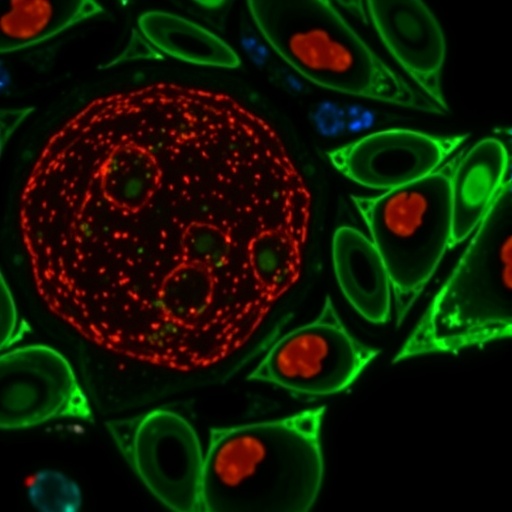
Recent research has illuminated the complex interplay between oncogenes and autophagy, particularly in the context of ovarian cancer, which remains one of the most lethal gynecological malignancies worldwide. A study conducted by Zhao, Wang, and Wang et al. has provided significant insights into how the oncogene DJ1 influences autophagy through the JNK signaling pathway in human ovarian cancer cells. This groundbreaking work highlights the potential for novel therapeutic strategies that could arise from manipulating autophagy pathways in cancer treatment.
Understanding the role of autophagy in cancer is pivotal, as this cellular process can both suppress and promote tumorigenesis depending on the context. Autophagy serves as a cellular quality control mechanism, allowing the degradation of damaged organelles and misfolded proteins, thereby maintaining cellular homeostasis. However, in cancerous cells, this process can be co-opted to support tumor growth and survival. The study underscores DJ1’s role as a crucial molecular player in this duality, navigating the fine balance between cell survival and death, which could potentially be exploited for therapeutic gains.
DJ1, an oncogene implicated in various cancers, including ovarian cancer, interacts with numerous signaling pathways that govern cellular responses to stress and insulin signaling. The study conducted by Zhao et al. demonstrates that DJ1 modulates autophagy through its interaction with the JNK signaling pathway. This pathway is known for its critical involvement in stress responses, apoptosis, and inflammation, highlighting DJ1’s multifaceted role in cancer progression. By elucidating the mechanisms through which DJ1 exerts its influence on autophagy, the study lays the groundwork for understanding its broader implications in ovarian cancer pathology.
The JNK signaling pathway’s activation has been associated with both protective and detrimental effects in different contexts. Zhao et al. provide evidence that DJ1 activates JNK, which subsequently regulates the autophagy process. This regulation of autophagy by DJ1 is particularly poignant in ovarian cancer cells where the survival of these cells is often contingent on their ability to effectively manage stress through autophagic mechanisms. The intricate balance presented here poses a tantalizing possibility of targeted therapies aimed at modulating DJ1 function or JNK activity to manage tumor growth.
The methodology employed in the study was rigorous, utilizing various experimental approaches to delineate the relationship between DJ1 and autophagy. Through in vitro experiments with human ovarian cancer cell lines, the researchers were able to demonstrate that silencing DJ1 significantly impaired autophagic flux, indicating the oncogene’s crucial role as an autophagy regulator. Furthermore, the modulation of the JNK pathway was observed, confirming the pathway’s essential role in this process. Such empirical evidence solidifies the notion that DJ1 is not merely an observer in the intracellular signaling landscape but rather a principal actor directing the processes that underpin ovarian cancer cell dynamics.
Moreover, the implications of targeting DJ1-driven autophagy are profound. Current therapies for ovarian cancer, including surgery and chemotherapy, often face limitations due to the development of resistance and associated toxicities. By understanding the mechanistic underpinnings of DJ1’s influence on autophagy, new avenues for therapeutic intervention could become available. For instance, pharmacological agents that inhibit DJ1 or modify JNK pathway activity may enhance the efficacy of existing treatments while potentially lowering the toxicity profile.
The relationship between autophagy and cancer is further complicated by the existence of a feedback loop where autophagic processes can affect the expression levels of oncogenes like DJ1. This feedback could create a vicious cycle, propelling cancer progression and complicating treatment algorithms. Thus, dissecting this cycle will be essential for developing comprehensive strategies targeting ovarian cancer. The findings presented by Zhao et al. contribute to this understanding by illustrating how DJ1’s role is intricately tied to the cellular autophagic response.
In addition to advancements in therapeutic strategies, the study raises critical questions about how similar mechanisms may play out in other cancer types. Oncogenes often exhibit tissue-specific effects, and the interplay between autophagy and oncogenes may vary across cancer contexts. Though the focus of Zhao and colleagues is on ovarian cancer, their findings spark curiosity about DJ1’s function in other malignancies and its potential as a ubiquitous target in oncology. This broadens the research landscape, suggesting that investigations into DJ1 could yield insights applicable across multiple tumor types.
Furthermore, the evolution of cancer research towards a more systems biology approach emphasizes the need to consider the network of signaling pathways that interact with autophagy. Investigating DJ1 within such a framework could unveil additional nuances pertaining to cellular metabolism, stress responses, and tumor microenvironment interactions. The potential for discoveries that could redefine the landscape of targeted cancer therapies cannot be understated.
In conclusion, the work conducted by Zhao and colleagues represents a significant leap forward in our understanding of how oncogenes like DJ1 can shape the intricate tapestry of cellular processes such as autophagy in ovarian cancer. As researchers continue to unravel these complex biological networks, there lies an exciting opportunity to translate these basic science discoveries into impactful clinical applications. Ultimately, this research not only enriches our fundamental knowledge but also reinforces the urgent need for innovative therapies in the fight against ovarian cancer.
The findings set forth in this study illuminate the promising horizon of oncogene-targeted therapies by showcasing how manipulating the autophagic response via DJ1 offers a beacon of hope in the face of one of the most challenging cancers. Continued exploration in this domain will be essential in developing comprehensive strategies aimed at improving patient outcomes while lessening the burden of disease.
Subject of Research: Regulation of autophagy by oncogene DJ1 via the JNK signaling pathway in human ovarian cancer cells.
Article Title: Regulation of autophagy by oncogene DJ1 via the JNK signaling pathway in human ovarian cancer cells.
Article References:
Zhao, XM., Wang, K., Wang, Z. et al. Regulation of autophagy by oncogene DJ1 via the JNK signaling pathway in human ovarian cancer cells.
J Ovarian Res (2025). https://doi.org/10.1186/s13048-025-01942-6
Image Credits: AI Generated
DOI: 10.1186/s13048-025-01942-6
Keywords: ovarian cancer, DJ1, autophagy, JNK signaling pathway, oncogenes, targeted therapies.
Tags: autophagy regulation in cancer cellscellular quality control mechanisms in cancerDJ1 and cell survival pathwaysDJ1 oncogene in ovarian cancerdual role of autophagy in tumorsimplications of autophagy in gynecological malignanciesJNK signaling pathway and tumorigenesisoncogene interactions in cancer therapyovarian cancer treatment advancementsrole of autophagy in cancer progressionstress response mechanisms in cancer cellstherapeutic strategies targeting autophagy