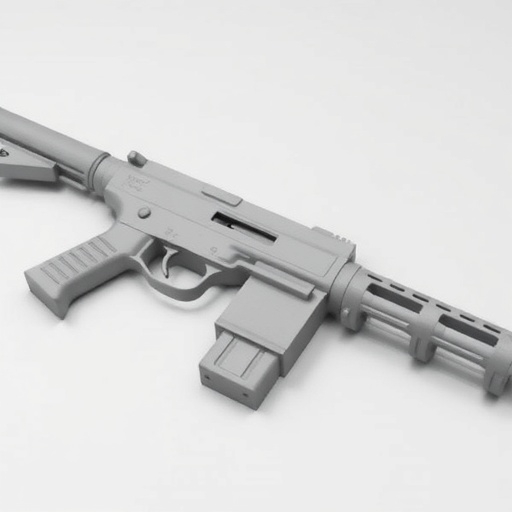
In a groundbreaking advancement at the intersection of forensic science and cutting-edge technology, researchers have unveiled an innovative approach that employs 3D-printed replicas of homicide weapons during autopsy procedures. This novel method promises to revolutionize crime scene investigations by providing autopsy teams with tangible, detailed reproductions of weapons without the risks associated with handling real, potentially hazardous instruments. The study, recently published in the International Journal of Legal Medicine, highlights the profound implications of integrating 3D printing technology into forensic pathology, underlining its capacity to enhance autopsy accuracy, safety, and evidentiary quality.
The traditional autopsy process often requires forensic pathologists to examine wounds in painstaking detail to ascertain the cause of death and reconstruct events leading to the victim’s demise. When a weapon is involved, direct contact with the actual murder instrument can pose considerable safety concerns and complicate evidence preservation. Using actual weapons, especially sharp or contaminated ones, increases the risk of accidental injury and contamination. This quandary has long challenged forensic practitioners, spurring the search for safer yet equally effective alternatives. Enter 3D printing: a technology that allows for the creation of precise, scalable, and manipulable replicas of physical objects with unmatched accuracy.
The researchers, led by Simon et al., leveraged high-resolution 3D scanning and additive manufacturing techniques to fabricate exact replicas of homicide weapons. These models are produced from comprehensive digital scans, which capture minute details including surface textures, contours, and dimensions. The process begins with the careful scanning of the original weapon using sophisticated imaging tools such as structured light scanners or laser scanners that ensure fidelity down to fractions of a millimeter. This scanning corpus is subsequently converted into a digital 3D model that is optimized for printing. The authors emphasized the importance of maintaining geometric and dimensional fidelity to ensure the replica’s forensic utility.
Additive manufacturing, commonly known as 3D printing, then transforms the digital files into physical models via layer-by-layer deposition of materials, often photopolymer resins or thermoplastics. By controlling material properties and printing resolution, the team could replicate subtle features that bear forensic significance, such as serrations on a knife blade or rifling marks on a firearm barrel. An added benefit of the printed replicas is their inherent inertness and safety—for instance, a fatal stabbing weapon printed in resin poses no risk of injury yet provides a tangible object for wound comparison and trajectory analysis during autopsy.
The study details multiple case applications where these 3D replicas were employed successfully. During autopsies, forensic pathologists used the replicas to simulate wound infliction, assess the correlation between suspected weapons and observed injuries, and document findings with unprecedented clarity. These replicas facilitated enhanced visualization and manipulation without damaging the original evidence or compromising safety protocols. Notably, replicas allowed for meticulous examination of stab wounds, lacerations, and ballistic injuries by fitting replicas into wound tracks or measuring wound dimensions against weapon geometry.
Beyond safety and practical benefits, the researchers noted that 3D-printed replicas serve an evidentiary purpose by enabling courtroom demonstrations while reducing the necessity to present original weapons, which might be exhibits subject to chain-of-custody concerns or health hazards. By providing juries and legal professionals with tangible yet harmless replicas, the justice process can gain in transparency and accessibility without compromising evidence integrity.
In addition to forensic advantages, the use of 3D-printed replicas accelerates autopsy workflows. Digital scanning and printing technologies, although initially requiring investment in precision equipment, allow for rapid reproduction once a weapon’s digital profile has been captured. This efficiency becomes particularly valuable in complex investigations involving multiple weapons or comparative analyses, where handling and preserving authentic instruments may prove cumbersome.
The article also discusses technological challenges and considerations, such as material selection and reproduction limits. While current materials provide sufficient detail reproductions for most forensic applications, they do not mimic mechanical properties like hardness or flexibility of real weapons. Hence, the replicas are primarily used as visual and spatial references rather than for mechanical testing. The authors suggest that ongoing research into advanced materials and multispectral printing techniques could bridge this gap in the future.
Ethical and procedural standards emerge as critical facets accompanying this technological integration. The paper outlines the necessity for rigorous calibration and validation protocols to ensure that 3D-printed replicas meet forensic admissibility criteria. Standards for scanning, model processing, and printing must be established to prevent distortions or inaccuracies that could mislead investigations or court proceedings. The authors propose development of forensic guidelines and certification pathways as essential next steps for widespread adoption.
The implications of this research transcend the immediate application to homicide investigations. The methodology could be extended to other forensic domains, including accident reconstructions, assault analyses, or military forensic science. The ability to create accurate, manipulable replicas could revolutionize the entire forensic toolkit, ushering in an era where virtual and physical simulations complement traditional investigative methods.
Experts outside the research team have praised the innovation, highlighting its practical relevance and transformative potential. Forensic pathologists welcome the reduction of occupational risks and improvements in investigative precision. Legal professionals appreciate the facilitation of clearer evidence presentation while maintaining chain-of-custody integrity. Moreover, the accessibility of 3D scanning and printing technologies continues to improve worldwide, suggesting scalability and democratization of this approach.
Looking forward, the integration of emerging technologies such as artificial intelligence and augmented reality with 3D-printed replicas may redefine forensic autopsies altogether. For example, AI algorithms might analyze wound patterns digitally and then customize replicas for targeted autopsy assistance, while augmented reality could overlay injury data onto replicas for interactive exploration. This convergence of technologies promises to deepen understanding of violent deaths and criminal mechanisms.
In closing, the pioneering work by Simon and colleagues represents an essential inflection point in forensic medicine. By harnessing the precision and adaptability of 3D printing, the study delivers a proof of concept that bridges safety, accuracy, and efficiency in autopsy investigations. It heralds a future where forensic science embraces technological synergy to solve crimes more thoroughly and justly. This journey underscores the transformative power of innovation at the nexus of medicine, engineering, and law enforcement.
As criminal investigations grow ever more complex and public scrutiny intensifies, tools like 3D-printed weapon replicas empower forensic teams with new ways to uncover truth while protecting both practitioners and evidence. The study sets the foundation for future interdisciplinary collaborations and continued advancements in forensic methodologies. The road ahead in forensic pathology is illuminated by the promise of 3D-printing technologies, coupled with rigorous scientific validation and ethical foresight.
Subject of Research: Use of 3D-printed replicas of homicide weapons during autopsy procedures to enhance forensic investigations.
Article Title: The use of 3D-printed replicas of homicide weapons during autopsy.
Article References:
Simon, G., Tóth, D., Heckmann, V. et al. The use of 3D-printed replicas of homicide weapons during autopsy. Int J Legal Med (2025). https://doi.org/10.1007/s00414-025-03691-z
Image Credits: AI Generated
DOI: https://doi.org/10.1007/s00414-025-03691-z
Tags: 3D-printed weapon replicasautopsy analysis techniquesbenefits of 3D printing in forensicscrime scene investigation advancementsdetailed wound examination processesevidence preservation methodsforensic science innovationshomicide weapon reconstructionlegal medicine advancementsrisk reduction in forensic investigationssafety in forensic pathologytechnology in autopsy procedures