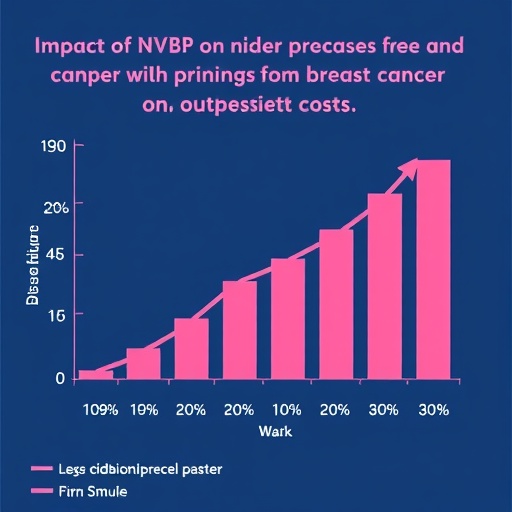
In a groundbreaking study recently published in BMC Health Services Research, researchers led by Tao et al. delve into the effects of the National Volume-Based Procurement (NVBP) program on the healthcare expenditure of breast cancer outpatients in Wuhan, China. This significant analysis employs an interrupted time series methodology to decipher the impacts of such procurement policies, not only illuminating key financial implications but also shedding light on the broader ramifications for healthcare access and treatment efficacy in oncology.
At its core, the NVBP scheme, which was initiated to reduce drug prices through bulk buying, aims to ensure equitable access to essential medications for patients. However, the implications of such changes extend far beyond mere financial savings. The study highlights the potential for NVBP to modify treatment protocols, influence patient outcomes, and reshape the economic landscape of oncological care in urban contexts such as Wuhan.
In their research, the authors utilized an interrupted time series analysis to accurately assess changes in healthcare expenditures for breast cancer patients before and after the implementation of the NVBP. This method is particularly robust, allowing researchers to observe temporal patterns and trends, thereby establishing a causal relationship between policy changes and observable outcomes.
The findings of the study are striking. Not only were expenditures significantly affected after the NVBP was enacted, but there were also noticeable shifts in the patterns of medication utilization among breast cancer outpatients. This suggests that while the intent of the NVBP was to ameliorate costs, it inadvertently triggered alterations in patient treatment paradigms that may warrant further exploration.
Advancements in healthcare policies such as the NVBP are often met with optimism. The authors argue, however, that it is essential to critically analyze these initiatives in real-world contexts. This research serves as a vital contribution to understanding the complexities of healthcare expenditures and suggests that significant cost savings might come at the expense of treatment quality or accessibility, which are crucial for patient outcomes.
Moreover, the implications of this research extend beyond the immediate economic analyses. As China continues its transition towards a healthcare system that prioritizes efficiency and affordability, this study raises important questions about the balance that must be struck between cost containment and maintaining high standards of care. The interplay between economic forces and healthcare quality is particularly salient in oncology, where treatment success is often contingent on access to the right medications and timely interventions.
In evaluating the data, the researchers noticed that some segments of patients, particularly those with advanced stages of breast cancer, experienced more pronounced shifts in expenditures. This highlights an emerging challenge: ensuring that cost-reduction strategies do not inadvertently disadvantage those who are already more vulnerable within the healthcare system.
The interrupted time series design not only serves to quantify economic impacts but also allows for a nuanced understanding of patient demographics and healthcare dynamics within urban centers. The study points to the necessity for ongoing evaluations of policy changes, advocating for a framework that incorporates patient experience and clinical outcomes alongside financial metrics.
Furthermore, this analysis underscores the importance of transparency in healthcare policies. Policymakers must remain vigilant about the unintended consequences that can arise from well-intentioned initiatives like the NVBP. It is critical for authorities to monitor these shifts continuously and engage stakeholders from diverse backgrounds to inform policy adjustments that address emergent challenges.
As healthcare systems worldwide grapple with the complexities of drug pricing and procurement strategies, the implications of this research extend internationally. The NVBP model presents both an opportunity and a cautionary tale for other countries considering similar approaches. Striking a balance between cost efficiency and healthcare quality is not a trivial endeavor; it requires careful consideration of the multifaceted nature of patient care.
The study concludes that while NVBP has arguably succeeded in lowering medication prices, it necessitates a careful dissection of its broader impacts on patient outcomes and healthcare expenditures. This comprehensive understanding is vital for shaping future healthcare policies that aspire to maintain high-quality standards while managing costs effectively.
As the discourse around healthcare transformation continues to evolve, the detailed findings of this research promise to engage both policymakers and healthcare practitioners. The insights gleaned from this analysis could set the stage for future investigations aimed at optimizing healthcare delivery systems in China and beyond.
With its meticulous approach to a pressing issue, the work of Tao and colleagues not only enriches the academic discourse surrounding healthcare policy but also reinforces the vital role of evidence-based practices in reshaping the future of oncology care.
In this rapidly changing healthcare landscape, studies like this illuminate the need for an ongoing conversation about the implications of economic policies on patient experiences and treatment options. Engagement in this dialogue is essential for ensuring that economic initiatives fulfill their promise without compromising the essential services that patients depend upon.
The confluence of economics and healthcare continues to be a critical area of inquiry. As the implications of studies like this one are fully realized, the hope is that policymakers will remain attentive to the human impacts of their decisions, striving for a healthcare framework that is not only cost-effective but also equitable and genuinely supportive of patient needs.
Ultimately, the work of Tao et al. serves as a clarion call for future research, policy revisions, and ongoing dialogue regarding the intricacies of healthcare financing and patient advocacy. Advancing our understanding in these areas is vital for the development of a healthcare system that can cater to the diverse needs of all patients, particularly those facing the challenges of serious illnesses like breast cancer.
This study not only emerges as a crucial contribution to the existing literature but also as a prompt for stakeholders and healthcare professionals to consider the wider ramifications of procurement policies and their effect on patient care.
Subject of Research: The impact of National Volume-Based Procurement (NVBP) on healthcare expenditures for breast cancer outpatients.
Article Title: The impact of National Volume-Based Procurement (NVBP) on healthcare expenditures for breast cancer outpatients: an interrupted time series analysis in Wuhan, China.
Article References:
Tao, J., Li, S., Gong, S. et al. The impact of National Volume-Based Procurement (NVBP) on healthcare expenditures for breast cancer outpatients: an interrupted time series analysis in Wuhan, China.
BMC Health Serv Res (2025). https://doi.org/10.1186/s12913-025-13841-z
Image Credits: AI Generated
DOI: 10.1186/s12913-025-13841-z
Keywords: National Volume-Based Procurement, healthcare expenditures, breast cancer, interrupted time series analysis, Wuhan, China.
Tags: BMC Health Services Researchbreast cancer outpatient costsdrug price reduction policieseconomic impact of healthcare policiesequitable access to medicationshealthcare expenditure analysisimplications of procurement programs on healthcare.interrupted time series methodologyNational Volume-Based Procurementoncological care in WuhanPatient outcomes in oncologytreatment protocol modifications