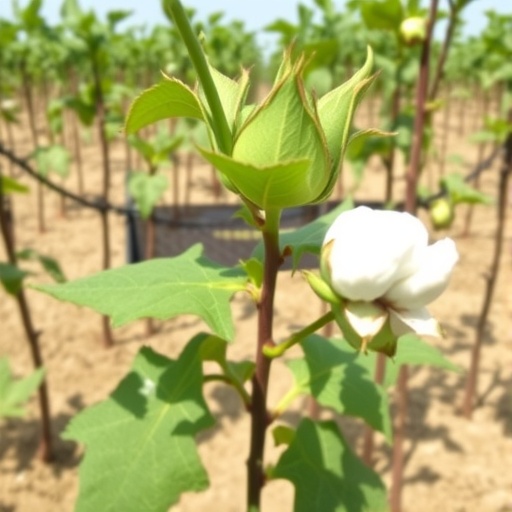
In an era where climate change represents one of the most formidable challenges for agriculture, scientists are relentlessly seeking innovative strategies to enhance crop productivity under stress conditions. A recent study published in Scientific Reports emerges as a groundbreaking exploration of how Moringa oleifera, commonly known as the drumstick tree, can be harnessed to improve cotton production during periods of reproductive drought stress. This groundbreaking research underscores the role of bio-stimulants in boosting plant resilience and optimizing physiological responses in crops affected by water scarcity.
The research team, led by M.W. Hassan, alongside colleagues A. Yasmeen and H. Nawaz, embarked on a quest to investigate the impacts of Moringa bio-stimulant on cotton plants under drought stress conditions. This study is timely, as drought has increasingly become a critical limiting factor in agricultural output, especially in regions where cotton is a staple cash crop. The findings demonstrate that Moringa bio-stimulant might be a panacea for enhancing the sustainability of cotton farming, offering a pathway to mitigate the adverse effects of climate change on crop yields.
Central to the study is the recognition that oxidative stress is a significant contributor to the decline in plant health during drought conditions. The researchers found that Moringa extracts function as powerful antioxidant agents, effectively neutralizing reactive oxygen species (ROS) that accumulate in plants during periods of water deficiency. By coordinating essential antioxidants, Moringa bio-stimulant assists in maintaining cellular integrity, thus promoting overall plant health and vigor during stressful conditions.
The experimentation involved carefully controlled trials where cotton plants were subjected to simulated drought stress while being treated with varying concentrations of Moringa bio-stimulant. Remarkably, the team observed a substantial improvement in key physiological traits, including enhanced germination rates, increased root length, and improved leaf chlorophyll content. These traits are critical indicators of a plant’s ability to thrive despite environmental stress, and the results were consistent across multiple trials.
In addition to these physiological advantages, the Moringa treatments were shown to significantly boost the accumulation of essential nutrients within the cotton plants. Specifically, the bio-stimulant facilitated increased levels of nitrogen, phosphorus, and potassium—primary macronutrients vital for successful plant growth and development. This nutrient enhancement is especially important as cotton plants often struggle to meet their nutritional needs during drought periods due to impaired root function and nutrient uptake.
Moreover, the study’s findings point toward an exciting synergy between Moringa bio-stimulant and cotton plants regarding reproductive success. The research indicated that treated plants displayed higher flowering rates and improved boll formation, which are crucial for cotton yield. These outcomes suggest that Moringa bio-stimulant not only empowers plants to withstand drought stress but also enhances their reproductive performance, leading to greater overall productivity.
The importance of physiological behavior, particularly stomatal conductance and transpiration rate, was also emphasized in the study. Moringa treatment appeared to optimize these parameters, allowing cotton plants to effectively manage water loss while still maintaining adequate photosynthetic activity. The balance of water use efficiency is integral to plant survival and productivity under drought conditions, and this balance was notably improved with Moringa application.
Encouragingly, the researchers did not observe any adverse effects of Moringa treatment on cotton plants, further reinforcing its potential as a safe and sustainable agricultural practice. This aspect is particularly relevant in an agricultural landscape increasingly scrutinized for its reliance on chemical fertilizers and pesticides, which can harbor detrimental effects on the environment and ecosystem. Instead, the use of a natural bio-stimulant like Moringa could pave the way for more ecologically conscious farming methodologies.
As the study highlights the promising potential of Moringa, it also opens the door for future research. Investigating the molecular mechanisms underlying Moringa’s effects on cotton plants could provide deeper insights into how bio-stimulants can be tailored for specific crops and stress conditions. Additionally, field trials would be crucial to ascertain the efficacy of Moringa bio-stimulant in real-world agricultural settings, where variables such as soil type, climate, and other environmental factors play critical roles.
In the context of global agricultural needs, the implications of this research extend far beyond cotton alone. The ability to use natural products to enhance crop resilience represents a strategic advantage for both food security and sustainable farming practices. This becomes increasingly critical as densely populated regions face the dual challenges of feeding growing populations while adapting to the impacts of climate change.
Furthermore, this study significantly contributes to the body of knowledge surrounding bio-stimulants, positioning Moringa as a leading candidate for further exploration and use in various agricultural practices. The interest in bio-stimulants is on the rise, as farmers and agriculturalists seek alternatives to traditional inputs that may alter soil microbiomes and decline soil health over time. Moringa’s multifunctional benefits present a gentle yet effective solution to these pressing issues.
In conclusion, Hassan et al.’s research on Moringa bio-stimulant presents compelling evidence of its positive impact on cotton production during reproductive drought stress. The findings underscore the importance of innovation in agricultural practices to combat the increasing unpredictability of climate patterns. As we look toward the future of agriculture, exploring natural solutions like Moringa offers a promising avenue for enhancing food security and sustainability in an ever-changing world.
This research encourages continued exploration into the use of natural bio-stimulants in agriculture, advocating for their role in fostering resilience among crops facing environmental stresses. Indeed, Moringa oleifera may well be a cornerstone of sustainable agricultural practices as the world grapples with the complex challenges of climate change.
The role of Moringa as a strategic tool for improving crop yields and resilience against drought could revolutionize cotton cultivation practices, benefiting farmers and agricultural stakeholders alike. As further investigations are planned, the agricultural community eagerly anticipates the broader applications of such findings, potentially transforming the future landscape of farming for generations to come.
Subject of Research: The impact of Moringa bio-stimulant on cotton production during reproductive drought stress.
Article Title: Moringa bio-stimulant promoted cotton production via coordinating anti-oxidants and physiological behaviors to combat reproductive drought stress.
Article References:
Hassan, M.W., Yasmeen, A., Nawaz, H. et al. Moringa bio-stimulant promoted cotton production via coordinating anti-oxidants and physiological behaviors to combat reproductive drought stress.
Sci Rep (2025). https://doi.org/10.1038/s41598-025-33402-y
Image Credits: AI Generated
DOI: 10.1038/s41598-025-33402-y
Keywords: Moringa, bio-stimulant, cotton production, drought stress, antioxidants, agricultural sustainability.
Tags: bio-stimulants in agricultureclimate change and agriculturecotton yield improvementdrought stress solutionsenhancing crop productivityinnovative agricultural strategiesMoringa oleifera benefitsoxidative stress in plantsplant resilience under droughtscientific research on Moringa.sustainable cotton farming practiceswater scarcity effects on crops