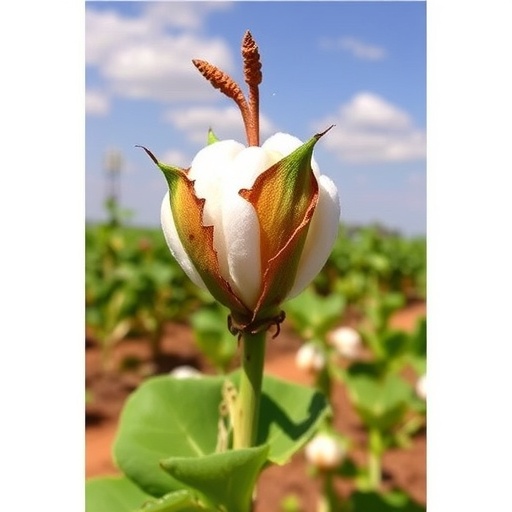
In the realm of agricultural science, the impact of plant diseases and parasitic organisms presents a formidable challenge, particularly in regions heavily dependent on cash crops like cotton. Recent research has shed light on the distribution of Fusarium wilt and plant-parasitic nematodes in Benin Republic, West Africa, emphasizing the urgent need for effective management strategies. This intricate interplay between pathogens and their host plants not only affects crop yields but also has far-reaching implications for the local economy and food security.
Fusarium wilt, caused by various species of the Fusarium genus, is notorious for its devastating effects on cotton crops. The pathogen invades the plant’s vascular system, leading to wilting, yellowing of leaves, and ultimately plant death. As cotton is a significant cash crop in Benin, the prevalence of this disease directly threatens the livelihoods of countless farmers. Understanding the geographical distribution of Fusarium wilt is crucial for devising targeted intervention strategies, and this study provides substantial new insights into its occurrence in the region.
Moreover, the research highlights the role of plant-parasitic nematodes, microscopic roundworms that attack the roots of plants, exacerbating the effects of Fusarium wilt. These nematodes create entry points for pathogens, weakening plants and making them more susceptible to diseases. The interaction between Fusarium and nematodes can lead to a synergistic effect, where the presence of one organism enhances the pathogenicity of the other. This dual threat poses a significant hurdle for cotton cultivation in Benin, demanding immediate attention from agricultural scientists and policymakers.
The study’s findings reveal a worrying pattern of distribution for both Fusarium wilt and the associated nematodes. The researchers meticulously mapped locations across various cotton farms in Benin, identifying hotspots for the disease. This geospatial analysis allows farmers and agricultural extension officers to prioritize areas for intervention. By concentrating resources and efforts—such as implementing crop rotation, resistant varieties, and biological control—communities can potentially mitigate the impacts of these pathogens.
Furthermore, the implications of this research extend beyond immediate agricultural concerns. Cotton is integral to the economy of the Benin Republic, contributing significantly to exports and generating employment. When diseases like Fusarium wilt and nematodes wreak havoc on crops, the ripple effect can lead to economic instability. Farmers facing reduced yields may struggle to invest in their farms in subsequent seasons, leading to a cycle of poverty and underinvestment in agricultural productivity.
In light of these findings, it is imperative for stakeholders, including government agencies, research institutions, and NGOs, to collaborate in developing comprehensive management strategies. Educational programs are essential to inform farmers about integrated pest management techniques and promote the use of resistant crop varieties. Such initiatives can empower local communities, enhancing their capacity to combat plant diseases and improve agricultural resilience.
The significance of this research is further magnified by the global context. As climate change continues to alter weather patterns, the likely increase in pathogen prevalence poses a stark reality for farmers worldwide. The Benin case study serves as a microcosm of a broader issue; the struggle against plant diseases is a reflection of the vulnerabilities within our global food systems. Addressing these challenges requires concerted scientific efforts and interdisciplinary collaboration among researchers, agronomists, and economists.
Moreover, the study opens the door for future research avenues. The interactions between different pathogens, their hosts, and environmental conditions warrant extensive exploration. Understanding the molecular mechanisms of Fusarium and nematode pathogenicity could lead to breakthroughs in developing robust disease-resistant cotton varieties. Researchers could also benefit from delving into the role of beneficial microorganisms in the soil that might offer natural competition against these harmful pathogens.
In addition to cultivating disease-resistant cotton, exploring sustainable practices such as intercropping and organic farming can enhance soil health and biodiversity. Such practices bolster the resilience of cotton systems and contribute to sustainable agricultural development. It is vital to consider the long-term agroecosystem health, rather than focusing solely on immediate yield outcomes.
The research conducted in Benin Republic stands as a clarion call for the scientific community and policymakers alike. With the increasing pressures from climate change and a growing global population, the necessity for food security cannot be overstated. It compels us to rethink our approaches to agriculture and resource management, instilling a sense of urgency in adopting innovative solutions.
Looking to the future, multidisciplinary projects that integrate technology, such as remote sensing and machine learning, could revolutionize the monitoring of pathogen distribution. Leveraging advancements in agricultural technology for real-time data can enhance disease forecasting and intervention strategies, paving the way for more resilient farming practices.
In closing, the distribution of Fusarium wilt and plant-parasitic nematodes in Benin Republic embodies the critical intersection of agricultural health, economic stability, and food security. As research progresses, it remains crucial that the findings translate into actionable solutions for the farmers who depend on cotton as their lifeline.
Looking back at the study underscores a pivotal moment in understanding plant diseases’ role within agricultural systems. As we gather more data, we should harness this knowledge to not only combat specific diseases but to build resilient agricultural systems that can withstand the myriad challenges posed by pathogens and environmental changes.
Subject of Research: Distribution of Fusarium wilt and plant-parasitic nematodes associated with cotton in Benin Republic (West Africa)
Article Title: Distribution of Fusarium wilt and plant-parasitic nematodes associated with cotton in Benin Republic (West Africa)
Article References:
Djaouga Mamadou, N.T., Baimey, H., Zinsou, V.A. et al. Distribution of Fusarium wilt and plant-parasitic nematodes associated with cotton in Benin Republic (West Africa). Discov. Plants 2, 370 (2025). https://doi.org/10.1007/s44372-025-00453-4
Image Credits: AI Generated
DOI: https://doi.org/10.1007/s44372-025-00453-4
Keywords: Fusarium wilt, plant-parasitic nematodes, cotton, Benin Republic, agricultural science, food security.
Tags: agricultural research in West Africachallenges of cash crop farmingcotton disease management strategiescotton farming and local economieseconomic implications of cotton diseasesfood security in Benin agricultureFusarium wilt in cotton cropsgeographical distribution of Fusarium wiltimpact of Fusarium on crop yieldsnematodes and plant healthplant-parasitic nematodes in agriculturesustainable agriculture practices in Benin