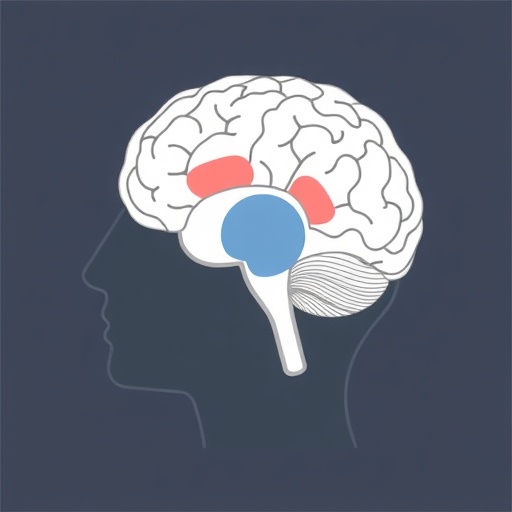
The human brain has long been conceptualized as a mosaic of distinct areas, each responsible for specialized functions that together orchestrate perception, cognition, and behavior. This parcellation—the division of the cerebral cortex into discrete, functionally modular regions—has provided a foundational framework for decades of research in cognitive and systems neuroscience. However, a provocative new perspective challenges the very centrality of these brain areas in understanding the brain’s functional organization. In a groundbreaking publication set to reshape neuroscience, Hayden, Heilbronner, and Yoo argue that brain areas, while important, do not solely dictate brain function and that other organizational principles arguably play equally significant roles.
At the heart of this reevaluation is the observation that traditional determinants of brain function, such as cytoarchitecture—the cellular composition of brain tissues—and connectivity patterns, frequently fail to converge into unified parcellations. Parcellations derived from histological, anatomical, or connectivity data tend to disagree substantially, raising critical questions about whether discrete “brain areas” can, in fact, be the ultimate functional units of the brain. Instead, the authors suggest embracing a more pluralistic view that acknowledges multiple coexisting principles underlying brain organization.
Among these alternative organizing principles are macroscale gradients, which represent continuous transitions in functional and structural brain properties across the cortex. Unlike the notion of sharply bounded areas, these gradients provide a spectrum of neural capabilities and properties that do not respect strictly demarcated boundaries. Furthermore, distributed networks—spatially dispersed but functionally interlinked sets of brain regions—serve as another major architecture, supporting cognitive processes that are inherently integrative and cross-regional. Classes of meso-scale structures like layers, columns, and patches are also vital for local processing and demonstrate an organizational complexity that often extends across traditional boundaries.
The study fundamentally challenges the long-standing assumption that cognitive functions neatly map onto these brain areas. It emphasizes that many cognitive processes depend on distributed patterns of activity and interactions across the cortex rather than being confined to isolated modules. For instance, complex cognition, including attention, memory, and decision-making, often emerges from widely distributed networks, complicating the simplistic picture of single areas controlling distinct cognitive domains.
One of the most striking implications of this work is the critique of how neuroscientists have historically clung to the concept of arealization, sometimes at the expense of exploring other brain organization models. The authors highlight that overreliance on brain areas as explanatory units may have limited the field’s capacity to capture the dynamic and integrative nature of brain function. They call for a paradigmatic shift that incorporates the fluid interplay of gradients, networks, and microscale structures alongside traditional parcellations.
The authors also delve into the technical challenges inherent in identifying brain areas. For example, differences in imaging modalities, analytical techniques, and the scales at which data are collected contribute to inconsistencies in parcellations. Neuroanatomical approaches that depend on cellular markers may find boundaries that are invisible to connectivity-based methods, and vice versa. This methodological heterogeneity further underscores the difficulty of defining brain areas as fixed, immutable units of function.
Moreover, electrophysiological evidence adds another layer of complexity. Neural recordings often reveal patterns of activity that span multiple traditional areas, demonstrating that functional boundaries may be more permeable and context-dependent than previously thought. The brain’s neural dynamics emphasize temporal coordination and flexibility that static parcellations cannot fully encapsulate.
This research also engages with the nuanced roles of laminar (layer-based) and columnar organizations in the cortex. Laminar distinctions, defined by varying types of neurons and input-output relationships across cortical layers, reflect a sophisticated vertical dimension of organization. Columns, representing local clusters of neurons processing specific features, highlight micro-architectural principles that complement rather than compete with areal parcellations. The interplay among these dimensions points to a hierarchy of organizational principles operating at multiple scales.
Importantly, the authors caution against reducing the complexity of cognitive function to singular anatomical substrates. Cognitive neuroscience’s quest to link “area X” to “function Y” is often hamstrung by the brain’s inherent distributedness and overlap of functions. Tasks that engage attention, working memory, or language frequently recruit overlapping and dynamically reconfigurable networks that transcend classical areal borders.
This work is not a wholesale dismissal of brain areas but rather a call for a more integrative framework that considers the mosaic alongside gradients, networks, and multi-scale motifs. Rather than an either-or choice between areas and other organizational units, the authors advocate for a conceptual synthesis that respects their complementary contributions. Such a synthesis has profound implications for both basic neuroscience and clinical applications, including the design of interventions like neuromodulation and brain-machine interfaces.
Importantly, this conceptual move invites new computational and analytical tools that can capture the brain’s multi-dimensional structure. Traditional parcellation-based methods are supplemented by gradient mapping, network graph theory, and multi-layer models to better characterize brain function. These approaches recognize the non-discrete, often overlapping nature of neural circuits, opening the door to more nuanced explorations of cognition.
The broader significance extends to the interpretation of neuroimaging results. While functional MRI studies have historically relied heavily on discrete atlases, the community increasingly appreciates gradient-based and network-based analyses as superior tools for understanding complex brain states and individual differences. The ideas presented by Hayden and colleagues provide theoretical backing for this evolving methodological landscape.
This research also challenges neuroscientific pedagogy and communication, urging a paradigm shift in how brain organization is taught and conceptualized. Moving beyond traditional brain maps requires re-educating both new researchers and the public, fostering an appreciation of the brain as an intricately interwoven organ characterized by fluid boundaries and multiple levels of organization.
In conclusion, the work by Hayden, Heilbronner, and Yoo reframes a foundational neuroscientific concept, urging the field to move beyond a constricted view that privileges brain areas above all else. Their argument for embracing an array of organizational principles, including gradients, networks, layers, columns, and patches, broadens the intellectual toolkit for tackling brain complexity. This fresh perspective holds the promise of illuminating the nuanced interplay of structure and function that underlies cognition and behavior.
As we stand on the cusp of a new era in cognitive and systems neuroscience, this rethinking presents both a challenge and an opportunity: to embrace complexity, revise long-standing assumptions, and devise integrative models of brain function that better reflect the intricate reality of the human brain. The future of neuroscience research may well depend on how we incorporate these insights and transcend the legacy of brain arealization.
Subject of Research: Functional organization of the cerebral cortex and the role of brain areas versus alternative organizing principles
Article Title: Rethinking the centrality of brain areas in understanding functional organization
Article References:
Hayden, B.Y., Heilbronner, S.R. & Yoo, S.B.M. Rethinking the centrality of brain areas in understanding functional organization. Nat Neurosci (2025). https://doi.org/10.1038/s41593-025-02166-z
Image Credits: AI Generated
DOI: https://doi.org/10.1038/s41593-025-02166-z
Tags: brain modularity and functionchallenges in brain parcellation methodscognitive neuroscience frameworksconnectivity patterns in the braincytoarchitecture and brain functiondiscrete brain areas vs. functional unitsfunctional brain organizationmacroscale gradients in brain organizationneuroscience research advancementspluralistic approaches to neurosciencerethinking brain area centralityunderstanding brain function complexity