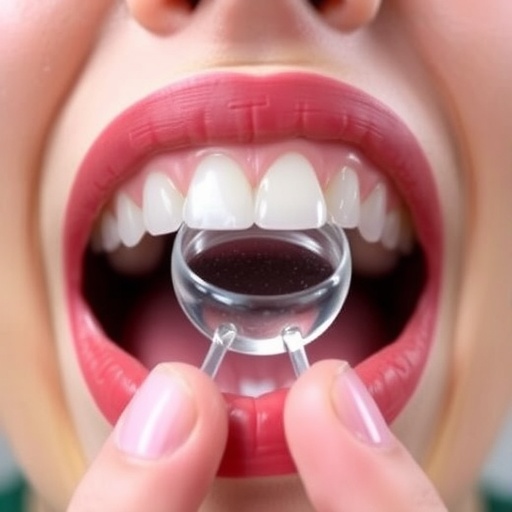
In a groundbreaking study set to redefine the landscape of oral drug delivery systems, researchers have unveiled new insights into the physicochemical and sensory properties of orally disintegrating films (ODFs), specifically focusing on the role of hydrocolloids. This pioneering research, recently published in Food Science and Biotechnology, promises to revolutionize how pharmaceutical and nutraceutical compounds are administered, offering profound implications for patient compliance and therapeutic efficacy.
Orally disintegrating films have garnered considerable attention over the past decade due to their rapid dissolution upon contact with saliva, bypassing the need for water and enhancing convenience, especially among pediatric and geriatric populations. However, the challenge remains to optimize these films’ texture, dissolution rate, and overall sensory acceptance without compromising structural integrity. The team led by Park, Ganbat, and Han tackled these challenges head-on by systematically evaluating diverse hydrocolloid matrices within ODF formulations.
Hydrocolloids, naturally occurring polysaccharides renowned for their water-binding capabilities and film-forming properties, serve as the backbone of many pharmaceutical delivery systems. The researchers meticulously assessed how different hydrocolloid types influence disintegration time, mechanical strength, and dissolution kinetics. Their study did not merely skim the surface but dove deep into understanding molecular interactions that govern how these polymers behave in the complex oral environment.
One of the standout revelations from the study was the distinct performance profile exhibited by gelatin-based films. Unlike starch or pectin counterparts, gelatin films demonstrated superior flexibility and a faster disintegration rate. This dual advantage arises from gelatin’s unique triple helix molecular structure, which untangles swiftly in the presence of saliva, resulting in enhanced bioavailability of the active compounds embedded within the film matrix.
Conversely, films incorporating pectin displayed extended disintegration times due to their gel-forming attributes, highlighting potential for sustained release applications. This characteristic positions pectin-based ODFs as candidates for delivering therapeutics that benefit from prolonged exposure to the oral mucosa, such as local analgesics or antifungals.
Furthermore, the research incorporated sensory evaluations, an often-overlooked aspect in pharmaceutical formulations. By engaging volunteer panels to assess mouthfeel, taste, and aftertaste, the scientists demonstrated that hydrocolloid choice profoundly impacts patient acceptability. Notably, films formulated with modified starch garnered favorable feedback for neutral taste and comfortable mouthfeel, an essential factor for daily compliance.
The dissolution studies revealed intriguing dynamics as well. The interaction of hydrocolloids with different saliva compositions dramatically influenced how the films broke down. This finding suggests a need to tailor ODF formulations to target demographics with varying saliva pH and enzymatic profiles, potentially opening avenues for personalized oral drug delivery platforms.
From a physicochemical standpoint, the study explored parameters such as tensile strength, elongation at break, and moisture uptake behavior. These metrics are critical in ensuring that ODFs maintain robustness during manufacturing, packaging, and handling while still disintegrating promptly upon administration. The comprehensive characterization conducted showcases how subtle modifications in hydrocolloid concentration can fine-tune these properties, fine-balance that pharmaceutical formulators have long strived to achieve.
The implications reach beyond pharmaceuticals into the rapidly expanding realm of functional foods and nutraceuticals. Orally disintegrating films infused with vitamins, probiotics, and plant extracts could leverage these optimized hydrocolloid matrices to deliver health benefits seamlessly and appeal to consumer desires for convenience and efficacy.
Of particular interest is the team’s investigation into the sensory masking capabilities of different hydrocolloids, addressing a significant hurdle in orally administered films—the often unpleasant flavor of active pharmaceutical ingredients (APIs). Their findings suggest that certain hydrocolloids can form protective matrices that delay the immediate release of bitter compounds, enhancing taste masking without sacrificing dissolution performance.
This research also highlights environmental considerations. By employing biodegradable and naturally derived hydrocolloids, the production of ODFs aligns with sustainability goals, reducing reliance on synthetic polymers that contribute to ecological burdens. The synergy between performance and environmental consciousness underscores the future trajectory of oral film technologies.
Advanced analytical techniques such as scanning electron microscopy (SEM) and Fourier-transform infrared (FTIR) spectroscopy were utilized to delineate the microstructural arrangement and chemical interactions within the hydrocolloid films. These insights elucidate how polymer-polymer and polymer-water interplays determine the release kinetics and mechanical behavior of the films.
The study’s comprehensive approach—integrating physicochemical testing, dissolution profiling, and sensory evaluation—sets a new benchmark for future investigations targeting patient-centric drug delivery solutions. By contextualizing hydrocolloid performance within the multifaceted demands of oral administration, this work transcends traditional formulation science and introduces a holistic paradigm.
Clinicians and pharmaceutical developers stand to benefit immensely from these findings as they provide actionable data to tailor ODFs for specific therapeutic areas, optimize dosing regimens, and enhance patient adherence. The elegance of hydrocolloid specialization within ODFs could pave the way for bespoke medication tailored not only to the active compound but also to individual patient preferences and physiological conditions.
Moreover, the scalability of these formulations and their compatibility with existing manufacturing technologies imply that commercialization hurdles can be minimized, accelerating the availability of next-generation orally disintegrating films in global markets.
In conclusion, the collaborative efforts of Park, Ganbat, and Han represent a seminal contribution to oral pharmacotechnics, unlocking hydrocolloid-specific performance metrics that will spearhead innovation in drug delivery. Their study eloquently underscores that the choice and manipulation of polymeric carriers are as critical as the active pharmaceutical agents themselves in dictating therapeutic success.
As the healthcare landscape inevitably shifts toward patient-centered, non-invasive, and accessible treatment modalities, orally disintegrating films formulated with precisely characterized hydrocolloids will emerge not merely as carriers but as sophisticated vehicles delivering optimized therapeutic experiences. This research heralds a new dawn for pharmaceutical technology, marrying scientific rigor with sensory finesse, and promising a healthier future delivered one film at a time.
Subject of Research:
Hydrocolloid-specific performance in orally disintegrating films, encompassing physicochemical properties, dissolution behavior, and sensory evaluation.
Article Title:
Hydrocolloid-specific performance of orally disintegrating films: physicochemical, dissolution, and sensory insights.
Article References:
Park, CH., Ganbat, C., & Han, JA. Hydrocolloid-specific performance of orally disintegrating films: physicochemical, dissolution, and sensory insights. Food Sci Biotechnol (2025). https://doi.org/10.1007/s10068-025-02066-9
Image Credits: AI Generated
DOI: 10.1007/s10068-025-02066-9
Keywords:
Orally disintegrating films, hydrocolloids, physicochemical properties, dissolution kinetics, sensory evaluation, drug delivery, film-forming polymers, taste masking, patient compliance, pharmaceutical technology
Tags: dissolution rate enhancementfilm-forming polysaccharideshydrocolloids in drug deliveryinnovative oral drug delivery systemsmolecular interactions in ODFsoptimization of film textureorally disintegrating filmspatient compliance in drug deliverypediatric and geriatric pharmaceuticalspharmaceutical and nutraceutical applicationsphysicochemical properties of ODFssensory properties of oral films