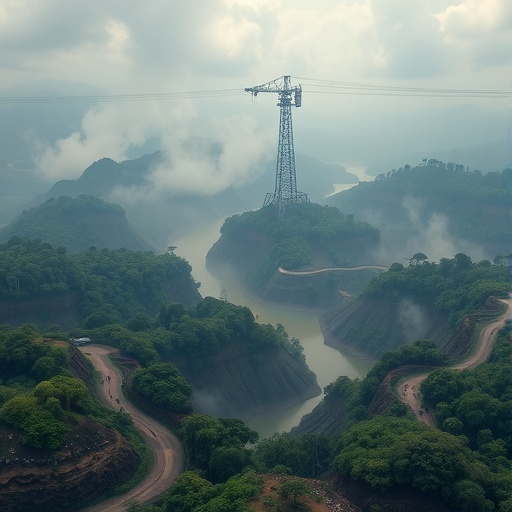
In the relentless pursuit of economic growth and resource acquisition, global mining operations have expanded dramatically in the 21st century, underpinning much of the modern world’s infrastructure and technology. However, a recent groundbreaking study has unveiled a critical and underappreciated environmental consequence of this surge—the extensive deforestation caused by mining activities worldwide. This in-depth investigation reveals how the extraction of minerals and metals is not only reshaping landscapes but also silently eroding forest ecosystems at an alarming rate, raising urgent questions about conservation and sustainability.
Mining, as a land-intensive industry, inherently involves the clearing of vast tracts of natural vegetation, but the new research highlights that the scope of forest loss attributable to mining has been grossly underestimated in previous assessments. Unlike deforestation driven by agriculture or urban expansion, mining-related forest loss is often less visible and poorly documented, obscured by its occurrence in remote and inaccessible regions. The study synthesizes satellite observations and ground-based data to catalogue mining-induced deforestation over the last two decades, exposing patterns that challenge current environmental policies.
Spatial analysis within key mining regions shows that forest degradation arises not only from the direct footprint of mine pits but also from associated infrastructure development, such as access roads, processing plants, and worker settlements. These auxiliary disturbances often create a fragmented mosaic of cleared areas which can have disproportionately large ecological impacts, disrupting wildlife corridors and altering hydrological cycles. Moreover, the subterranean and tailings aspects of mining contribute to soil contamination, further compounding forest ecosystem stress beyond mere canopy loss.
Of particular concern is the substantial deforestation linked to artisanal and small-scale mining (ASM), which although less mechanized, frequently takes place in biodiversity-rich tropical forests. ASM activities have proliferated in nations with weak regulatory frameworks, leading to unchecked forest clearance that escapes detection amid official statistics. This phenomenon complicates conservation strategies, as fragmented governance and informal mining practices elude conventional monitoring mechanisms and hinder enforcement of environmental protections.
The analysis leverages high-resolution temporal satellite imagery processed through advanced machine learning algorithms, enabling precise differentiation between mining-induced deforestation and other causes such as agriculture or natural disturbances. This methodological leap forward provides a clearer picture of where and when forests have been lost to mining, revealing hotspots of degradation in Southeast Asia, Central Africa, and the Amazon basin. The detection of temporal trends indicates both the escalation and seasonal variability of mining-driven forest loss, correlating with commodity price fluctuations and mining investment cycles.
Crucially, the study challenges the traditional boundaries of mining impact assessments by emphasizing indirect and landscape-scale effects as integral to understanding the full environmental cost. Forest fragmentation patterns associated with mining corridors have knock-on consequences for carbon storage capacity, biodiversity conservation, and indigenous land rights. As forests act as vital carbon sinks, their reduction exacerbates global climate change, while habitat disruption threatens countless species, some of which remain scientifically undescribed due to forest remoteness.
This research arrives at a pivotal moment when global mineral demand is projected to soar, fueled by the transition to renewable energy technologies that rely heavily on metals like lithium, cobalt, and nickel. While the green energy transition is imperative, the findings underscore the necessity of integrating stringent environmental safeguards within mining governance frameworks. Sustainable mining practices must evolve to address not only pollution and resource depletion but also the extensive deforestation footprint, demanding technological innovations and enhanced regulatory oversight.
Policy implications emerging from the study advocate for an urgent revision of environmental impact assessments (EIAs) to incorporate rigorous forest loss monitoring, particularly in regions with burgeoning mining activities. The authors call for international collaboration to establish transparent, publicly accessible data repositories and standardized reporting protocols to improve accountability. They suggest the deployment of real-time satellite monitoring linked to enforcement agencies could significantly curtail illegal and unregulated mining expansions.
Additionally, the study invites a re-examination of supply chain management within global industries reliant on mined products. By tracing the origin of raw materials and implementing certification schemes that prioritize ecological integrity, consumers and corporations can incentivize environmentally responsible mining operations. The concept of ‘forest-friendly mining’ emerges as a novel framework aimed at reconciling resource extraction with conservation priorities through adaptive management and restoration commitments post-mine closure.
The socioeconomic dimensions of mining-induced deforestation also receive attention, particularly regarding vulnerable indigenous communities who depend on forest resources for cultural and subsistence purposes. Displacement and loss of access to forest lands often culminate in social conflict and erosion of traditional knowledge systems. The researchers emphasize the critical importance of integrating indigenous rights and livelihoods into mining policy dialogues to ensure equitable and sustainable outcomes.
From a technological perspective, the development of low-impact mining techniques shows promising potential to mitigate environmental harm. Innovations such as underground mining with minimal surface disturbance, precision extraction methods, and enhanced rehabilitation strategies offer pathways to reduce deforestation footprints. However, widespread adoption depends on economic feasibility and robust regulatory frameworks that incentivize sustainable practices over short-term profits.
The study also brings to light the gap in global environmental monitoring where mining deforestation has been overshadowed by more conspicuous drivers like agricultural expansion. By spotlighting this neglected source of forest loss, the authors seek to galvanize the scientific community and policymakers into recognizing mining as a formidable agent of landscape change. This paradigm shift is essential for crafting more inclusive conservation strategies that address all significant contributors to forest degradation.
In conclusion, the revelations from this comprehensive examination of mining-related deforestation constitute a call to action for stakeholders at every level—from local communities and industry actors to governments and international organizations. Balancing the imperative for minerals with the protection of global forest ecosystems requires multi-faceted approaches, encompassing improved data transparency, technological innovation, community engagement, and policy reform. Only through integrating these elements can the escalating deforestation crisis linked to mining be effectively mitigated in the coming decades.
As the world seeks to reconcile development with environmental stewardship, this research underscores that ignoring the silent footprints of mining on forests is no longer an option. The forests lost to mining today represent not just trees felled but ecosystems fragmented, carbon sinks diminished, and cultural foundations disrupted. Addressing this overlooked dimension of deforestation will be critical to achieving sustainable land use and preserving biodiversity for future generations.
The study by Zhang, Chen, An, and colleagues thus stands as a seminal contribution to our understanding of the environmental costs of mining in the 21st century. The hope is that its insights will inspire transformative policy changes and renewed commitment to safeguarding the planet’s vital forest ecosystems amidst ongoing mineral extraction imperatives.
Subject of Research:
Deforestation caused by global mining activities and its environmental impacts in the 21st century.
Article Title:
Overlooked deforestation from global mining activities in the 21st century
Article References:
Zhang, X., Chen, B., An, J. et al. Overlooked deforestation from global mining activities in the 21st century. Nat Commun (2025). https://doi.org/10.1038/s41467-025-67501-1
Image Credits: AI Generated
Tags: 21st century environmental policiesconservation challenges in miningenvironmental consequences of miningforest ecosystems degradationglobal mining operationshidden deforestationinfrastructure development impactsland-intensive industriesmining-induced forest lossremote region deforestationresource acquisition and sustainabilitysatellite observations of deforestation