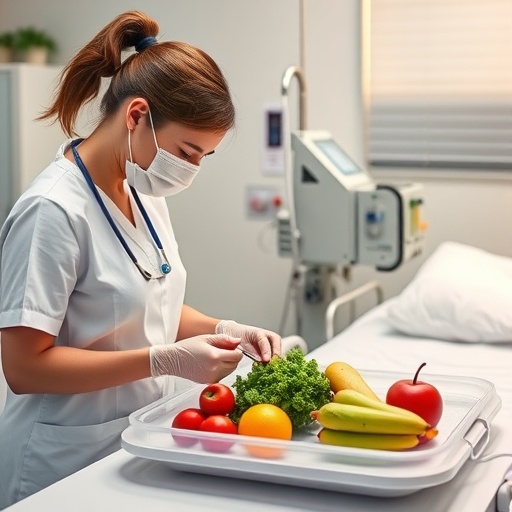
A recent study has unveiled significant insights into the nutritional care competencies possessed by Intensive Care Unit (ICU) nurses in China, shedding light on an area that has profound implications for patient outcomes in critical care. Published in the journal BMC Nursing, the research conducted by Zhu et al. employs a latent profile analysis approach, using robust statistical methods to categorize different profiles of nutritional care competence among nursing professionals in intensive care settings. This innovative methodology allows for a nuanced understanding of how nurses in these high-stakes environments navigate nutritional care, a critical but often overlooked component of patient management.
Nutrition is a fundamental aspect of patient care, particularly in ICUs where patients may be critically ill and unable to meet their own nutritional needs. The research emphasizes that adequate nutritional support is associated with improved healing times, reduced infections, and better overall outcomes for patients with severe conditions. However, the study highlights that the complexity of nutritional care is often compounded by the fast-paced environment of ICU settings, making it essential for nurses to have a solid grounding in nutritional science and the necessary competencies to provide effective care.
The study identified various profiles of nutritional care competence among ICU nurses, illustrating the diversity in skills and knowledge that exists within this essential workforce. By analyzing data collected from a large cohort of nurses working in Chinese ICUs, the authors were able to segment the population into distinct competency groups. This stratification is crucial as it helps identify both the strengths and gaps in nutritional care competencies, informing targeted interventions and training programs to bolster nurses’ skills in this area.
One of the major findings of the research is that a significant portion of ICU nurses demonstrates a substantial level of competence in nutritional care practices, particularly those with specialized training or further education in nutrition. These nurses exhibited a higher level of confidence in their ability to assess patients’ nutritional needs and provide appropriate interventions tailored to individual cases. This correlation underscores the value of continuous professional development and specialized training in enhancing nurses’ competencies, which ultimately benefits critically ill patients who rely on these skilled professionals for their care.
Conversely, the study also revealed areas of concern where certain subsets of nurses—often those with less experience or lacking additional training—exhibited lower levels of competence. Inadequate nutritional care competencies among these individuals may pose risks to patient safety and recovery, as they may struggle to address the complex nutritional needs of their patients effectively. This calls for urgent attention to nursing education and ongoing training programs that specifically address the essentials of nutritional care within critical care settings.
Furthermore, the research highlights the importance of creating a supportive practice environment that empowers nurses to communicate effectively about nutritional needs with their multidisciplinary teams. Effective collaboration between dietitians, physicians, and nurses is essential to develop comprehensive care plans that address not only the medical but also the nutritional aspects of patient care. The findings suggest that hospitals and healthcare systems must prioritize fostering an environment that encourages such collaboration, which can ultimately lead to enhanced patient outcomes.
In light of these findings, the call to action for healthcare institutions is clear. There is a pressing need to implement structured educational programs that enhance the nutritional competencies of ICU nurses. Given the dire consequences of malnutrition in critically ill patients, investing in nurse education and training should be considered a critical aspect of quality care in intensive settings. By prioritizing nutritional education, hospitals can ensure that their nursing staff is equipped to meet the diverse needs of their patients effectively.
The implications of this study extend beyond the borders of China, as many health systems worldwide grapple with similar challenges in nurturing competent nursing professionals in nutritional care. Shared insights from this research can serve as a foundational template for other nations looking to enhance their intensive care practices. By advocating for and implementing systems that prioritize nutritional education among nurses, healthcare providers globally can improve patient outcomes and contribute to more effective ICU practices.
Moreover, the significance of this research is amplified by the ongoing global challenges posed by malnutrition and obesity. As healthcare providers work to balance the needs of diverse patient populations, a keen understanding of nutritional care remains paramount. The findings suggest that addressing nurse competencies can fundamentally alter the trajectory of care delivered in ICUs, highlighting the need for a comprehensive approach that integrates dietary considerations into routine critical care protocols.
ICU settings are often characterized by rapid decision-making and high-pressure situations, and thus, the ability for nurses to quickly assess and respond to evolving nutritional needs can drastically affect patient recovery times. The study underscores how a more profound knowledge and competence in nutritional care can equip ICU nurses to make informed, timely decisions that align with best practices, ultimately enhancing patient safety and quality of care.
As the research continues to resonate with healthcare professionals and institutions, it remains imperative for nursing leaders and educators to develop resources and training tools that are aligned with contemporary best practices in nutritional care. The potential for improved patient outcomes through enhanced nurse competencies not only reflects a commitment to client-centered care but also advocates for the critical role nurses play in the holistic health and recovery of patients.
In conclusion, the analysis presented by Zhu et al. serves as a vital reminder of the essential role that nutritional care plays in the context of intensive care nursing. Empowering ICU nurses with the competencies needed to navigate the complexities of nutrition will not only improve the care provided to critically ill patients but will also elevate the standards of nursing practice as a whole. Consequently, the health of future generations rests on the competencies and capabilities of today’s nursing workforce—an investment that can transform intensive care practices and ultimately save lives.
Subject of Research: Nutritional care competence among ICU nurses in China
Article Title: Nutritional care competence among ICU nurses in China: a latent profile analysis
Article References:
Zhu, XY., Guo, XX., Ge, WJ. et al. Nutritional care competence among ICU nurses in China: a latent profile analysis.
BMC Nurs (2025). https://doi.org/10.1186/s12912-025-04244-w
Image Credits: AI Generated
DOI: 10.1186/s12912-025-04244-w
Keywords: ICU, nutritional care, nursing competence, critical care, China, nursing education.
Tags: BMC Nursing journal studyChina nursing researchcompetencies for effective nursing careICU environments and patient managementICU nurses nutritional care skillsimproving healing times in ICUinfection reduction through nutritional carelatent profile analysis in nursingnursing professionals nutritional sciencenutritional care competencies in critical carenutritional support for critically ill patientspatient outcomes in intensive care