Recent advancements in the understanding of melanoma have emphasized the significance of genetic mutations in dictating treatment outcomes. Among the various mutations studied, the BRAF gene mutation has emerged as a crucial contributor to the pathology of metastatic melanoma. Researchers have recently published compelling findings that shed light on how the frequency of BRAF variant alleles can serve as a prognostic marker for patients undergoing BRAF/MEK inhibitor therapy. This innovative research could potentially revolutionize the way clinicians predict treatment outcomes in melanoma patients and tailor their therapeutic strategies accordingly.
The study, conducted by Guida and colleagues, focuses on the clinical implications of BRAF variant allele frequency. The researchers recruited a significant cohort of metastatic melanoma patients, each diagnosed with distinct variants of the BRAF gene, which often lead to uncontrolled cell proliferation. In their analysis, the team aimed to correlate the frequency of these mutations with patient outcomes after treatment with targeted therapies composed of BRAF and MEK inhibitors. This approach represents a targeted effort to optimize the therapeutic approach to melanoma by identifying patients who might respond poorly to standard treatment.
Melanoma, a particularly aggressive form of skin cancer, has seen a gradual improvement in treatment options due to the advent of targeted therapies. BRAF inhibitors, for instance, have been revolutionary, yet not all patients experience the same level of efficacy. This inconsistency in treatment response has warranted further investigation into genetic factors that could predict patient outcomes. By examining BRAF variant allele frequency, Guida et al. sought to provide insights into this existing knowledge gap, allowing for more personalized healthcare solutions.
In this study, the authors meticulously determined the variant allele frequency among the melanoma patients in their sample. This involved advanced genomic sequencing techniques that enabled precise quantification of mutant alleles in comparison to the normal allele. Higher frequencies of BRAF mutations have been associated with greater aggressiveness in melanoma; therefore, the team anticipated that a rise in variant allele frequency might correlate with a reduced response to therapy and poorer overall survival rates.
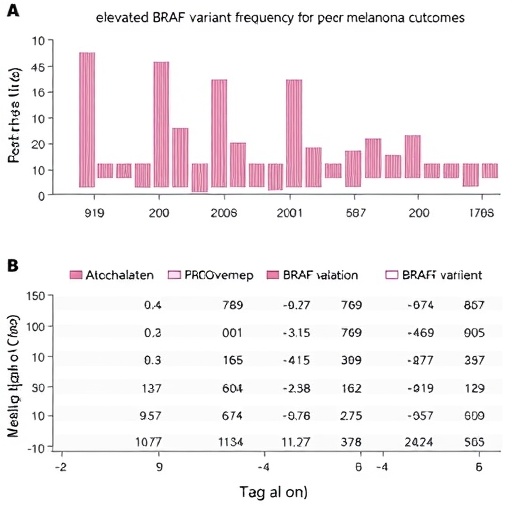
The findings were striking and persistent across analyses. Data showed a clear trend: patients exhibiting high BRAF variant allele frequencies had significantly poorer outcomes when treated with BRAF/MEK inhibitors. Specifically, those with elevated mutation frequencies experienced shorter progression-free survival and overall survival rates compared to their counterparts with lower frequencies. These results suggest that the BRAF variant allele frequency could serve as an important biomarker, highlighting the need for an integrative approach to patient screening.
Moreover, the implications of this research extend beyond merely predicting outcomes. Identifying high-risk patients based on BRAF variant allele frequency enables clinicians to make informed decisions about treatment planning. For instance, those identified as having poor prognostic indicators may benefit from more aggressive therapeutic strategies, possibly including combination therapies or participation in clinical trials exploring novel agents. The researchers recommend that awareness of these genetic markers be integrated into routine clinical practice for melanoma management.
The study does not just illuminate the significance of BRAF variant allele frequency; it also highlights the broader potential of genomics in oncology. Reflecting on this research, it is evident that as understanding of genetic influences on cancer advances, the potential for personalized medicine becomes increasingly attainable. Therapies tailored to individual genetic makeups promise to enhance efficacy rates and minimize adverse effects, ultimately transforming the patient care landscape.
Furthermore, the evolution of next-generation sequencing technologies has facilitated this research, providing researchers with the tools necessary to delve into complex genetic landscapes. As genomic data becomes more accessible, the implications for precision medicine in melanoma treatment could be profound. Future research endeavors should aim to expand upon these findings, incorporating additional biomarkers and exploring the interactions between different genetic variants.
In conclusion, Guida and colleagues have made significant strides in identifying how BRAF variant allele frequency can act as a prognostic marker for metastatic melanoma patients receiving BRAF/MEK inhibitors. Their work underscores the necessity of integrating genetic insights into clinical practice, paving the way for improved patient stratification and treatment outcomes. As the medical community continues to embrace a more personalized approach to oncology, this research serves as an important step in harnessing the potential of genetic analysis to revolutionize cancer care.
The body of work presented by Guida et al. is a compelling example of how scientific inquiry can lead to meaningful advancements in medicine. By connecting genetic profiles to treatment outcomes, they provide not only a roadmap for future research but also a clearer path to enhancing the quality of care for melanoma patients. As we progress into an era of personalized medicine, the importance of genetic markers like BRAF variant allele frequency cannot be overstated, marking a new chapter in the fight against cancer.
With this knowledge in hand, the challenge ahead will be to implement these findings in clinical settings effectively. To that end, further studies are necessary to establish standardized protocols for assessing BRAF variant allele frequency routinely in melanoma patients. As researchers, clinicians, and the medical industry as a whole forge ahead, the commitment to utilizing genetic insights to improve patient outcomes will remain paramount.
In a world where rapid advancements in cancer research continually reshape therapeutic landscapes, the exploration of BRAF variant allele frequency illustrates the power of genetics in developing targeted, effective treatment strategies. As we continue to unearth the complexities of melanoma and other malignancies, patient survival can only benefit from these scientific efforts. Collaborative partnerships between researchers and clinicians will ultimately forge innovative pathways for cancer treatment, underscoring the vital importance of research in this ongoing fight against metastatic disease.
Subject of Research: BRAF variant allele frequency and outcomes in metastatic melanoma patients treated with BRAF/MEK inhibitors.
Article Title: High BRAF variant allele frequency predicts poor outcomes in metastatic melanoma patients treated with BRAF/MEK inhibitors.
Article References: Guida, M., Apollonio, B., Romano, L. et al. High BRAF variant allele frequency predicts poor outcomes in metastatic melanoma patients treated with BRAF/MEK inhibitors. J Transl Med 23, 1407 (2025). https://doi.org/10.1186/s12967-025-07434-x
Image Credits: AI Generated
DOI: https://doi.org/10.1186/s12967-025-07434-x
Keywords: BRAF mutation, metastatic melanoma, targeted therapy, precision medicine, prognostic biomarker.
Tags: advancements in melanoma researchBRAF gene mutation in melanomaBRAF/MEK inhibitor therapyclinical implications of BRAF mutations.frequency of BRAF variant allelesgenetic mutations and skin cancermetastatic melanoma treatment outcomesoptimizing melanoma treatment strategiespatient outcomes in melanoma therapypersonalized medicine in melanomaprognostic markers in melanomatargeted therapies for melanoma