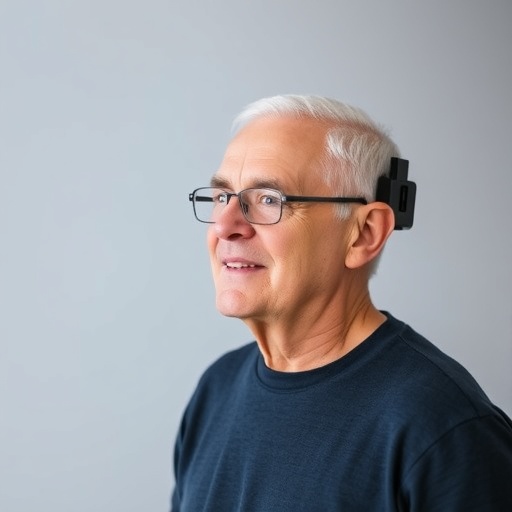
In the realm of neurotechnology, recent advancements are propelling our understanding and management of age-related cognitive decline and mobility impairments. A groundbreaking study led by researchers Zhang, Pan, and Zheng presents innovative insights into the efficacy of a network-based transcranial direct current stimulation (tDCS) protocol. This randomized controlled crossover study, published in BMC Geriatrics, highlights the potential of tDCS not only to enhance gait but also to bolster cognitive function among older adults.
Transcranial direct current stimulation has garnered attention in recent years due to its non-invasive nature and promising applications in neuromodulation. By applying a low electrical voltage to specific areas of the scalp, researchers aim to influence neuronal activity. This process can facilitate neuroplasticity and optimize brain functioning, making it an intriguing area of exploration for cognitive and motor rehabilitation in aging populations.
In their meticulously designed clinical trial, the research team recruited a diverse cohort of older adults, assessing both their cognitive abilities and gait parameters before, during, and after the application of the tDCS method. Participants were subjected to crossover conditions, alternating between real tDCS and sham stimulation, ensuring a robust comparison of outcomes. This rigorous design bolstered the validity of findings and reinforced the reliability of the results.
The study’s outcomes revealed significant improvements in various cognitive assessments, including executive function and working memory, indicating that tDCS offers a viable therapeutic avenue for cognitive rehabilitation. Moreover, improvements in gait parameters, characterized by better balance, quicker walking speed, and enhanced coordination, were also noted. These dual benefits underscore the multifaceted potential of tDCS in addressing both cognitive and physical deterioration associated with aging.
A particularly fascinating aspect of the research lies in its network-based approach. The stimulation protocol targeted specific brain networks integral to movement and cognitive processes. By focusing on these interconnected neural circuits, researchers hoped to elicit a more profound and long-lasting impact on participants’ abilities. This represents a shift from traditional stimulation methods, which often focus on isolated brain regions, thereby enhancing the potential applicability of tDCS in diverse clinical settings.
The implications of this study reach far beyond the laboratory. With the aging population worldwide, effective strategies to mitigate cognitive decline and maintain mobility are paramount. The findings suggest a future where tDCS can be integrated into standard therapeutic regimens for older adults, alongside traditional interventions such as physical therapy and cognitive training. In doing so, clinicians may foster improved quality of life and independence among aging patients.
Furthermore, the non-invasive nature of tDCS adds to its appeal as a treatment modality. Unlike pharmacological interventions, which can be associated with side effects and interactions, tDCS provides a safe alternative that may enhance patient compliance. The simplicity and accessibility of this technology open the door for widespread use in clinics, rehabilitation centers, and even home settings, empowering older adults to take charge of their cognitive health.
Despite the promising results, the study acknowledges the need for larger-scale trials to explore long-term effects and optimize stimulation parameters. Future investigations could delve deeper into variations, including duration, frequency, and the specific brain areas stimulated, to maximize therapeutic outcomes. There’s also a call for studies that could address the individual variability in response to tDCS, factoring in demographic variables such as age, gender, and baseline health status.
As researchers continue to unravel the complexities of the human brain and its response to innovative interventions like tDCS, the understanding of neuroplasticity and its implications for aging will broaden. The lexicon of treatments for cognitive decline and mobility issues is expanding, and tDCS stands at the forefront, offering hope for those who seek to maintain their independence and cognitive vitality as they age.
In conclusion, the pioneering study conducted by Zhang et al. not only sheds light on the significant benefits of tDCS but also sets the stage for further research in this promising field. The convergence of neurotechnology and geriatric care may result in transformative approaches that redefine aging, emphasize quality over quantity, and inspire future generations to prioritize cognitive wellness throughout their golden years.
As we advance into a future marked by technological innovation, the lessons learned from this tDCS study will likely pave the way for novel therapeutic strategies that address the unique challenges faced by the elderly population. The promise of rejuvenation and improved quality of life awaits, serving as a reminder that age is not merely a number but an opportunity for continued growth and adaptation.
Subject of Research: Network-based transcranial direct current stimulation in older adults
Article Title: Network-based transcranial direct current stimulation may improve gait and cognitive function in older adults: a randomized controlled crossover study.
Article References: Zhang, Y., Pan, W., Zheng, S. et al. Network-based transcranial direct current stimulation may improve gait and cognitive function in older adults: a randomized controlled crossover study. BMC Geriatr 25, 1029 (2025). https://doi.org/10.1186/s12877-025-06749-0
Image Credits: AI Generated
DOI: https://doi.org/10.1186/s12877-025-06749-0
Keywords: Transcranial direct current stimulation, cognitive function, gait improvement, geriatric health, neurological rehabilitation, non-invasive treatment, neuroplasticity, electrical stimulation, aging population, clinical trial insights.
Tags: brain function optimization in seniorsclinical trial findings on tDCScognitive decline management in older adultsenhancing rehabilitation in older adultsgait improvement through neuromodulationinnovative neurotechnology for agingmobility impairments in elderly individualsneuroplasticity in aging populationsnon-invasive brain stimulation techniquesrandomized controlled crossover study in geriatricstDCS effects on cognitive functiontranscranial direct current stimulation for seniors