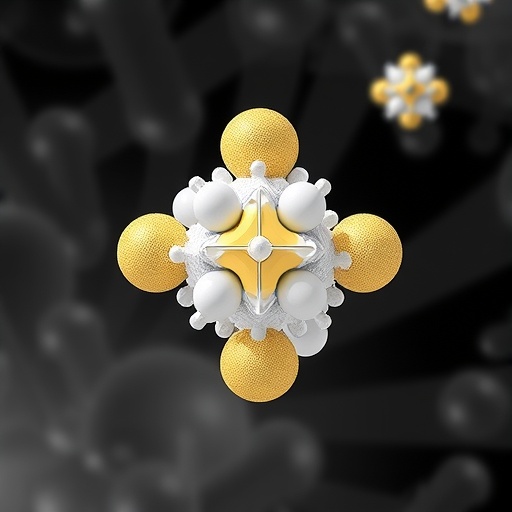
In the realm of photocatalytic materials, research is continually evolving, seeking improved processes for the degradation of organic pollutants. A significant advancement has emerged from the recent works of Manikandan, Sasikumar, and Seenivasan, whose investigations delve into the structural modifications of graphitic carbon nitride, or g-C3N4. This innovative study is centered on the incorporation of nickel oxide (NiO) nanoparticles, which are showing promising results in enhancing the photocatalytic properties of g-C3N4. This research not only offers theoretical enhancements to the existing photocatalytic frameworks but also implications for real-world applications in environmental remediation.
Graphitic carbon nitride is celebrated for its unique electronic properties and high stability, making it a compelling candidate for photocatalytic applications. In their research, the authors explore the synergy between g-C3N4 and NiO nanoparticles, unveiling the potential for a revolutionary shift in how pollutants are treated, particularly in industrial wastewater management. By systematically modifying the structural aspects of g-C3N4 through the addition of NiO, the researchers aim to overcome some limitations posed by g-C3N4 in its pristine form—especially its relatively low efficiency under visible light.
The introduction of NiO nanoparticles serves multiple purposes. Not only do they enhance the surface area available for catalytic reactions, but they also contribute to improved charge separation during the photocatalytic process. Enhanced charge separation is particularly crucial as it significantly reduces the recombination rate of electron-hole pairs, enabling more effective degradation of organic pollutants under light irradiation. This mechanism is central to the efficacy of photocatalysis, and the researchers have produced data to support the theory that the g-C3N4/NiO composite operates on this principle.
Field studies focusing on the performance of the modified g-C3N4 have yielded remarkably positive results. The hybrid material demonstrates a superior photocatalytic activity compared to its non-modified counterpart, particularly in the degradation of dyes and other complex organic molecules, which are often resistant to traditional treatment methods. The research underscores the importance of optimizing both the morphology and distribution of the NiO nanoparticles throughout the g-C3N4 matrix to achieve maximal degradation efficiency.
Moreover, the stability of the photocatalytic material over extended periods is a crucial factor in its practical application. The study indicates that the g-C3N4/NiO composite maintains its effectiveness even after several cycles of use, which is a promising feature for potential commercial applications. This durability further reinforces the idea that photocatalytic processes can be relied upon to achieve sustainable environmental benefits, particularly in localized water treatment solutions that integrate seamlessly into existing infrastructures.
In a world increasingly aware of environmental sustainability, the urgency for effective pollution control mechanisms has never been greater. The integration of advanced materials like modified g-C3N4 into conventional wastewater treatment frameworks presents an opportunity to significantly reduce the ecological footprint of such processes. The implications of this research could not only transform how industries approach wastewater treatment but also foster a greater understanding of emerging photocatalytic materials and their role in enhancing environmental quality.
The research also delves deep into the characterization techniques utilized to confirm the successful synthesis of the g-C3N4/NiO composite. Techniques such as X-ray diffraction, transmission electron microscopy, and surface area analysis provide critical insights into the elemental composition and structural integrity of the synthesized material. These characterizations are essential for establishing the reliability of the findings and ensure reproducibility in future studies or practical implementations.
Furthermore, as industries advance toward greener technologies, scientists and engineers collaborating in this field have much to gain from the insights derived from such studies. The pathways to harnessing photocatalysis for sustainable practices are becoming more intricate, bringing together disciplines such as materials science, environmental engineering, and nanotechnology. Collaborative research endeavors like those presented in this study can align commercial applications with cutting-edge scientific findings, ultimately leading to enhanced public health and cleaner ecosystems.
In conclusion, the structural modification of g-C3N4 with NiO nanoparticles represents a noteworthy leap forward in photocatalytic research. The findings of Manikandan, Sasikumar, and Seenivasan present a promising narrative in the discussion of advanced materials for pollution remediation. This innovative approach showcases the potential to create more efficient, sustainable, and durable materials for the treatment of organic pollutants, which could have far-reaching implications for both environmental sustainability and public health.
As the researchers continue exploring the multifaceted nature of g-C3N4 and its derivatives, it is clear that their work is ripe for future advancements. The ongoing investigation into nanoparticle interactions, synergies, and optimization signifies an exciting trajectory for photocatalytic materials in the years to come. With the groundwork laid for further exploration and practical applications established, we stand at the threshold of a new era in photocatalytic environmental solutions.
The future exploration into adapting these materials into real-world applications will be crucial. There remains a wealth of knowledge to uncover regarding the scalability of such systems and how they can be integrated within existing treatment facilities. The challenge will not only lie in optimizing performance but also ensuring economic viability to encourage widespread adoption across multiple industries.
As we look forward to the future of photocatalysis, the contribution of these innovative research efforts cannot be overstated. They remind us of the importance of continued investment in hybrid materials and sustainable technologies as we strive for more efficient methods of combating pollution and protecting our planet.
Subject of Research: Photocatalytic removal of organic pollutants using g-C3N4 modified with NiO nanoparticles.
Article Title: Structural modification of g-C3N4 with NiO nanoparticles for superior photocatalytic removal of organic pollutants.
Article References:
Manikandan, S., Sasikumar, D. & Seenivasan, S. Structural modification of g-C3N4 with NiO nanoparticles for superior photocatalytic removal of organic pollutants. Ionics (2025). https://doi.org/10.1007/s11581-025-06844-7
Image Credits: AI Generated
DOI: 17 December 2025
Keywords: Photocatalysis, g-C3N4, NiO nanoparticles, organic pollutants, structural modification, environmental remediation, wastewater treatment.
Tags: enhanced photocatalytic efficiencyenvironmental remediation techniquesgraphitic carbon nitride modificationsindustrial wastewater management solutionsNiO nanoparticles in photocatalysisorganic pollutant removal strategiesphotocatalytic materialspollution degradationstructural enhancements in g-C3N4synergy between g-C3N4 and NiOvisible light photocatalysiswastewater treatment innovations