In an increasingly health-conscious world, the quest for effective pain relief has reached unprecedented levels. Health professionals and researchers have been diligently exploring alternative treatments that integrate holistic approaches and conventional medicine. Among these, acupotomy—a minimally invasive technique derived from traditional acupuncture—has attracted attention. Recent research has provided critical insights into its efficacy, particularly when combined with epidural steroid injections, for treating lumbosacral radiculopathy, a condition associated with nerve pain in the lower back.
The study in question, spearheaded by a team of researchers including Jang, Park, and Lee, employs a comprehensive cost-utility analysis, revealing crucial findings about the effectiveness and economic viability of acupotomy coupled with epidural steroid injections. This research offers a nuanced understanding of patient outcomes and healthcare costs, a vital consideration for healthcare providers and policymakers in an era marked by rising medical expenses.
Lumbosacral radiculopathy affects a significant portion of the population, often resulting in debilitating pain, decreased mobility, and a lower quality of life. Traditional treatment approaches have included physical therapy, medication, and in severe cases, surgical interventions. However, these options are not always effective, and many patients find themselves searching for alternative solutions. Acupotomy, integrating the principles of acupuncture with modern medical techniques, emerges as a promising candidate that warrants thorough investigation.
In the randomized controlled trial conducted by the researchers, participants receiving acupotomy experienced significant reductions in pain and enhancements in functional outcomes. The application of needles not only targets acupuncture points but also utilizes specialized tools to penetrate deeper tissues, potentially yielding more profound therapeutic effects than traditional acupuncture alone. This innovative hybrid approach presents a paradigm shift in the management of chronic pain conditions.
Moreover, the incorporation of epidural steroid injections—a common treatment for radiculopathy—compliments acupotomy’s effects, aiming to reduce inflammation and alleviate pain. The researchers meticulously documented these combined effects, allowing for a clearer understanding of patient progress. Patients receiving the dual intervention reported lower levels of pain and improved daily functioning. Thus, the combination therapy demonstrates a synergistic effect that holds promise for those grappling with chronic pain.
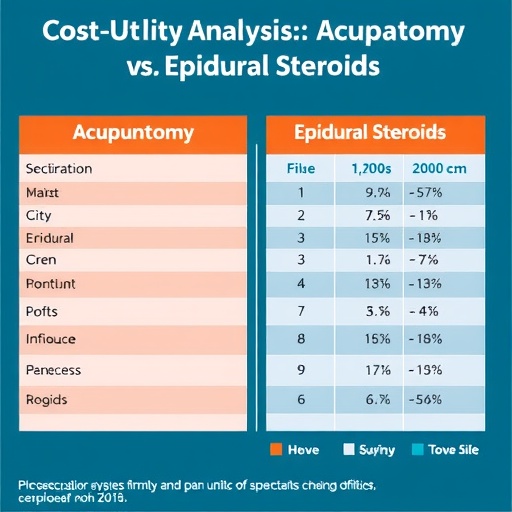
From a financial perspective, the study presents a compelling case for the cost-effectiveness of this combined treatment approach. In an era where healthcare costs are skyrocketing, finding treatments that deliver tangible benefits without excessive expenditure is paramount. The cost-utility analysis conducted by the research team indicates that the benefits of combining acupotomy with epidural injections extend beyond immediate pain relief to encompass long-term financial savings through reduced need for further interventions.
Additionally, the focus on patient-reported outcomes provides invaluable insights into the actual experiences of those undergoing these treatments. Patient subjective assessments on pain levels, functional abilities, and overall satisfaction are crucial data points that enhance understanding of treatment efficacy. The comprehensive analysis illuminates a more holistic picture of medical interventions, emphasizing the importance of not only clinical outcomes but also patient satisfaction and well-being.
As this research informs future clinical practices, it may influence the integration of alternative medicine in traditional health care settings. The potential incorporation of acupotomy could lead to a broader acceptance of holistic practices within the conventional medical community, paving the way for further research and development in this field.
The implications of this study extend beyond individual patient outcomes and cost savings; they may also influence public health policies. As healthcare systems grapple with the challenges posed by chronic pain and rising treatment costs, evidence-based approaches such as the one demonstrated in this study may pave the way for innovative treatment protocols that enhance both quality of care and cost-effectiveness.
Looking ahead, ongoing research into the mechanisms underlying the efficacy of acupotomy is essential. Understanding the biological and physiological responses triggered by this technique could provide deeper insights into its application and optimize treatment protocols. Moreover, larger scale studies are warranted to substantiate the findings of this analysis, ensuring the robustness and reproducibility of results across diverse patient populations.
In conclusion, the findings presented by Jang, Park, and Lee reflect a significant advancement in the field of pain management. The promising results of the combined intervention of acupotomy and epidural steroid injections not only highlight an effective therapeutic option for lumbosacral radiculopathy but also underscore the vital integration of cost-utility analyses in clinical settings. This groundbreaking research may encourage further interdisciplinary collaboration to refine treatment methodologies, enhance patient outcomes, and ultimately transform the landscape of chronic pain management.
The future of pain management hinges on embracing innovative approaches like acupotomy, which challenge conventional paradigms while fostering a myriad of therapeutic alternatives for patients. In an era where patients seek comprehensive and effective pain relief, the union of traditional practices with modern medical techniques may very well hold the key to enhanced well-being and quality of life for those affected by chronic pain.
Subject of Research: Lumbosacral radiculopathy treatment methodologies
Article Title: Cost-utility analysis of acupotomy combined with epidural steroid injection for lumbosacral radiculopathy: analysis of randomized controlled trial
Article References:
Jang, S., Park, TY., Lee, JH. et al. Cost-utility analysis of acupotomy combined with epidural steroid injection for lumbosacral radiculopathy: analysis of randomized controlled trial.
BMC Complement Med Ther (2025). https://doi.org/10.1186/s12906-025-05212-2
Image Credits: AI Generated
DOI: 10.1186/s12906-025-05212-2
Keywords: Acupotomy, lumbosacral radiculopathy, epidural steroid injection, pain management, cost-utility analysis.
Tags: acupotomy for pain reliefalternative treatments for nerve paincost-utility analysis in healthcareeconomic viability of alternative therapiesefficacy of acupotomy in clinical studiesepidural steroids for lumbosacral radiculopathyhealthcare costs and patient outcomesholistic approaches in modern medicineintegrative approaches to pain managementlumbosacral radiculopathy treatment optionsminimally invasive pain management techniquesresearch on acupotomy and epidural injections