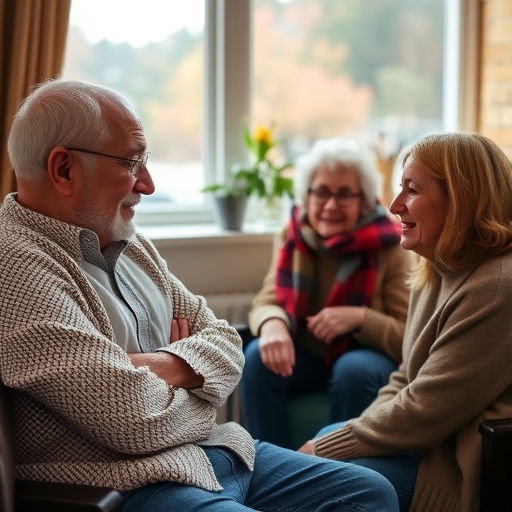
In an increasingly digitalized world, one might assume that connectivity is at an all-time high, especially amidst the technological advancements that promise to bridge distances. However, a nuanced examination reveals a stark reality that contradicts this assumption—social isolation among older adults residing in community settings. This pressing issue has been meticulously explored in a recent qualitative study led by a team of researchers, including notable contributors He, Guo, and Sun. Their comprehensive research has surfaced compelling insights into the lived experiences of older adults who find themselves grappling with the profound emotional and psychological effects of social isolation.
As we delve deeper into the findings, it becomes clear that the phenomenon of social isolation is not merely a result of individual circumstances but is often compounded by systemic factors. Many older adults, particularly those living alone, experience a significant reduction in face-to-face interactions. This diminishment of social contact has repercussions that extend beyond loneliness; it can influence mental health, physical well-being, and overall quality of life. The study captures this critical interplay through insightful narratives that shed light on the multi-dimensional nature of social isolation.
A pivotal aspect of the study is the method employed to gather data. The researchers utilized qualitative interviews, which allowed participants to express their thoughts and feelings in their own words, free from the constraints of structured questionnaires. This approach provided a rich tapestry of experiences that underscore how social isolation affects individuals differently. One participant poignantly expressed that the absence of regular social interactions made them feel as if they were “invisible,” a sentiment that resonated with many others in the study. These powerful testimonials highlight the need for deeper understanding and empathy towards older adults navigating solitude.
Moreover, the study delineates various factors that contribute to social isolation, including mobility challenges, loss of friends and family, and a general sense of disconnection from the community. Significantly, the researchers identified that older adults often perceive their social networks as diminishing over time, leading to feelings of helplessness and despair. The emotional narratives captured in the research paint a vivid picture of how these experiences manifest in daily life, illustrating that social isolation can be as impactful as physical ailments, if not more so.
The implications of this research extend beyond individual experiences; they touch on broader societal issues. In understanding the nuances of social isolation, policymakers can develop targeted interventions to mitigate its effects. For example, programs aimed at increasing community engagement, social activities, and befriending initiatives could play a crucial role in addressing this growing concern. The study emphasizes the importance of fostering supportive environments that encourage interaction among older adults, thereby facilitating a sense of belonging and community.
In addition to community efforts, the authors highlight the role of families in combating isolation. Consistent communication and involvement can serve as a lifeline for older adults, providing them with the emotional support and companionship that many lack due to external circumstances. It underscores the necessity of bridging generational gaps and encouraging familial bonds to counteract the alienation that often accompanies aging.
Technological solutions also emerge as a topic of discussion within the study. The researchers recognize that while technology has the potential to connect individuals virtually, it may also inadvertently exacerbate feelings of isolation for those who are not tech-savvy. Therefore, educational initiatives aimed at enhancing digital literacy among older adults could enhance their ability to engage with family, friends, and community resources online.
As we reflect upon the findings of this significant study, it is essential to acknowledge the resilience exhibited by many older adults. Their stories exemplify strength in the face of adversity, showcasing how some individuals seek creative ways to maintain social connections despite geographic or physical barriers. Crafting and sustaining relationships, even through virtual means, represents a stirring testament to the human spirit’s intrinsic need for companionship.
While the research focuses on the experiences of social isolation, it also opens up discussions about potential remedies. Future initiatives could consider incorporating mental health support as a cornerstone of community programming for older adults. Accessing mental health resources can foster resilience and coping strategies that empower individuals to navigate feelings of loneliness and foster deeper social ties.
The study urges gerontologists, healthcare professionals, and community planners to prioritize social connectivity as an essential aspect of holistic elder care. Understanding that social interactions contribute significantly to longevity and well-being will shape the way resources are allocated and initiatives designed. The benefits of community involvement extend far beyond enhancing social capital; they can lead to improved mental health outcomes, reduced healthcare costs, and a more vibrant society overall.
In conclusion, the qualitative research conducted by He, Guo, and Sun unearths vital insights into the complex dynamics of social isolation experienced by community-dwelling older adults. Their findings serve as a clarion call for society to address this pervasive issue with compassion, innovation, and urgency. By working collectively to cultivate environments that foster connection and inclusive engagement, we can hope to mitigate the effects of social isolation and enhance the quality of life for older adults everywhere.
Our ability to heed these lessons will not only benefit older generations but will also enrich our communities as a whole, reminding us of the fundamental values of connection, empathy, and humanity that underpin our societal fabric. The time to acknowledge and address the plight of socially isolated older adults is now, as we navigate the challenges of an increasingly fragmented world.
Subject of Research: Social isolation among community-dwelling older adults.
Article Title: The experience of social isolation among community-dwelling older adults: a qualitative study.
Article References:
He, M., Guo, S., Sun, X. et al. The experience of social isolation among community-dwelling older adults: a qualitative study.
BMC Geriatr 25, 1026 (2025). https://doi.org/10.1186/s12877-025-06735-6
Image Credits: AI Generated
DOI: https://doi.org/10.1186/s12877-025-06735-6
Keywords: Social isolation, older adults, community engagement, mental health, qualitative research.
Tags: community settings for seniorsdigital connectivity and seniorsemotional effects of isolationface-to-face interactions in elderlymental health impacts of lonelinessnarratives of older adultspsychological effects of lonelinessqualitative research on agingquality of life and agingreducing isolation in senior communitiessocial isolation in older adultssystemic factors of social isolation