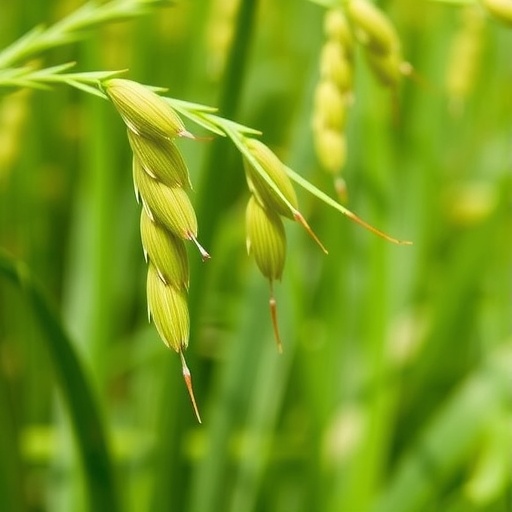
In a groundbreaking study recently published in BMC Genomics, researchers have undertaken a comprehensive exploration of the DREB gene family in barley, scientifically known as Hordeum vulgare L. This family of genes has garnered significant attention due to its crucial role in plant responses to environmental stressors, particularly drought and salinity. The extensive research presented by Liu et al. promises to provide vital insights into the genetic mechanisms enabling barley plants to cope with increasingly challenging climatic conditions.
DREB, short for Dehydration-Responsive Element Binding proteins, is a key transcription factor family in plants that plays a significant role in enhancing drought and salinity tolerance. The current study meticulously identified and characterized these genes within the barley genome, a process that is pivotal not only for understanding the adaptive qualities of this crop but also for its implications in agricultural resilience. The authors employed advanced genomic technologies and bioinformatics tools that facilitated the identification of various DREB members within the barley genome, correlating their sequences with functional annotations.
The research findings indicate that the DREB gene family in barley consists of several members that exhibit distinct functional profiles and expressions under different stress conditions. By analyzing the sequences and their regulatory elements, Liu and colleagues determined how these genes are modulated in response to both drought and saline environments. This granularity allows for a refined understanding of the specific roles of individual DREB proteins in orchestrating plant stress responses.
Moreover, the researchers did not solely rely on sequencing and annotation; they conducted extensive functional characterization of key DREB genes. This included overexpression studies in model plant systems, where specific DREB genes were artificially elevated to observe the resultant physiological and phenotypic changes in the plants. These experiments provided critical evidence pointing to the enhanced performance of barley under stress, effectively showcasing the practical implications of manipulating these genes for improved crop resilience.
Furthermore, the implications of these findings reach far into the realm of agricultural biotechnology. Genetic engineers may leverage this knowledge to develop barley varieties that are better equipped to withstand drought and salinity stress. In regions where water scarcity is increasingly becoming a concern, such genetically improved crops could ensure food security and sustain livelihoods dependent on barley cultivation. This underscores the importance of investing in genetic research that identifies critical traits for climate resilience.
The study also draws attention to the evolutionary significance of the DREB gene family as described in their phylogenetic analysis. The researchers charted the evolutionary divergence among different DREB members not only within barley but also compared them with other important crop species. Such comparative analyses provide deeper insights into how different plants have adapted to their environments and can guide future breeding programs aimed at maximizing stress tolerance across various crops.
As the climate crisis escalates, understanding the genetic frameworks that permit plants to endure extreme weather becomes a priority. The findings from Liu et al.’s work stand on the frontier of climate-adaptive agriculture, promising to alter our cultivation practices. Crop improvement strategies could be successfully augmented by coupling traditional breeding techniques with modern genomic technologies, thereby optimizing the potential to enhance yield stability under adverse conditions.
Additionally, the research highlights the necessity for integrating multidisciplinary approaches, including genetics, genomics, and agronomy, to tackle the challenges posed by abiotic stress. Such holistic strategies foster a deeper understanding of plant biology and can catalyze advances in sustainable agricultural practices.
This innovative study reinforces the vital connection between plant science and global challenges such as food scarcity, climate change, and sustainable resource management. By understanding the mechanisms underlying stress responses, scientists and agricultural experts can collaborate to create solutions that enhance food security while minimizing environmental impacts.
In conclusion, the investigation into the DREB gene family in barley not only marks a significant scientific advance but also shines a light on the potential for genetic solutions to agricultural challenges. The expansive insights gathered from this research are poised to influence future scientific inquiries and practical applications, creating an avenue toward more resilient food crops that can thrive in an unpredictable climate. The work of Liu et al. serves as a clarion call to harness genetic research as a formidable tool against global agricultural crises, paving the way for innovations that will benefit farmers worldwide.
The research emphasizes the importance of ongoing exploration in plant genomics and the necessity of developing strategies to utilize this information effectively. As we seek to innovate within the field of agriculture, studies like this one will be fundamental in guiding our endeavors toward a sustainable and food-secure future.
Subject of Research:
DREB gene family in barley and its role in drought and salinity responses.
Article Title:
Genome-wide identification and functional characterization of the DREB gene family in barley (Hordeum vulgare L.) reveal its role in drought and salinity responses.
Article References:
Liu, H., Zheng, M., Han, S. et al. Genome-wide identification and functional characterization of the DREB gene family in barley (Hordeum vulgare L.) reveal its role in drought and salinity responses.
BMC Genomics (2025). https://doi.org/10.1186/s12864-025-12433-9
Image Credits:
AI Generated
DOI:
Keywords:
DREB gene family, barley, drought tolerance, salinity response, genome-wide identification, functional characterization, agricultural biotechnology.
Tags: advanced genomic technologies in plant researchagricultural resilience in climate changeBarley DREB gene familybioinformatics in gene characterizationDehydration-Responsive Element Binding proteinsdrought stress tolerance in barleyenvironmental stress adaptation in cropsfunctional profiling of DREB genesgenetic mechanisms in Hordeum vulgareinsights into barley genome sequencingsalinity stress responses in plantsstress-responsive transcription factors