


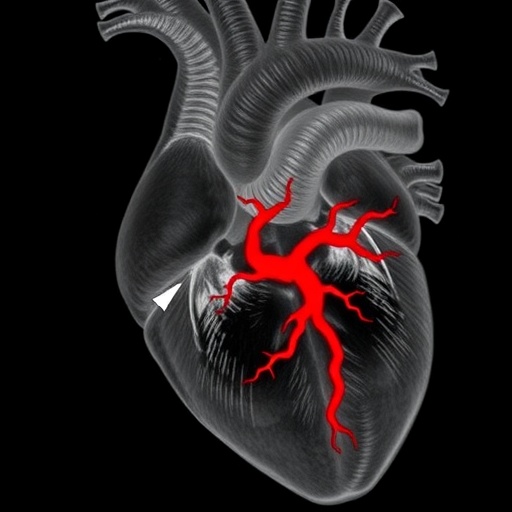
In a groundbreaking advancement at the intersection of forensic science and cardiology, researchers have unveiled a novel post-mortem ultrasound technique designed to study coronary circulation on ex-situ human hearts. This cutting-edge approach promises to revolutionize the forensic investigation of sudden cardiac deaths by providing unprecedented insights into the state of coronary vessels after death. The research, led by Simone et al. and recently published in the International Journal of Legal Medicine, introduces a pioneering methodology that leverages ultrasound imaging to visualize coronary circulation in hearts removed from the body, potentially reshaping how pathologists and forensic experts examine cardiac pathology post-mortem.
Traditionally, post-mortem examinations of the heart rely heavily on macroscopic inspection and histological analysis to identify abnormalities within coronary arteries. These methods, while informative, are limited by their invasive nature and the potential for microscopic oversight of vascular features critical to understanding the cause of death. The study conducted by Simone and colleagues addresses these limitations by applying ultrasound modalities to ex vivo hearts, aiming to capture dynamic vascular information that otherwise remains inaccessible during routine autopsies.
The protocol outlined in the study utilizes high-resolution ultrasound transducers positioned strategically around the excised heart, enabling visualization of coronary vessels with remarkable clarity. This approach allows the team to observe vascular structures such as the lumen, wall thickness, and potential obstructions in three dimensions. By applying Doppler ultrasound techniques, the researchers further assess residual blood flow within the coronary arteries, offering a functional dimension to the anatomical evaluation of the heart after death.
One of the most significant breakthroughs of this study is the ability to detect and characterize coronary occlusions and plaques non-invasively. The ultrasound images reveal details about the presence, size, and morphology of atherosclerotic plaques, which are pivotal in diagnosing ischemic heart diseases. This technique surpasses the spatial limitations of conventional post-mortem histology, providing a holistic view of coronary pathology that can correlate more directly with the cause of death.
In forensic investigations, accurately determining the cause of sudden cardiac death remains a complex challenge. The subtlety of coronary artery disease, especially when it involves non-stenotic plaques prone to rupture, often demands advanced diagnostic tools. Post-mortem ultrasound serves as a complementary tool, enhancing the diagnostic accuracy by enabling real-time visualization of the coronary vasculature without the need for extensive tissue processing or destructive sampling.
Moreover, this imaging modality is remarkably time-efficient, allowing forensic pathologists to conduct a comprehensive coronary examination within a shorter timeframe compared to traditional autopsy practices. The speed and accuracy of this technique have profound implications for medico-legal contexts, where expedited and precise diagnoses can influence legal outcomes and family closure.
The research team also highlights the potential integration of post-mortem ultrasound data with advanced computational modeling. By combining imaging results with biomechanical and hemodynamic simulations, forensic cardiologists could predict the mechanical stability of plaques and assess the likelihood of rupture, thus linking morphological findings to pathophysiological mechanisms of cardiac death.
Noteworthy is the technical challenge addressed in the study regarding the preservation of coronary circulation integrity in excised hearts. The researchers developed specialized perfusion protocols to maintain vessel patency and simulate physiological conditions, ensuring the accuracy and reliability of ultrasound measurements. This innovation underscores the interdisciplinary expertise applied, merging forensic pathology, cardiovascular medicine, and imaging technology.
The study also touches on the broader implications of post-mortem ultrasound beyond forensic applications. Potential clinical uses might include organ transplantation, where evaluating donor heart vasculature ex situ with ultrasound could improve the selection and preservation of viable organs. Though still in its infancy, this cross-disciplinary methodology demonstrates far-reaching promise in both medical and legal fields.
Importantly, the researchers conducted rigorous validation of ultrasound findings against histopathological data, confirming the modality’s sensitivity and specificity in detecting coronary abnormalities post mortem. This cross-verification strengthens the argument for incorporating ultrasound into standard forensic protocols, especially for cases where coronary artery disease is suspected but remains elusive upon gross examination.
The ethical and practical advantages of this technique are compelling. By reducing the need for extensive tissue dissection, post-mortem ultrasound offers a less invasive alternative, which is particularly significant in cultures or legal systems where autopsy practices are restricted. Furthermore, the non-destructive nature preserves samples for subsequent molecular analyses or judicial proceedings, safeguarding forensic evidence integrity.
Simone et al.’s study invites the forensic community to revisit traditional autopsy paradigms, advocating for the integration of advanced imaging technologies that enhance diagnostic yield and procedural efficiency. As forensic methodologies increasingly incorporate digital tools, the application of ultrasound in post-mortem coronary evaluation represents a vital step towards modern, multimodal autopsies that transcend the limitations of manual inspection.
Looking forward, the research opens avenues for technological refinement. Future endeavors may focus on miniaturizing ultrasound devices for ease of use, developing standardized imaging protocols, and training forensic professionals in interpreting the nuanced vascular images generated. Expansion of this approach to other organ systems is also conceivable, potentially transforming post-mortem examination into a comprehensive, image-guided discipline.
In conclusion, the advent of post-mortem ultrasound study of coronary circulation in ex-situ hearts heralds a transformative era in forensic cardiology. By enabling detailed, functional, and non-destructive visualization of coronary vessels after death, this technique equips forensic experts with a powerful diagnostic tool that can unravel the complexities of sudden cardiac death with greater precision. As adoption of this methodology grows, it is poised to enhance the accuracy of cause of death determinations, expedite forensic workflows, and ultimately contribute to a deeper understanding of cardiac pathology post mortem.
Subject of Research: Post-mortem ultrasound imaging of coronary circulation in ex-situ human hearts.
Article Title: Post-mortem ultrasound study of coronary circulation on ex-situ hearts.
Article References:
Simone, S., Marcello, R., Filippo, P. et al. Post-mortem ultrasound study of coronary circulation on ex-situ hearts. Int J Legal Med (2025). https://doi.org/10.1007/s00414-025-03683-z
Image Credits: AI Generated
DOI: https://doi.org/10.1007/s00414-025-03683-z
Tags: cardiac pathology analysiscoronary artery abnormalities detectioncoronary circulation visualizationdynamic vascular information captureex-situ human heartsforensic science and cardiologyhigh-resolution ultrasound transducersinnovative post-mortem methodologiesnon-invasive heart examinationpost-mortem ultrasound techniquesudden cardiac death investigationultrasound imaging in forensics


