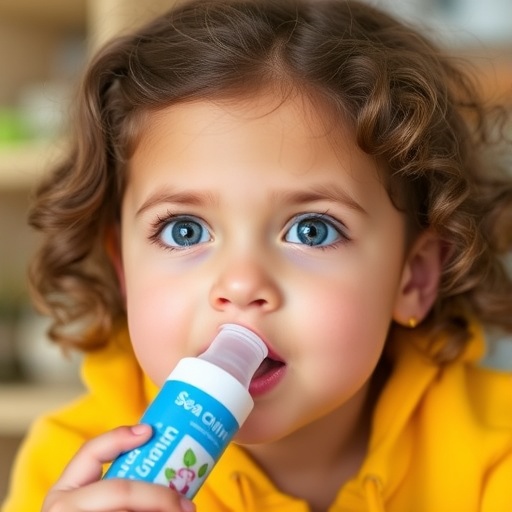
In a groundbreaking study published in the esteemed journal BMC Pediatrics, researchers Luo, C., Yang, Y., and Fang, Q. have delved into the effects of physiologic sea saline nasal care on young children, particularly focusing on its role in reducing the incidence of acute upper respiratory tract infections (URTIs). The context of this research is critically relevant given that URTIs are among the most common reasons for pediatric visits worldwide. To tackle these health concerns, the study uniquely integrates saline nasal care into daily routines at kindergarten daycare facilities, suggesting an innovative approach to address the high prevalence of respiratory illnesses among children.
Acute upper respiratory infections can significantly impact children’s health, leading to increased absenteeism in school and daycare settings, as well as the potential for severe complications. These infections are often caused by a variety of viral pathogens that proliferate in highly populated environments such as kindergartens. With children’s immune systems still developing, they are particularly susceptible to these infections. The study is motivated by a need for preventive measures that are not only effective but also non-invasive and easy to implement. This is where saline nasal care comes into the picture.
Saline nasal care involves the use of a sterile saline solution to irrigate the nasal passages. This procedure has been shown to provide several benefits, including clearing mucus and allergens, moisturizing nasal tissues, and helping to restore normal respiratory function. Research has pointed to the efficacy of saline solutions in both reducing symptoms and preventing infections. By applying this method specifically to children in a daycare setting, the researchers aim to observe its potential in minimizing the rates of URTIs and modifying the presence of pharyngeal pathogens.
The study encompassed a sizeable cohort of kindergarten children, providing a robust dataset for analysis. Researchers employed a prospective study design, which is particularly valuable as it allows for the observation of outcomes in real-time. This methodology stands in contrast to retrospective studies, which rely on historical data and may carry biases. Thus, the prospective duration ensured that children were actively monitored, thereby yielding more reliable results about the impact of saline nasal care on their health throughout the academic year.
Participants in the study underwent routine saline nasal care during their time at daycare, facilitated by trained caregivers. Pre- and post-intervention assessments were conducted to quantify the rates of URTIs among the children. Additionally, throat swabs were collected to analyze changes in the microbial landscape of the pharynx. This multifaceted approach permits a comprehensive understanding of how saline nasal care might not only reduce infections but may also influence the pathogenic flora present in the airways.
Furthering the significance of this research, the study highlights the differences in outcomes based on various environmental factors such as daycare group sizes, geographical location, and seasonality. For example, understanding how these factors may exacerbate or alleviate the incidence of infections is crucial for tailoring interventions. The research team meticulously documented these variances, positing that such factors can play significant roles in the success of preventive healthcare measures.
In a particularly notable finding, the use of saline nasal irrigation appeared to correlate with a reduction in the frequency and severity of URTIs, compared to control groups that did not receive this treatment. The evidence suggests that children who routinely engaged in nasal saline care experienced fewer sick days and demonstrated improved overall respiratory health. This discovery opens up further questions regarding the potential for similar interventions in various populations, hinting at broader implications for public health strategies targeting respiratory diseases in children.
Moreover, the alteration in the composition of pharyngeal pathogens raises intriguing possibilities for future research directions. The study implies that consistent nasal care might lead to a healthier microbial ecosystem, reducing the prevalence of harmful pathogens while potentially promoting the growth of beneficial bacteria that can enhance immune function. The intricate relationship between nasal care, pathogen presence, and immune responses could pave the way for new therapeutic approaches in pediatric care.
As the research community continues to unravel the complexities of respiratory infections, the implications of Luo et al.’s study become increasingly poignant. It reinforces the vital need for preventive practices in early childhood care, particularly in settings where close contact among children is inevitable. Caregivers, educators, and healthcare professionals will benefit from implementing such measures, ultimately aiming to foster healthier environments for children as they grow and learn.
In conclusion, this groundbreaking study underscores the potential role that simple yet effective interventions, such as physiologic sea saline nasal care, can play in combating a prevalent issue affecting children worldwide. By redefining approaches to URI prevention, it not only addresses immediate health concerns but also fosters an innovative dialogue in the broader field of pediatric health care. As researchers continue to investigate these findings, the hope remains that such knowledge can lead to transformative practices in early childhood education and health.
This investigation further emphasizes the fundamental need for continued research in pediatric health, particularly as it relates to enhancing the quality of care and well-being of children in daycares and schools. As URTIs remain a significant challenge in childhood health, we are reminded through this study that proactive measures, grounded in scientific inquiry, can have a lasting, positive impact.
In an era marked by increasing emphasis on child wellness and preventive healthcare, studies like the one conducted by Luo et al. illuminate pathways toward improved health outcomes. The potential for saline nasal care to emerge as a standard practice in childcare facilities may ultimately serve not just the children but also the greater community—as healthier children contribute to lower healthcare costs and improved quality of life for all.
In summary, as we look towards the future of pediatric healthcare, this essential research adds a pivotal piece to the puzzle of understanding how best to protect and promote children’s health in our increasingly interconnected world.
Subject of Research: Physiologic sea saline nasal care and its impact on acute upper respiratory tract infections in children.
Article Title: One prospective study of physiologic sea saline nasal care on the incidence of acute upper respiratory tract infections and changes of pharyngeal pathogens in children during kindergarten daycare.
Article References:
Luo, C., Yang, Y., Fang, Q. et al. One prospective study of physiologic sea saline nasal care on the incidence of acute upper respiratory tract infections and changes of pharyngeal pathogens in children during kindergarten daycare.
BMC Pediatr (2025). https://doi.org/10.1186/s12887-025-06424-8
Image Credits: AI Generated
DOI: 10.1186/s12887-025-06424-8
Keywords: Saline nasal care, acute upper respiratory tract infections, children, daycare, pharyngeal pathogens.
Tags: absenteeism due to illnessacute upper respiratory tract infectionschildren’s health and wellnessdaycare health strategiesinnovative health solutions for kidskindergarten health practicesnon-invasive health interventionspediatric respiratory infectionspreventive measures for childrensaline nasal irrigation benefitssea saline nasal careviral infections in children