


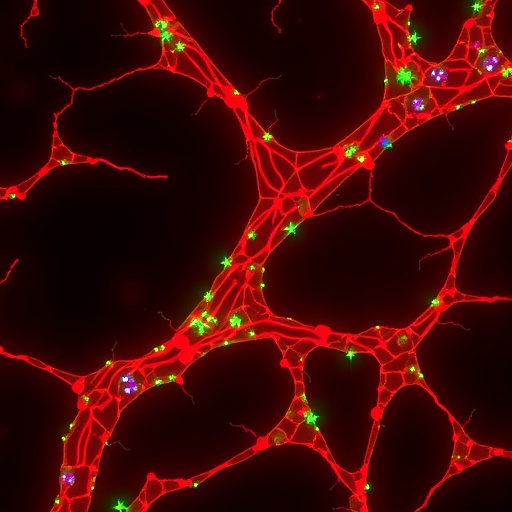
In a groundbreaking study poised to reshape our understanding of cerebrovascular health, researchers have unveiled the pivotal role of the gene Foxf2 in maintaining brain endothelial cell functionality through the Tie2 signaling pathway. This discovery not only deepens our grasp of the molecular underpinnings of stroke risk but also opens promising avenues for therapeutic interventions aimed at fortifying the blood-brain barrier and preserving neural integrity.
Stroke remains one of the leading causes of morbidity and mortality worldwide, with the complexity of its pathogenesis posing substantial challenges to both diagnosis and treatment. Central to its development is the dysfunction of the brain’s vasculature, particularly the endothelial cells lining cerebral blood vessels. These cells act as a critical barrier, regulating the exchange between the bloodstream and neural tissue, and their impairment can precipitate the catastrophic cascade of events leading to ischemic injury.
At the heart of this new research is Foxf2, a gene previously implicated in vascular development but not extensively studied in the context of adult cerebrovascular function. The investigative team, led by Todorov-Völgyi and colleagues, employed a combination of genetic, molecular, and cellular techniques to elucidate Foxf2’s role within the endothelial compartment of the brain. Their findings illuminate a complex regulatory network in which Foxf2 orchestrates endothelial cell behavior via modulation of the Tie2 receptor, a tyrosine kinase known for its critical involvement in vascular stability and angiogenesis.
The researchers discovered that loss of Foxf2 expression compromises endothelial integrity, leading to diminished Tie2 signaling and subsequent vascular dysfunction. This cascade ultimately undermines the blood-brain barrier’s selective permeability, rendering neural tissue vulnerable to ischemic insult and inflammatory damage. Such vulnerability aligns with clinical observations linking Foxf2 genetic variants to increased stroke susceptibility, thereby providing a molecular basis for previously observed epidemiological correlations.
One of the study’s significant innovations lies in its use of advanced in vivo models that mimic human cerebrovascular architecture with high fidelity. Through conditional knockout approaches, the team selectively ablated Foxf2 in brain endothelial cells, enabling a precise dissection of its functional consequences. These models revealed marked alterations in endothelial morphology, junctional protein expression, and vessel responsiveness, collectively highlighting Foxf2 as a linchpin of cerebrovascular homeostasis.
The Tie2 receptor, a well-characterized mediator of endothelial survival and vascular quiescence, emerged as the downstream effector through which Foxf2 exerts its protective influence. Reduced Foxf2 correlated with attenuated Tie2 activation, diminishing phosphorylation events essential for endothelial cell resilience. This attenuation precipitated a cascade of pathophysiological changes that compromised vascular integrity, including increased permeability and susceptibility to oxidative stress, both hallmarks of stroke pathology.
Crucially, the study’s findings suggest that therapeutic strategies aimed at augmenting Foxf2 activity or enhancing Tie2 signaling could reinforce the brain’s microvasculature and mitigate stroke risk. Pharmacological agonists of Tie2 or gene therapy approaches to restore Foxf2 expression may hold transformative potential, especially for individuals genetically predisposed to cerebrovascular disorders.
The implications of this research extend beyond stroke, offering insights into broader neurovascular diseases characterized by endothelial cell dysfunction, such as vascular dementia and certain neurodegenerative disorders. The identification of Foxf2 as a master regulator introduces a novel molecular target to potentially slow or prevent the progression of these debilitating conditions.
Moreover, the study highlights the intricate crosstalk between genetic factors and intracellular signaling pathways in vascular biology. By delineating this axis, the researchers contribute to a more nuanced model of cerebrovascular regulation that integrates genetic susceptibility with cellular signaling dynamics, thereby refining our conceptual framework for stroke pathogenesis.
Equally compelling is the potential for Foxf2 and Tie2 pathway components to serve as biomarkers for early detection of vascular compromise. Their expression levels or activity states could inform risk stratification and monitoring, enabling clinicians to tailor preventative or therapeutic interventions with greater precision.
The research also points to the importance of endothelial heterogeneity in brain health. Not all endothelial cells are created equal; those within distinct vascular niches may differentially express Foxf2, influencing localized vulnerability to injury. Future work may focus on mapping this spatial variability and exploiting it to develop region-specific therapeutic regimens.
This study consequently invites a reevaluation of existing therapeutic paradigms, many of which focus on symptomatic relief rather than addressing underlying endothelial dysfunction. Targeting the Foxf2–Tie2 signaling axis situates treatment within the realm of molecular correction, offering hope for more durable and efficacious outcomes.
As the field advances, interdisciplinary collaborations integrating genomics, vascular biology, and clinical neurology will be paramount to translating these discoveries into clinical practice. Such collaborations promise to hasten the journey from bench to bedside, ultimately alleviating the global burden of stroke and related disorders.
In sum, the elucidation of Foxf2’s role in safeguarding brain endothelial cells via Tie2 signaling represents a paradigm shift in cerebrovascular research. It underscores the nuanced interplay between genetics and vascular physiology, charting a course toward innovative therapies that address the root causes of stroke and enhance brain resilience.
This seminal work not only broadens the scientific community’s understanding of cerebrovascular function but also invigorates the quest for novel interventions that can transform stroke management from reactive to proactive. As researchers continue to unravel the complexities of vascular biology, Foxf2 stands out as a beacon of promise in the ongoing battle against neurological disease.
The study’s integrative approach, combining genetic manipulation with functional assays and clinical relevance, affirms the critical importance of multi-faceted research in uncovering the biological secrets of the brain’s vasculature. With further exploration, Foxf2 could redefine standards of care and inspire a new generation of targeted cerebrovascular therapeutics.
Subject of Research: The role of the stroke risk gene Foxf2 in brain endothelial cell function mediated through Tie2 signaling.
Article Title: The stroke risk gene Foxf2 maintains brain endothelial cell function via Tie2 signaling.
Article References:
Todorov-Völgyi, K., González-Gallego, J., Müller, S.A. et al. The stroke risk gene Foxf2 maintains brain endothelial cell function via Tie2 signaling. Nat Neurosci (2025). https://doi.org/10.1038/s41593-025-02136-5
Image Credits: AI Generated
DOI: https://doi.org/10.1038/s41593-025-02136-5
Tags: blood-brain barrier integritybrain endothelial cell protectioncerebrovascular disease preventioncerebrovascular health researchendothelial cell dysfunctionFoxf2 gene functionmolecular mechanisms of strokeneurovascular regulationstroke risk factorstherapeutic interventions for ischemic injuryTie2 signaling pathwayvascular development in adults


