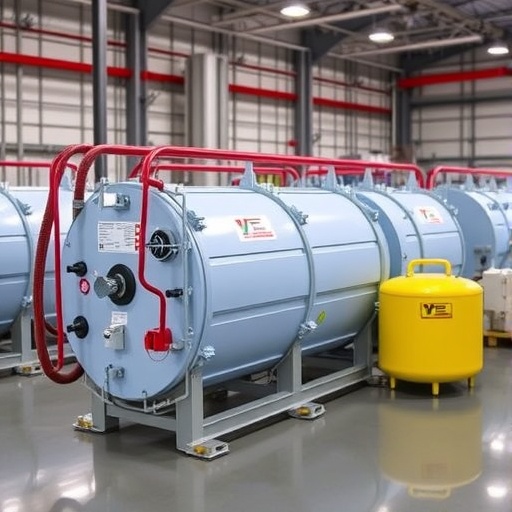
In the rapidly advancing field of energy storage, researchers are continuously seeking new and innovative ways to improve the performance and efficiency of batteries. Among the types of batteries undergoing intensive study, sodium-ion batteries have emerged as a promising alternative to lithium-ion technology. Their potential to deliver comparable energy densities while utilizing abundant materials makes them a focal point for future energy solutions. In a recent groundbreaking study published by Nilugal, Subramanian, and Ramadesigan in the journal “Ionics,” a novel tanks-in-series model for sodium-ion batteries has been introduced, potentially transforming our understanding of how these batteries operate under various conditions.
The research outlines a systematic approach that models the behavior of sodium-ion batteries as a series of interconnected tanks. This unique representation allows for a more refined analysis of the internal dynamics of sodium-ion cells, essentially providing a clearer picture of how ion distribution and movement within the battery affect overall performance. By conceptualizing the battery in this manner, the authors have opened up new pathways for optimizing battery design and operation, setting the stage for enhanced energy storage capabilities in the near future.
One of the most significant challenges facing sodium-ion batteries is their efficiency in energy transfer and storage. Traditional modeling techniques often struggle to accurately reflect the complexities of electrochemical reactions happening inside the cells. The tanks-in-series model effectively addresses this shortcoming by employing a dynamic approach that facilitates the exploration of various operational states of the battery. The researchers meticulously developed equations governing the flow of sodium ions within these ‘tanks’, considering factors such as concentration gradients and voltage levels, which are crucial for battery efficiency.
Moreover, this innovative model provides a platform for simulating various real-world scenarios, enabling the researchers to predict how sodium-ion batteries will perform under different temperature ranges, charge cycles, and discharge rates. By analyzing these scenarios, the team can pinpoint inefficiencies in energy transfer and propose modifications to the battery design to enhance performance. The ability to model these scenarios accurately could significantly speed up the development of next-generation sodium-ion batteries that are not only more efficient but also more sustainable.
In addition to the immediate benefits of improved efficiency, this research has broader implications for energy storage technologies overall. The insights gleaned from the tanks-in-series model can be extrapolated to other types of batteries, facilitating a deeper understanding of ionic behavior in various battery chemistries. This versatility positions the model as a valuable tool for researchers across the energy storage sector looking to refine their systems and improve battery performance.
Furthermore, the researchers did not stop at merely developing a theoretical model; they validated their approach using experimental data. By comparing the predicted outcomes of their model with real-world performance metrics from current sodium-ion batteries, they were able to confirm the model’s accuracy and reliability. This empirical backing lends credibility to their findings and highlights the practicality of the tanks-in-series model in advancing battery technology.
The potential application of this model in commercial settings is particularly exciting. As the demand for efficient and affordable energy storage solutions continues to grow, industries are heavily investing in research to enhance battery performance. The tanks-in-series model could shape the strategies that manufacturers employ to design and optimize their batteries, leading to significant advancements in consumer electronics, electric vehicles, and renewable energy systems.
Another critical aspect addressed in this research is the environmental impact of battery production and disposal. Sodium-ion batteries offer a more sustainable alternative to their lithium-ion counterparts by utilizing sodium, a more abundant and less costly element. By enhancing the performance and efficiency of sodium-ion batteries through improved modeling techniques, the research contributes to a more sustainable future where energy storage solutions can meet rising demands without compromising ecological welfare.
In conclusion, the introduction of the tanks-in-series model presents a comprehensive and innovative approach to understanding and optimizing sodium-ion batteries. With its ability to accurately simulate various operational scenarios and predict performance outcomes, this model has the potential to accelerate breakthroughs in battery technology. As the world continues to seek effective ways to harness and store energy, such transformative research will undoubtedly play a crucial role in shaping the future of energy storage systems.
Effective and efficient energy storage technologies are critical to meeting the world’s growing energy needs while addressing environmental concerns. In this context, the innovative tanks-in-series model for sodium-ion batteries promises to be a game changer. The blend of theoretical and experimental work presented by Nilugal, Subramanian, and Ramadesigan not only advances the field of sodium-ion batteries but also underscores the importance of developing sustainable and efficient energy solutions for generations to come. As we march towards an increasingly electrified future, such advancements will be pivotal in ensuring that energy storage technologies keep pace with our evolving needs.
This research serves as an inspiring reminder of the potential within scientific inquiry to revolutionize technology and our everyday lives. The quest for better battery systems continues, and with models like the tanks-in-series gaining traction, a brighter and more sustainable energy future may be within our reach.
Subject of Research: Tanks-in-series model for sodium-ion batteries.
Article Title: A tanks-in-series model for sodium-ion batteries.
Article References:
Nilugal, M.L., Subramanian, V.R. & Ramadesigan, V. A tanks-in-series model for sodium-ion batteries.
Ionics (2025). https://doi.org/10.1007/s11581-025-06857-2
Image Credits: AI Generated
DOI: 13 December 2025
Keywords: sodium-ion batteries, tanks-in-series model, energy storage, electrochemical reactions, battery efficiency, environmental impact, sustainable energy.
Tags: advanced battery modeling techniqueschallenges in sodium-ion battery efficiencyenergy storage innovationsfuture energy solutions with sodium-iongroundbreaking research in energy storageinternal dynamics of sodium-ion cellsion distribution in batteriesoptimizing battery designperformance enhancement in energy storagesodium-ion battery technologysodium-ion vs lithium-ion batteriestanks-in-series model for batteries