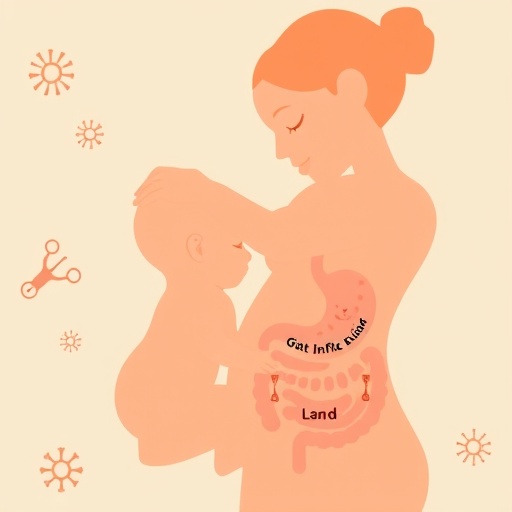
In a groundbreaking study poised to revolutionize our understanding of human development and behavior, researchers have uncovered compelling evidence pointing to a profound, bidirectional relationship between the maternal and infant gut microbiomes and behavioral outcomes. Published in the prestigious journal Pediatric Research, this substantial body of work elucidates the complex interplay between microbial communities inhabiting the digestive tracts of mothers and their newborns, influencing not only physiological health but also shaping key behavioral patterns from the earliest stages of life.
The gut microbiome—an intricate ecosystem comprising trillions of microorganisms including bacteria, viruses, fungi, and archaea—has been the focus of intense scientific scrutiny in recent years. Its role transcends mere digestion, extending to immune regulation, neurological development, and now, as this study reveals, the behavioral domain. The research team, led by C. Kelsey and colleagues, embarked on a longitudinal investigation tracking dyads of mothers and their infants from pregnancy through the first months postpartum, integrating cutting-edge sequencing technologies with robust behavioral assessments.
Central to the study’s findings is the evidence that maternal gut microbiome composition during pregnancy significantly influences the establishment and maturation of the infant’s own microbial communities. This seeding process sets the foundation for subsequent neurodevelopmental trajectories, with shifts in microbial diversity correlating with observable variations in infant temperament and responsiveness. Intriguingly, the data show that behaviors manifested by the infant, such as feeding patterns and emotional reactivity, can in turn affect the mother’s microbiome, suggesting a dynamic feedback loop that sustains and modifies microbial and behavioral states within the dyad.
By employing metagenomic and metatranscriptomic analyses, the researchers cataloged changes in the relative abundance of key bacterial taxa known for their neuroactive metabolite production, such as Bifidobacterium and Lactobacillus species. These metabolites—short-chain fatty acids, neurotransmitter precursors, and other bioactive compounds—are hypothesized to traverse the gut-brain axis, impacting neural circuits involved in mood regulation and cognitive function. The implications of such findings underscore a paradigm shift: maternal-infant microbial interactions are not passive or unidirectional but represent an active conversation with far-reaching consequences.
A particularly fascinating aspect of the study lies in the behavioral phenotyping of infants using validated observational frameworks and maternal reports collected at various postnatal stages. Variations in exploratory behavior, social engagement, and stress responsivity aligned with measurable alterations in gut microbial profiles, providing a biological substrate for behavior that was previously uncharted. Moreover, maternal stress levels and emotional well-being further modulated microbiome-behavior interactions, highlighting the intricate mediation of psychosocial factors within this biological system.
This research departs from earlier studies by moving beyond correlation to examine causative mechanisms. Using animal models that simulate maternal microbial exposure and subsequent infant behavior, the team demonstrated that transferring microbiota from mothers exhibiting certain behavioral profiles could recreate these phenotypes in offspring, suggesting that microbial signals are instrumental in behavioral programming. This represents a monumental leap in understanding how early environmental factors, including the maternal microbiome, imprint upon infant neurodevelopment.
The bidirectionality of the maternal-infant microbiome-behavior relationship opens up intriguing avenues for therapeutic interventions. Given the sensitive periods of neural plasticity in infancy, modulating maternal gut health through prebiotics, probiotics, or dietary modifications may offer unprecedented opportunities to optimize developmental outcomes. Furthermore, recognizing the impact of infant behavior on maternal microbiome dynamics invites novel strategies supporting maternal mental health as a conduit for healthy microbiome transfer and infant growth.
Technical dimensions of the study involved rigorous next-generation sequencing platforms, analytical pipelines integrating microbial community ecology with host gene expression data, and advanced statistical modeling to parse intricate interaction effects. The integrative approach enabled the disentanglement of confounding variables such as mode of delivery, antibiotic exposure, and feeding practices, ensuring robustness and reproducibility of findings. This methodological rigor sets a new standard for microbiome-behavior research and paves the way for larger cohort studies.
The findings carry significant implications for addressing developmental disorders and behavioral dysregulations, including autism spectrum disorders and anxiety-related conditions, wherein microbial imbalances have been increasingly implicated. By charting the microbial-behavior interface from maternal origins, the research highlights potential biomarker pathways and modulatory targets that could underlie early diagnosis and multifaceted interventions, thereby transforming pediatric healthcare paradigms.
Moreover, the study contributes to a better appreciation of the mother-infant dyad as a holistic biological unit, wherein microbial ecosystems participate actively in shaping behavior and physiology. This challenges reductionist perspectives and underscores the necessity of integrative biopsychosocial models in developmental research. It also reinforces the vital role of maternal health and prenatal care, advocating for policies supporting maternal nutrition and stress reduction during pregnancy.
Beyond clinical implications, the research inspires deeper philosophical inquiries into human development. The concept that our microbiota are co-authors in behavioral identity from our earliest moments invites reconsideration of autonomy and individuality. It prompts questions about how external environments interface with internal microbial networks to sculpt the unfolding human experience, a frontier ripe for interdisciplinary exploration.
As research in this domain accelerates, the identification of specific microbial strains and metabolic pathways involved in mediating behavioral outcomes will be crucial. Future directions might include precision microbiome editing, maternal microbiota transplantation, or microbiome-informed behavioral therapies. These advances herald not just a biomedical revolution but a societal one, redefining how we understand and care for human development.
In sum, this landmark study by Kelsey et al. unveils the profound and reciprocal relationships linking maternal and infant gut microbiomes with behavior. It offers compelling evidence that our microbial companions are integral to shaping who we are from birth and that these relationships are dynamic, bidirectional, and deeply embedded within the neurobehavioral fabric of human life. As the field continues to evolve, these insights are set to transform scientific thought, clinical practice, and public health, marking a new epoch in understanding the origins of behavior.
Subject of Research: Maternal and infant gut microbiome interactions and their bidirectional influence on behavior.
Article Title: Bidirectional relations between the maternal and infant gut microbiome and behavior.
Article References:
Kelsey, C., Moulder, R., Yancey, H. et al. Bidirectional relations between the maternal and infant gut microbiome and behavior. Pediatr Res (2025). https://doi.org/10.1038/s41390-025-04630-9
Image Credits: AI Generated
DOI: 10.1038/s41390-025-04630-9
Tags: behavioral outcomes linked to microbiomebidirectional influence of gut microbiotagut health and child developmentgut microbiome and neurodevelopmentlongitudinal study on maternal-infant dyadsmaternal health and infant microbiotamaternal microbiome effects on infant behaviormicrobial communities in pregnancymicrobiome impact on early life behaviormother-infant gut microbiome relationshippediatric research on gut microbiomesequencing technologies in microbiome research