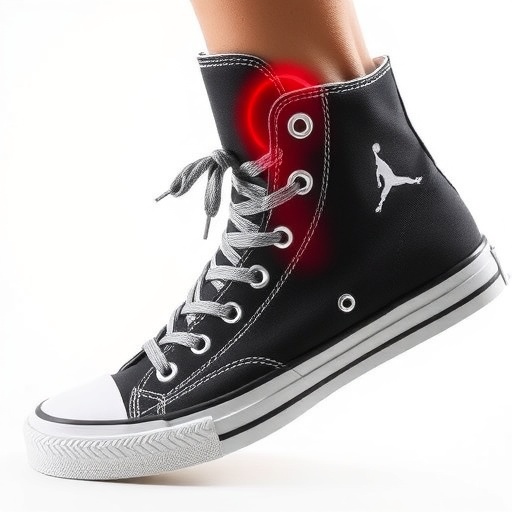
In a groundbreaking study, researchers have unveiled the intriguing effects of high-top shoes on reducing the risk of ankle inversion injuries, a common concern prevalent among athletes and active individuals. The research, which provides new insights into injury prevention, highlights the pressure and kinematic dynamics associated with sudden ankle inversions. When the foot turns inwards excessively, it can lead to sprains, strains, and a range of other ankle injuries that often sideline sports enthusiasts for extended periods.
The study, conducted by a team of professionals led by researchers Zhang, Bai, and Feng, examines the biomechanics involved during sudden inversion of the ankle while wearing high-top shoes. The team employed advanced pressure analysis and motion tracking technologies to evaluate how different types of footwear can influence ankle stability and injury risk. Analyzing the mechanical and kinematic data collected during tests, the researchers devised a comprehensive understanding of how high-top configurations can support the lower extremities during high-risk activities.
Athletes typically encounter situations where rapid changes in direction or unexpected movements lead to ankle injuries; thus, understanding how footwear impacts these scenarios is crucial. The research team focused on collecting data from various participants, subjecting them to controlled environments where their movements were meticulously monitored. By comparing the kinematic responses of participants wearing both traditional low-cut shoes and higher ankle-supporting footwear, the study aimed to isolate the factors that contribute to injury prevention.
Utilizing sophisticated pressure measurement apparatus, the researchers observed that high-top shoes distributed force more evenly across the foot during instances of ankle inversion. This pressure distribution is critical because it allows for better weight management and reduced strain on specific areas that are prone to injury. The detailed analysis showcased that higher footwear mitigated excessive rolling of the ankle and provided additional support that low-cut designs could not replicate.
The background of this study highlights increasing concerns surrounding sporting injuries that result in time away from training and competition. Ankle sprains represent one of the most frequently occurring injuries in sports, and any item of gear that can diminish this risk is a valuable asset to athletes. Apart from the immediate consequences, ankle injuries can lead to long-term issues, including chronic instability, debilitating pain, and even osteoarthritis.
Preliminary results published in the Annals of Biomedical Engineering reveal compelling advantages offered by high-top shoes. Participants reported enhanced stability and a decreased perception of risk to their ankles while navigating sharp turns and quick stops. This subjective feedback from athletes complements the quantitative findings, emphasizing the footwear’s possible protective qualities throughout high-stress athletic scenarios.
In addition to analyzing pressure dynamics, the research scrutinized the kinematics involved in ankle inversion incidents. By employing high-frame-rate cameras and motion capture systems, the researchers accurately tracked foot movements in real-time. This sophisticated approach elucidated the biomechanical processes at play during sudden deviations in foot orientation. As a result, the study effectively connects footwear design, biomechanical performance, and user experience to advocate for improved athletic safety measures.
Another fascinating insight from the research indicates that the design of high-top shoes could be refined to maximize their protective benefits. With advances in materials and technology, athletes could benefit from designs that combine lightweight agility with the stability afforded by high-top structures. As companies continue to innovate and respond to this research, we can anticipate the emergence of next-generation athletic shoes specifically engineered to prevent ankle injuries while enabling peak performance.
These findings will likely prompt further investigation into tailored footwear solutions not only for high-impact sports but also for general daily activities. As active lifestyles increasingly dominate modern society, understanding how shoes can support our biomechanics, particularly in children and young adults, could pave the way for healthier future generations. Schools, extracurricular programs, and fitness organizations may also consider integrating this research into their training protocols for enhanced safety.
Moreover, this study opens the door to broader research addressing various anatomical concerns related to footwear. Each individual’s foot structure presents unique challenges and perceptions of stability, suggesting the need for personalized approaches to shoe selection. With the rising popularity of customized footwear, companies may look into developing analytical tools enabling consumers to select the ideal shoe fit based on their specific performance needs.
It is essential to recognize that while high-top shoes show promising results, they are only one layer of a multi-faceted approach to injury prevention. Proper training, warm-up routines, and strength-building exercises play equally significant roles in strengthening the muscles surrounding the ankle. Athletes should be encouraged to adopt holistic practices that encompass both footwear technology and comprehensive physical education strategies.
The researchers conclude that further studies in diverse environments would provide clarity on how high-top shoes hold up against varying terrains and sports activities. This could further validate the initial findings and refine approaches to fostering athletic safety. As more evidence accumulates, we may witness a shift in how athletes perceive and choose their footwear, potentially revolutionizing the industry.
The implications of this research resonate beyond sports realms; they could influence daily consumers’ choices, encouraging the market to embrace smarter footwear technologies that prioritize safety and comfort. As curiosity and innovation drive this sector, the vision of well-supported, injury-free movement is becoming a tangible reality.
By cementing the connection between high-top shoe designs and lower injury risks, this research stands as a powerful testament to the potential of biomechanical studies. As we advance toward a future where athletic and personal safety is paramount, the groundwork set by this research serves as an impetus for continued exploration into footwear and wearable technology.
Subject of Research: The impact of high-top shoes on reducing ankle inversion injury risk.
Article Title: High-Top Shoes Reduce Ankle Inversion Injury Risk: Pressure and Kinematic Analysis during Sudden Inversion.
Article References: Zhang, J., Bai, T., Feng, L. et al. High-Top Shoes Reduce Ankle Inversion Injury Risk: Pressure and Kinematic Analysis during Sudden Inversion.
Ann Biomed Eng (2025). https://doi.org/10.1007/s10439-025-03932-7
Image Credits: AI Generated
DOI: https://doi.org/10.1007/s10439-025-03932-7
Keywords: ankle injuries, high-top shoes, footwear technology, biomechanics, injury prevention, athletic performance.
Tags: ankle injury prevention strategiesbiomechanics of ankle inversionenhancing sports safety with proper footwearfootwear choices for active individualsfootwear impact on athletic performancehigh-top shoes and ankle protectioninjury risk in athleteskinematic dynamics of ankle stabilitymotion tracking in sports researchpressure analysis in footwear designreducing ankle sprains with high-top shoesresearch on ankle injury mechanisms