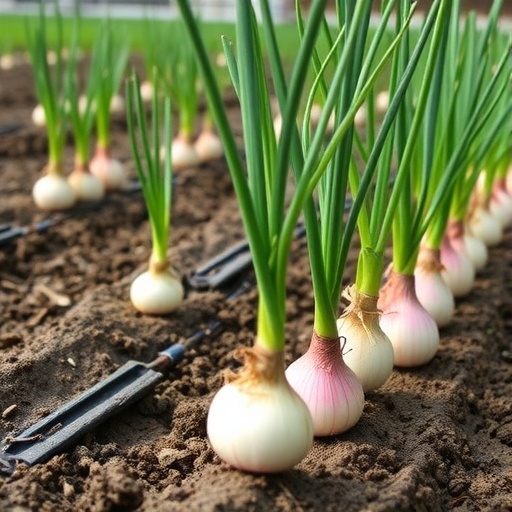
In an era where sustainable agriculture is of paramount importance, the study conducted by Riaz et al. (2025) sheds light on revolutionary approaches to enhancing the cultivation of Allium cepa L., commonly known as onion. This research is pivotal, as it explores the synergy of biochar manure and NPK fertilizers in fostering sustainable soil management practices. Agriculture is constantly challenged by the threats of climate change, soil degradation, and the quest for food security, urging researchers to innovate and find eco-friendly solutions.
Biochar, a carbon-rich byproduct from the pyrolysis of organic materials, is gaining attention for its potential to improve soil properties. It enhances soil fertility, retains moisture, and sequesters carbon, thereby mitigating greenhouse gas emissions. This innovative amendment has demonstrated promising results in various crops, but its application in onion cultivation presents new opportunities for increased productivity. The efficacy of biochar is further augmented when combined with manure, providing a dual benefit of improving soil structure and nutrient availability.
NPK fertilizers, which are composed of nitrogen (N), phosphorus (P), and potassium (K), are essential for crop growth and yield. Traditionally, the application of these fertilizers has contributed significantly to increased agricultural productivity, enhancing the nutrient profile of the soil. However, overuse has led to adverse environmental impacts, including soil degradation and water pollution. The research conducted by Riaz and colleagues emphasizes the importance of balanced and sustainable application of NPK fertilizers in conjunction with biochar and manure.
In this groundbreaking study, the researchers sought to assess the combined effects of biochar manure and NPK fertilizers on onion yield and soil health. By employing an experimental design that integrates multiple treatments with varying ratios of biochar and fertilizers, the research team meticulously monitored the growth parameters, soil characteristics, and crop yield over the cultivation period. This multi-faceted approach allowed for a comprehensive understanding of the interactions between these amendments and their collective impact on crop performance.
The results of the study were remarkable. The application of biochar, when integrated with manure, resulted in substantial improvements in soil nutrient availability and microbial activity. The researchers observed significant increases in key soil parameters such as pH, electrical conductivity, and organic matter content. These changes fostered a more conducive environment for onion root development, ultimately leading to enhanced plant growth. Moreover, the synergistic effects of this combination not only bolstered soil health but also reduced the dependency on chemical fertilizers—an essential stride towards sustainable agricultural practices.
Onion yield, which is a critical aspect of horticultural production, saw marked improvements throughout the study. Data indicated that the application of biochar manure and NPK fertilizers significantly increased bulb weight, diameter, and overall yield compared to control groups that relied solely on traditional fertilizers. This finding underscores the potential of integrating organic amendments into conventional farming systems, illustrating a path towards achieving higher yields while simultaneously promoting environmental stewardship.
The study also delved into the economic implications of this sustainable agricultural practice. By demonstrating the viability of combining biochar manure with NPK fertilizers, Riaz and his team provided insights that can lead to cost-effective farming strategies. Reduced reliance on chemical inputs not only lowers production costs for farmers but also enhances the quality of produce. Such benefits represent a win-win scenario for both agricultural producers and consumers seeking healthier and more sustainably produced food.
In examining the broader implications of their findings, the research highlights the significance of adopting integrated soil fertility management approaches. These methods encapsulate a holistic view of agriculture that prioritizes long-term sustainability over short-lived gains. As farmers grapple with the challenges posed by climate change and resource scarcity, innovative practices like those explored in this study could serve as transformative solutions.
The implications of this research extend beyond the confines of onion cultivation. The principles of sustainable soil management advocated by Riaz et al. can be applied across various crop systems. As such, farming communities around the globe could harness the benefits of biochar and manure integration, paving the way for more resilient agricultural practices tailored to local contexts.
Moreover, this research aligns with the global agenda for sustainable development, which emphasizes the crucial need for responsible land use and environmental preservation. By prioritizing techniques that enhance soil fertility without compromising ecological integrity, this study offers a roadmap for farmers and policymakers alike. The adoption of such practices can contribute to achieving food security while safeguarding the planet for future generations.
Finally, as the research community continues to explore the potential of sustainable agriculture, studies like this one serve as critical benchmarks. They illustrate the transformative power of integrating traditional knowledge with innovative scientific approaches, emphasizing the importance of collaboration among stakeholders. By supporting research initiatives and fostering knowledge exchange, we can unlock the potential for agricultural systems that not only feed the world but do so responsibly and sustainably.
The findings of Riaz et al. consequently not only contribute to the academic literature surrounding sustainable soil management but also inspire action toward a more sustainable future. It is a call to farmers, researchers, and consumers alike to embrace practices that promote ecological balance, economic viability, and social equity in the agricultural realm.
As we witness the challenges that modern agriculture faces, this study stands as a beacon of hope, illustrating the potential for innovation and sustainability to coexist. It reminds us of the power of research in shaping the future of food production and the critical role we all play in fostering a sustainable agricultural landscape.
Subject of Research: Sustainable soil management in onion cultivation.
Article Title: Enhancing Allium cepa L. cultivation through sustainable soil management with biochar manure and NPK fertilizers.
Article References:
Riaz, M., Khan, S., Shah, T. et al. Enhancing Allium cepa L. cultivation through sustainable soil management with biochar manure and NPK fertilizers.
Discov. Plants 2, 353 (2025). https://doi.org/10.1007/s44372-025-00436-5
Image Credits: AI Generated
DOI: https://doi.org/10.1007/s44372-025-00436-5
Keywords: Sustainable agriculture, Allium cepa, biochar, manure, NPK fertilizers, soil management, crop yield, environmental sustainability, food security.
Tags: biochar in onion cultivationboosting onion crop yieldcarbon sequestration in agricultureclimate change and agricultureeco-friendly farming solutionsenhancing soil fertilityfood security and sustainable farmingimproving soil structure for cropsNPK fertilizer applicationorganic soil amendmentssoil management techniquessustainable agriculture practices