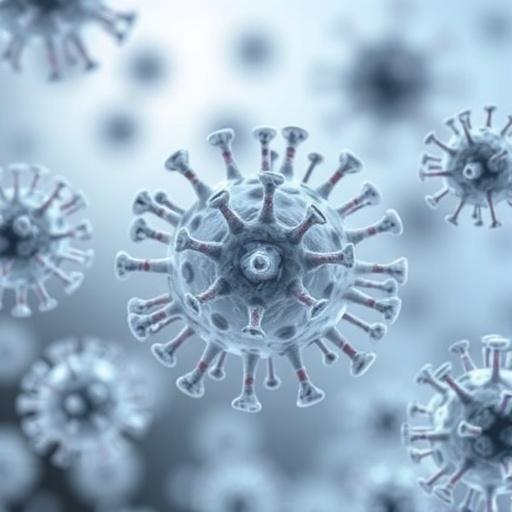
In the relentless battle against seasonal influenza, the virus’s ability to mutate continues to challenge vaccine efficacy and therapeutic interventions. A groundbreaking study published in Nature Communications sheds new light on the immunological dynamics that can diminish both susceptibility to and the infectiousness of the Influenza A/H3N2 virus. Researchers led by Hoy, Cortier, Maier, and colleagues have revealed that antibodies targeting two crucial viral components—the neuraminidase enzyme and the hemagglutinin (HA) stalk—play pivotal roles in disrupting the virus’s lifecycle, providing a promising avenue to curb viral transmission and enhance protective immunity.
Influenza A/H3N2, a subtype notorious for its rapid antigenic drift, frequently evades host immune defenses, making it a significant public health concern worldwide. Traditional influenza vaccines target the highly variable HA head domain, which rapidly accumulates mutations. This study focuses on less mutable viral epitopes, particularly the HA stalk domain and neuraminidase enzyme. Both serve essential functions: HA facilitates viral entry by binding to sialic acid receptors on host cells, while neuraminidase catalyzes the cleavage of sialic acids, aiding in viral progeny release and spread. Antibodies directed against these conserved domains could offer broader, more durable immunity, transcending the limitations of current vaccine designs.
Employing sophisticated immunological assays and viral infectivity measurements, the team characterized the effects of antibodies against neuraminidase and the HA stalk on influenza A/H3N2 infectivity. Their findings demonstrate that these antibodies significantly reduce the susceptibility of host cells to viral invasion. Mechanistically, HA stalk antibodies prevent the conformational changes necessary for membrane fusion during viral entry, whereas anti-neuraminidase antibodies inhibit enzymatic activity critical for viral dissemination within the host. This dual blockade culminates in a dramatic decrease in viral replication efficiency and transmission potential.
The researchers meticulously isolated monoclonal antibodies from subjects exposed to influenza viruses and used in vitro neutralization assays to dissect their antiviral properties. They observed that when these antibodies were present, viral load in infected cultures decreased markedly, indicating a potent interference with the viral life cycle. Furthermore, the antibodies displayed synergistic effects; co-targeting neuraminidase and HA stalk epitopes not only diminished viral infectivity but also enhanced the breadth of protection across multiple H3N2 strains, encompassing variants with differing antigenic profiles.
Importantly, the study advances our understanding of host-virus interactions by illustrating that immune responses directed against neuraminidase and the HA stalk domain can substantially lower infection rates. This insight challenges the traditional focus on HA head-targeted immunity, which often succumbs to antigenic escape. Instead, fostering robust responses against these conserved regions may yield vaccines and therapeutics with increased resilience against viral evolution.
In addition to in vitro analyses, the study incorporated in vivo models to validate these findings under physiological conditions. Animal challenge experiments confirmed that sera enriched in anti-HA stalk and anti-neuraminidase antibodies conferred enhanced protection against lethal H3N2 infection, reducing viral titers in respiratory tissues and ameliorating disease symptoms. These encouraging results underscore the translational potential of such immune targeting strategies for human influenza prevention.
The implications for vaccine development are profound. Current influenza vaccines chiefly elicit antibodies against the mutable HA head, resulting in variable efficacy year-to-year. By contrast, vaccines designed to induce a strong antibody response against the HA stalk and neuraminidase could provide broader, longer-lasting immunity, reducing the necessity for annual reformulations. This paradigm shift has the potential to revolutionize the future landscape of influenza vaccination, potentially alleviating both the burden of seasonal epidemics and the risks of pandemics.
Moreover, the study addresses the complex role of neuraminidase in viral pathogenesis. Although neuraminidase inhibitors such as oseltamivir have been key antiviral drugs, resistance rates have occasionally risen. Immunotherapy targeting neuraminidase with neutralizing antibodies could complement pharmacological approaches, offering an alternative mechanism of viral suppression that is less susceptible to resistance.
The research also highlights the importance of the HA stalk as a structural and functional anchor of the influenza virus. Unlike the globular head, the stalk domain’s relative sequence conservation makes it an attractive vaccine target. Antibodies against the stalk inhibit viral fusion and entry, crucial steps determining viral infectivity. This study provides compelling evidence that such antibodies not only reduce infection likelihood but also diminish infectiousness, lowering the potential for onward transmission.
Through structural analyses—including epitope mapping and antibody-virus interaction studies—the researchers elucidated the precise binding modes of these antibodies, shedding light on their neutralizing mechanisms. Such molecular insights are invaluable for guiding rational vaccine antigen design, enabling the fabrication of immunogens that optimally present these conserved sites to the immune system.
The cooperative nature of the antibody response discovered suggests a multi-pronged immune assault is more effective than targeting a single viral component. This synergy also mitigates the risk of viral escape mutations overcoming immune detection, an ongoing challenge in combating RNA viruses like influenza with high mutation rates.
Future research directions emerging from these findings include the development of next-generation influenza vaccines incorporating neuraminidase and HA stalk antigens, alongside clinical trials to evaluate their protective efficacy in diverse populations. Additionally, monoclonal antibodies identified could serve therapeutically, either prophylactically in high-risk individuals or as treatments, providing immediate passive immunity.
In conclusion, the study led by Hoy, Cortier, Maier, and colleagues represents a significant advance in influenza immunology, revealing that anti-neuraminidase and anti-HA stalk antibodies substantially reduce both the susceptibility to and infectivity of influenza A/H3N2 virus. These insights open promising new paths for designing universal influenza vaccines and antibody-based therapeutics, crucial tools in diminishing the global health impact of this pervasive and mutating pathogen.
As influenza viruses continue to pose unpredictable threats each season, harnessing the immune system’s ability to target conserved viral components offers hope to transform how we control and prevent influenza outbreaks. The demonstrated dual action of antibodies against neuraminidase and HA stalk epitopes underscores the power of combining structural virology, immunology, and therapeutic innovation to combat one of humanity’s oldest viral foes.
Subject of Research: Influenza A/H3N2 virus susceptibility and infectivity reduction through anti-neuraminidase and anti-HA stalk antibodies.
Article Title: Anti-neuraminidase and anti-HA stalk antibodies reduce the susceptibility to and infectivity of influenza A/H3N2 virus.
Article References:
Hoy, G., Cortier, T., Maier, H.E., et al. Anti-neuraminidase and anti-HA stalk antibodies reduce the susceptibility to and infectivity of influenza A/H3N2 virus. Nat Commun 16, 10910 (2025). https://doi.org/10.1038/s41467-025-65283-0
Image Credits: AI Generated
DOI: https://doi.org/10.1038/s41467-025-65283-0
Tags: Antibodies against H3N2 influenzadurable immunity against seasonal influenzaH3N2 virus mutation and antigenic driftimmunological dynamics of influenzainfluenza A virus infectivity reductioninnovative approaches to influenza vaccine designneuraminidase enzyme and hemagglutininprotective immunity against influenzapublic health concerns of H3N2seasonal influenza vaccination challengestargeting HA stalk domain for immunityviral lifecycle disruption by antibodies