In a groundbreaking revelation poised to revolutionize the field of muscle biology and regenerative medicine, researchers have identified squalene as a powerful agent in mitigating muscle atrophy. Muscle wasting is a debilitating condition afflicting a wide spectrum of patients—from those undergoing prolonged immobilization due to injury or surgery to individuals battling chronic inflammatory diseases. The new research illuminates the intricate molecular pathways by which squalene exerts protective effects on skeletal muscle, specifically highlighting its interaction with the PI3K/Akt signaling cascade, a key regulator of muscle mass and survival.
Muscle atrophy, characterized by the loss of muscle mass, strength, and function, arises from an imbalance between protein synthesis and degradation. Central to the pathophysiology is the inflammatory cytokine tumor necrosis factor-alpha (TNF-α), which notoriously promotes catabolic processes leading to muscle breakdown. The study delves into how squalene—a naturally occurring triterpene found abundantly in sources like olive oil and shark liver oil—acts as a potent modulator to counteract these deleterious effects. By specifically targeting TNF-α-stimulated C2C12 myotubes in vitro and immobilization-induced muscle atrophy in murine models, the research presents compelling evidence for squalene’s therapeutic potential.
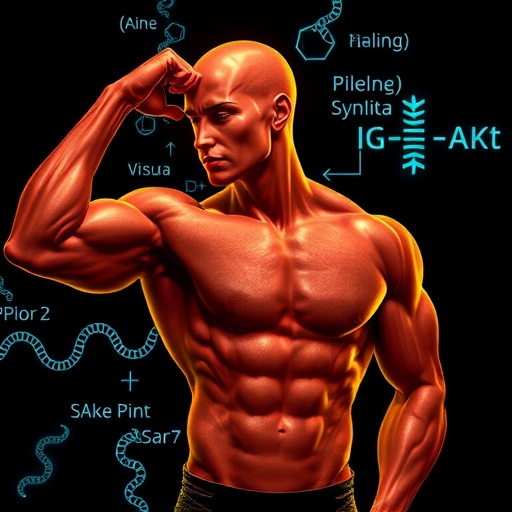
At the heart of this mechanism is the activation of the phosphatidylinositol 3-kinase (PI3K)/protein kinase B (Akt) pathway, a crucial intracellular signaling route that promotes muscle cell growth, survival, and hypertrophy. Under normal conditions, PI3K/Akt signaling suppresses atrophy-related genes and enhances muscle protein synthesis, thereby maintaining muscle mass. However, inflammatory insults such as elevated TNF-α attenuate this pathway, tipping the balance toward muscle degradation. The novel findings demonstrate that squalene treatment reinstates and even amplifies PI3K/Akt pathway activity, thereby reversing the catabolic signaling induced by TNF-α.
The study’s use of C2C12 myotubes, a well-established muscle cell model, allowed for precise molecular analyses of squalene’s effects. Upon TNF-α stimulation, these myotubes exhibited hallmark features of muscle atrophy, including reduced myotube diameter and increased expression of muscle-specific ubiquitin ligases that target proteins for degradation. Intriguingly, co-treatment with squalene significantly negated these atrophic changes. This was evidenced by enhanced phosphorylation of Akt and downstream targets such as mammalian target of rapamycin (mTOR), which orchestrate anabolic processes within the cell.
Moving from cell culture to animal models, the research team employed a well-validated immobilization model in C57BL/6J mice to simulate in vivo muscle wasting. Immobilization, a common cause of disuse atrophy in clinical contexts, results in rapid muscle mass loss predominantly through the suppression of PI3K/Akt signaling. Squalene-administered mice showed remarkable preservation of muscle mass compared to controls, accompanied by sustained activation of Akt and reduced levels of atrophy-inducing factors such as muscle RING-finger protein-1 (MuRF1) and atrogin-1. This translational aspect underscores squalene’s robust anti-atrophic capacity beyond cell culture models.
The interplay between inflammatory signaling and anabolic pathways forms the complex regulatory network governing muscle homeostasis. TNF-α not only triggers inflammatory cascades but also induces oxidative stress and apoptosis, compounding muscle protein loss. Squalene’s known antioxidant properties may complement its activation of PI3K/Akt signaling, thereby providing a multifaceted defense against atrophy. The precise biochemical mechanisms by which squalene interfaces with PI3K/Akt remain an area ripe for further exploration, particularly with regard to receptor engagement and upstream kinase modulation.
Moreover, the identification of squalene influencing the PI3K/Akt pathway offers potential for synergistic therapeutic strategies. Combining squalene with other agents that target complementary pathways, such as myostatin inhibitors or anti-inflammatory drugs, could amplify muscle preservation and regeneration. The non-toxic, natural origin of squalene further amplifies its appeal as a candidate for clinical interventions aimed at conditions involving muscle wasting, including sarcopenia, cachexia, and muscular dystrophies.
Given the aging global population, sarcopenia—or age-related muscle loss—poses significant public health challenges, increasing frailty and vulnerability to falls and fractures. The therapeutic implication that squalene can mitigate inflammatory-induced muscle atrophy opens avenues for interventions aimed at improving quality of life and reducing healthcare burdens. Nutrition-based approaches utilizing squalene-rich diets or supplementation could represent accessible, cost-effective strategies to combat muscle degradation in elderly populations.
It is notable that beyond muscle-specific impacts, PI3K/Akt signaling is implicated in systemic metabolic regulation and insulin sensitivity. Aberrant activation or inhibition of this pathway underlies numerous metabolic diseases which often coexist with muscle wasting syndromes. Thus, squalene’s modulatory effect might extend systemically, potentially improving metabolic health parameters alongside muscle preservation. Rigorous clinical trials will be essential to evaluate the safety, dosing, and efficacy of squalene in human populations suffering from muscle atrophy.
Fundamental to muscle biology, the study adds a critical piece to our understanding of how natural compounds can influence intracellular signaling pathways and cellular fate decisions. It also emphasizes the utility of the C2C12 myotube model and murine immobilization protocols as powerful platforms for dissecting molecular underpinnings of muscle atrophy and testing novel therapeutics. Future research might explore squalene’s effects on satellite cells—muscle stem cells responsible for regeneration—and investigate long-term outcomes after chronic administration.
A deeper mechanistic inquiry into how squalene modulates receptor crosstalk, particularly with insulin-like growth factor 1 (IGF-1) receptor signaling, would illuminate broader anabolic network interactions. IGF-1 is another potent activator of PI3K/Akt signaling and central to muscle growth. Understanding whether squalene acts independently or synergistically with IGF-1 could inform combinatorial treatment paradigms.
In summary, the identification of squalene as an efficacious agent in attenuating muscle atrophy via restoration of PI3K/Akt signaling marks a paradigm shift in therapeutic development for muscle wasting disorders. This research bridges molecular biology with translational medicine, highlighting a natural compound with significant anti-catabolic and pro-anabolic potential. As muscle atrophy continues to be a daunting clinical challenge, squalene’s promise positions it prominently on the horizon of next-generation muscle therapeutics.
As the scientific community advances towards validated clinical applications, the integration of squalene within dietary or pharmacological protocols could herald a new era of muscle health preservation. With ongoing inquiry into its multifaceted biochemical effects and potential systemic benefits, squalene stands poised as a beacon for patients and clinicians alike striving to combat the relentless scourge of muscle atrophy.
Subject of Research:
Squalene’s role in mitigating muscle atrophy via the PI3K/Akt signaling pathway in TNF-α-stimulated muscle cells and immobilization-induced muscle wasting in mice.
Article Title:
Squalene mitigates muscle atrophy via the PI3K/Akt pathway in TNF-α-stimulated C2C12 myotubes and immobilization-induced C57BL/6J mice.
Article References:
Kim, Y., Kim, MB., Lee, S. et al. Squalene mitigates muscle atrophy via the PI3K/Akt pathway in TNF-α-stimulated C2C12 myotubes and immobilization-induced C57BL/6J mice. Food Sci Biotechnol (2025). https://doi.org/10.1007/s10068-025-02058-9
Image Credits: AI Generated
DOI: 06 December 2025
Tags: anti-inflammatory agents for muscle lossC2C12 myotubes researchchronic inflammation and muscle atrophymuscle wasting treatmentnatural supplements for muscle healthPI3K/Akt signaling pathwayprotein synthesis regulation in musclesregenerative medicine breakthroughsskeletal muscle protectionsqualene muscle atrophy preventiontherapeutic potential of squaleneTNF-alpha and muscle breakdown