In a world grappling with the ever-increasing threat of antimicrobial resistance, a recent study by de Souza, de Oliveira Almeida, and Pereira dos Santos illuminates a critical aspect of this crisis: the emergence of plasmid-mediated carbapenem resistance. This research, published in International Microbiology, not only uncovers global dissemination patterns but also explores the intricate relationships between plasmid replicons and the resistance genes they harbor. Such findings are vital, as they provide insights into the mechanisms by which bacteria adapt and survive against one of the most potent classes of antibiotics used to treat multidrug-resistant infections.
The study primarily sheds light on the alarming spread of carbapenem-resistant organisms, which can result in severe infections that are notoriously difficult to treat. Carbapenems, often seen as the last line of defense against bacterial infections, are losing efficacy against pathogens due to genetic alterations that confer resistance. Within this context, plasmids — small, circular DNA molecules distinct from chromosomal DNA — have emerged as significant players in the transmission of resistance traits across bacterial populations. These mobile genetic elements facilitate horizontal gene transfer, allowing resistant genes to hop from one bacterium to another, perpetuating the cycle of resistance.
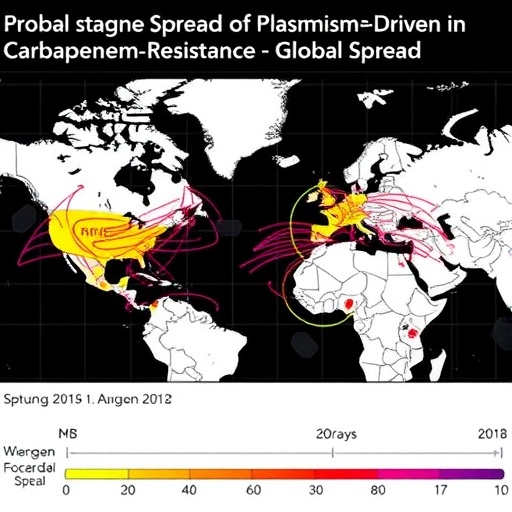
One of the most striking findings highlighted in the research is the marked global variation in the prevalence of carbapenem resistance. Different regions showcase varying patterns of dissemination, which can be traced back to specific plasmid replicons and associated resistance genes. For instance, the researchers found that certain replicons are dominant in certain geographical areas, reflecting historical, environmental, or even socio-economic factors that influence the spread of resistance. This complexity underscores the importance of localized studies to inform public health responses geared towards combating this growing threat.
Moreover, the study delved into the genetic architecture of the plasmids themselves, revealing that some are equipped with multiple resistance genes, thereby complicating therapeutic options. The presence of these multidrug resistance plasmids suggests an evolutionary advantage for bacteria, enabling them to survive in environments saturated with antibiotics. The interplay between plasmid replication mechanisms and the selection pressures imposed by antibiotic use further complicates our understanding of resistance development.
In addition to mapping out the relationship between replicons and resistance genes, the researchers emphasize the role of human activities in the global spread of these plasmids. Factors such as international travel, livestock farming, and the indiscriminate use of antibiotics in both healthcare settings and agriculture are key drivers of this phenomenon. Monitoring and controlling these activities could play a crucial role in mitigating the spread of carbapenem resistance on a global scale.
The implications of plasmid-mediated resistance extend beyond the immediate danger posed to individual patients. As these resistant bacteria proliferate, they can catalyze larger outbreaks, threaten public health systems, and drive up healthcare costs significantly. Addressing this issue requires a multifaceted approach, combining rigorous infection control measures, antibiotic stewardship programs, and increased surveillance of resistance patterns across various settings.
As researchers continue to unravel the genetic underpinnings of resistance, there is a pressing need for innovative therapeutic strategies that can outpace the evolving bacteria. One avenue being explored is the development of new antibiotics that can bypass existing resistance mechanisms. Additionally, phage therapy and other novel approaches that harness the specificity of viruses to target and kill bacteria are gaining traction as potential solutions.
To combat the burgeoning crisis of antimicrobial resistance effectively, international cooperation and policy-making rooted in robust scientific evidence are imperative. The dissemination of findings from studies such as this one serves as a clarion call for global health agencies, policymakers, and scientific communities to prioritize research efforts aimed at understanding and controlling the spread of resistance genes.
The research by de Souza and colleagues exemplifies the critical need to connect laboratory findings with real-world applications. By understanding the dynamics of plasmid-mediated resistance, public health officials can implement targeted interventions that reduce the transmission of these bacteria, ultimately preserving the efficacy of carbapenems and other vital antibiotics.
In conclusion, the intricate relationship between plasmids and carbapenem resistance as outlined in this pivotal study provides a roadmap for future research endeavors. It highlights the importance of global collaboration in addressing a problem that transcends borders. As antibiotic resistance continues to evolve, so must our strategies in surveillance, treatment, and prevention, ensuring that we stay one step ahead of this formidable adversary in the realm of infectious diseases.
In summary, this groundbreaking research underscores a clarion call for action: as the microbial landscape changes, so too must our understanding and responses to safeguard public health and combat the looming threat of antibiotic resistance.
Subject of Research: Plasmid-mediated carbapenem resistance
Article Title: Plasmid-mediated carbapenem resistance: global dissemination patterns and replicon–gene associations.
Article References: de Souza, H.C.A., de Oliveira Almeida, A.C., Pereira dos Santos, A.M. et al. Plasmid-mediated carbapenem resistance: global dissemination patterns and replicon–gene associations. Int Microbiol (2025). https://doi.org/10.1007/s10123-025-00757-1
Image Credits: AI Generated
DOI: 04 December 2025
Keywords: plasmid-mediated resistance, carbapenem resistance, antibiotic resistance, public health, global dissemination, resistance genes, microbial landscape, infection control.
Tags: dissemination of carbapenem-resistant organismsgenetic alterations in pathogenic bacteriaglobal antimicrobial resistance crisishorizontal gene transfer in bacteriaimpact of plasmids on bacterial evolutioninternational microbiology research on resistancelast line of defense antibioticsmechanisms of antibiotic resistanceplasmid replicons and resistance genesplasmid-mediated carbapenem resistancepublic health implications of resistancetreatment challenges for multidrug-resistant infections