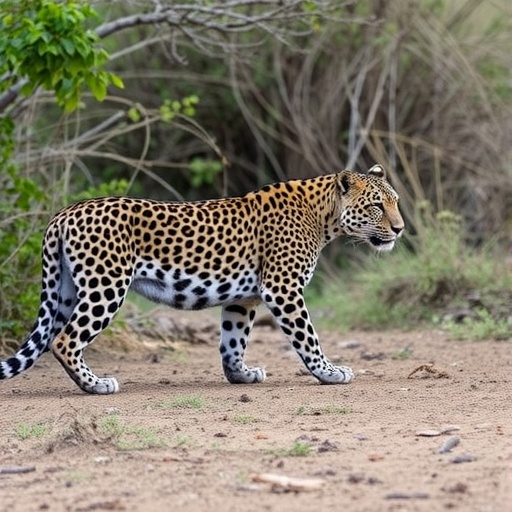
In the expansive and rugged terrains of Northern China, a delicate interplay between predation and conservation is currently unfolding, one that involves the majestic North Chinese leopard and its ungulate prey. Recent research conducted by a team of dedicated scientists sheds light on how human activities are reshaping the spatial dynamics between these apex predators and the wild ungulates they rely on for sustenance. This study not only highlights the profound impact of anthropogenic influences on wildlife behavior but also raises critical questions about the future of these species amid growing human encroachment.
The North Chinese leopard, known for its striking coat and elusive nature, occupies a niche that makes it an essential part of the ecological framework in its native habitats. These stunning felines traverse the varied landscapes of Northern China, where the presence of wild ungulates such as deer and antelope forms an integral part of their diet. The intricate predator-prey relationships have historically evolved over time, supported by the natural rhythms of the ecosystem. However, as human developments continue to proliferate, the spatial overlap between these predators and their prey is undergoing significant transformation.
Human activities, particularly in the form of habitat fragmentation and land use change, have initiated a ripple effect within the ecosystems these leopards inhabit. This disruption becomes particularly poignant as urban expansion, agriculture, and infrastructure development encroach upon the previously unspoiled territories of these animals. As a result, the leopards must adapt their hunting strategies and territorial behaviors to navigate an increasingly modified environment. Exploring these adaptive changes not only elevates our understanding of animal behavior but serves as a critical reminder of the influence of humanity on the natural world.
In conducting their research, the authors deployed advanced tracking technologies and observational studies to gain insights into the movement patterns of both leopards and their ungulate prey. By utilizing GPS collars and camera traps, the scientists were able to gather comprehensive data that illustrated how these animals interact with one another in the context of their changing environment. These methodologies provided robust evidence as to how the North Chinese leopard alters its hunting grounds and approaches based on the presence of human disturbances, such as roadways or agricultural plots.
Interestingly, the study found that the spatial overlap between the leopards and their prey was considerably impacted by the proximity to human activities. Increasing human presence not only directly influences ungulate populations—often leading to a decline in their numbers due to hunting and habitat loss—but also alters their grazing patterns and migration routes. This, in turn, forces leopards to adapt their hunting techniques, venturing closer to human-modified areas, which could expose them to additional risks, including vehicle accidents and conflicts with humans.
Moreover, the implications of these findings extend well beyond the immediate conflict between these species and humans. The shifting dynamics can result in broader ecological consequences, disrupting the balance of the entire ecosystem. If apex predators like the North Chinese leopard cannot efficiently hunt for their preferred prey due to habitat loss or fragmentation, the cascading effects may lead to an increase in ungulate populations, which in turn can overgraze vegetation in their habitats. This underscores the intricate balance that must be preserved to maintain ecological stability, emphasizing the need for informed conservation strategies.
The authors of this study advocate for a multifaceted approach to wildlife conservation that considers both the needs of human development and the imperatives of wildlife preservation. Their research calls for collaborative efforts involving local communities, policymakers, and conservation organizations to create and implement strategies that mitigate the negative impacts of human activities on wildlife. Such strategies could include the establishment of wildlife corridors to facilitate safe movement between habitat patches and buffer zones around critical habitats to reduce human-wildlife conflict.
As urban development and land use change continue unabated, the plight of the North Chinese leopard offers a window into the future of wildlife across the globe in the face of expanding human footprints. Researchers emphasize the importance of continuous monitoring and research to understand not only how current conditions affect these species but also how climate change and further anthropogenic pressures may shape their environments in the coming years.
By raising awareness about the implications of human activities on wildlife interactions, this research aims to serve as a catalyst for change. It seeks to remind society of its role as stewards of the natural world, urging individuals and communities to engage in sustainable practices that allow wildlife to thrive alongside human endeavors.
In conclusion, as the North Chinese leopard grapples with the challenges posed by an evolving landscape, the research offers critical insights into the broader conversations surrounding conservation and biodiversity. The findings underscore the vital need for ongoing dialogue and cooperation between wildlife conservationists, local communities, and governments to ensure that both human and natural communities can adapt and coexist in harmony.
As we consider the plight of the North Chinese leopard amidst these changes, the need for sustainable solutions becomes ever more pressing. As individuals, we can reflect on the impact we have on the environment and strive to cultivate a greater understanding of the natural world, ultimately recognizing that the preservation of the delicate balance in ecosystems is paramount for the health of our planet.
In summary, the research led by Wang et al. opens up new avenues for understanding how human activities are reshaping wildlife interactions, particularly in the case of the North Chinese leopard and its prey. As we delve into these findings, the urgency for responsible stewardship of our natural resources cannot be overstated, prompting every one of us to contribute positively towards the conservation of our shared planet.
Subject of Research: The impact of human activities on the spatial overlap between North Chinese leopards and their wild ungulate prey.
Article Title: Human activities reshape the spatial overlap between North Chinese leopard and its wild ungulate prey.
Article References:
Wang, Y., Liu, M., Xia, F. et al. Human activities reshape the spatial overlap between North Chinese leopard and its wild ungulate prey. Front Zool 21, 24 (2024). https://doi.org/10.1186/s12983-024-00545-z
Image Credits: AI Generated
DOI: https://doi.org/10.1186/s12983-024-00545-z
Keywords: Predator-prey dynamics, conservation, North Chinese leopard, ungulates, habitat fragmentation, human activities.
Tags: anthropogenic influences on ecosystemsconservation challenges for apex predatorsecological balance in northern Chinafuture of wildlife amidst urban expansionhabitat fragmentation effectshuman impact on wildlife dynamicshuman-induced habitat alterationsNorth Chinese leopard conservationpreservation of biodiversity in Chinaspatial dynamics of leopards and ungulatesungulate predator-prey relationshipswildlife behavior changes due to human encroachment